6 Minute English
Intermediate level
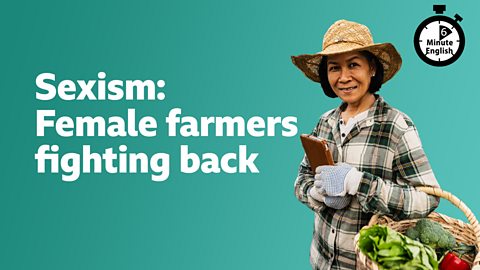
Sexism: Female farmers fighting back
Episode 231228 / 28 Dec 2023

Introduction
Female farmers in many countries face sexism. Some are now finding ways to be more fairly treated. Find out more with Beth and Neil.
This week's question
According to the UN’s World Food Programme, what is the world’s most popular vegetable? Is it:
a) onions?
b) tomatoes? or,
c) peppers?
Listen to the programme to hear the answer.
Vocabulary
sexism
The mistreatment of one sex based on the belief that the other one is better, usually that men are better than women.
fluctuate
continually change; shift up and down
risen dramatically
increased in a sudden and surprising way
make a (big) difference
(idiom) significantly improve a situation
savings and credit union
cooperative financial organisation where members pool their savings together so they can lend money to each other
chip in
each person of a group gives some money to pay for something together
TRANSCRIPT
Note: This is not a word-for-word transcript.
Neil
Hello. This is 6 Minute English from BBC Learning English. I’m Neil.
Beth
And I’m Beth.
Neil
If you've ever tried growing vegetables, you'll know it's not easy. They need water, soil, and plenty of sunlight. Plus you have to keep away weeds and insects.
Beth
But in some countries, female farmers face a different problem growing and selling vegetables - sexism, the mistreatment of one sex based on the belief that the other is better, usually that men are better than women. According to the United Nations, over 40% of farmers globally are women, a number which rises to almost 50% in lower and middle-income countries. Although these women manage farms, look after crops, and sell their produce at market, female farmers face sexism in societies where women are expected to raise children and stay at home.
Neil
In this programme, we’ll be digging into ideas helping female farmers in Bangladesh and Peru to earn a fair price for the food they grow. And, as usual, you’ll be learning some useful new vocabulary as well. But first I have a question for you, Beth. According to the UN’s World Food Programme, or WFP, what is the world’s most popular vegetable? Is it:
a) onions?
b) tomatoes? or,
c) peppers?
Beth
I think the answer is tomatoes.
Neil
OK, Beth, I’ll reveal the answer later in the programme. Poppy farms a small garden in rural Bangladesh where she grows cucumbers, spinach and okra. Although around half of Bangladeshi farmers are female, they’re not always welcome at the marketplace, where they face harassment, or are underpaid for their produce.
Beth
Now Poppy has joined hundreds of other female farmers using a new online app. The e-commerce platform is called ‘Farm to Go’ and farmers can sell their produce without revealing their identity, thereby getting a fairer price than at the market. Here’s Poppy telling more to, Salman Saeed, reporter for BBC World Service programme, People Fixing The World:
Poppy
By selling here, we get more profit. For example, if we sell a product in the market at 30 Taka, we can sell it here at 32 or 33 Taka. That's what makes us very happy! It also saves time, as after selling the products, we can come home and spend time with the family and can also work in the vegetable garden.
Salman Saeed
33 Taka is about 30 US cents, with 300 women currently using the app in Bangladesh. And while the three cents extra might sound small, over the course of the year, as prices fluctuate the WFP say the average monthly revenue for each farmer using the app has risen dramatically. In the long run, the hope is that it will also be possible to challenge and change attitudes around gender, but in the meantime the extra money she makes per sale makes a big difference to Poppy and her family.
Neil
Although the app only increases Poppy’s profits a little, they soon add up because vegetable prices fluctuate, they continually change, moving up and down. According to the WFP, the incomes of farmers using the app have risen dramatically, they have increased suddenly and surprisingly.
Beth
That makes a big difference to Poppy. To make a big difference is an idiom meaning to significantly improve a situation. It’s good news for female farmers in Bangladesh, but problems continue in many other places, often because it’s the man in the family who controls the household finances.
Neil
Here, reporter Craig Langran, explains a finance scheme helping female coffee growers in Peru to BBC World Service programme, People Fixing The World:
Craig Langran
So, I came across a project in Peru recently, and they're helping female coffee growers to access finance. So how it works - it's a type of savings and credit union and people living nearby can each chip in a small amount of money which can then be accessed by a farmer if she needs a loan to, say, buy a new bean processing machine or something like that…
Beth
Female farmers in Peru have started a savings and credit union. This is a kind of cooperative bank where members pool their savings together so they can lend funds to each other. Each member chips in, everyone gives a small amount of money to pay for something together.
Neil
Getting back to vegetables, I think it’s time to reveal the answer to my question, Beth: according to the UN, what is the world’s most popular vegetable?
Beth
I guessed it was tomatoes…
Neil
Which was… the correct answer! Technically a fruit, nutritionists count tomato as a vegetable, in fact the most commonly used vegetable in the world. OK, let’s recap the vocabulary we've learned in this programme on female farmers battling sexism – that’s the mistreatment of one sex based on the belief that the other one is better, usually that men are better than women.
Beth
If something fluctuates, it keeps changing, moving up and down.
Neil
To rise dramatically means to increase in a sudden and surprising way.
Beth
The idiom to make a big difference means to significantly improve a situation.
Neil
A savings and credit union is a cooperative bank where members pool their savings together so they can borrow money from each other.
Beth
And finally, if you chip in, youcontribute some money so a group of you can pay for something together. Once again our six minutes are up. Join us next time for more trending topics and useful vocabulary here at 6 Minute English. Goodbye for now!
Neil
Bye!
6 Minute English dhihoo kanaa
Sexism: Female farmers fighting back
Episode 231228 / 28 Dec 2023
How can female farmers beat rural sexism?
Invasive species: Why don't we eat them?
Episode 231207 / 07 Dec 2023
Could we eat invasive species?

What and where is Little Italy?
Episode 231130 / 30 Nov 2023
Mozzarella, ricotta, cannolis and focaccia... Where are we? Little Italy of course!

Social media and teenage health
Episode 231123 / 23 Nov 2023
What are the health risks of social media for teenagers?






Sounds that make you want to scream
Episode 230928 / 28 Sep 2023
Are there any sounds you find upsetting?




The stories behind our names
Episode 230831 / 31 Aug 2023
What do our names reveal about our culture and family history?


Are you unhappy at work?
Episode 230817 / 17 Aug 2023
Does work leave you feeling bored and exhausted?



Is it wrong to eat plants?
Episode 230629 / 29 Jun 2023
Should we treat plants with the same consideration we treat animals with?



The art of subtitling
Episode 230608 / 08 Jun 2023
Hear how subtitles can help bring TV and movies to life
Ecotourism: good or bad?
Episode 230601 / 01 Jun 2023
We discuss the growing popularity of ecotourism.
Can climate change cause more disease?
Episode 230525 / 25 May 2023
With warming temperatures, mosquitos are now spreading to new areas, including Europe.

Ice and the origins of life on Earth
Episode 230504 / 04 May 2023
We talk about an essential element for life to thrive.

Women in politics
Episode 230427 / 12 Apr 2023
We discuss some of the reasons why women make up only 26% of the world's politicians.

What's the point of museums?
Episode 230420 / 20 Apr 2023
We discuss the role of museums in the 21st century and the items taken from different countries.

How culture affects sadness
Episode 230413 / 11 Apr 2023
What ways do you think culture can influence sadness?
Would you eat a Kalette?
Episode 230406 / 06 Apr 2023
Hear about a new kind of vegetable making an entrance in British kitchens

Do you get jealous easily?
Episode 230330 / 06 Mar 2023
Let's talk about the ugly green-eyed monster

Food and mood
Episode 230316 / 16 Mar 2023
We look at the link between what you eat and how you feel.

How to talk to a climate denier
Episode 230309 / 09 Mar 2023
The dos and don'ts of trying to discuss science with someone who doesn't believe in it

Losing your mother tongue
Episode 230302 / 02 Mar 2023
Hear the story of a woman who replaced her native Czech for English.
The health benefits of apples
Episode 230223 / 23 Feb 2023
Could 'an apple a day keep the doctor away'?


Doomscrolling: Why do we do it?
Episode 230209 / 27 Jan 2023
What is doomscrolling and why are we attracted to bad news? Listen to find out!

Exercise for the lazy
Episode 230202 / 22 Jan 2023
What's the least amount of exercise you should do to stay healthy?

Can AI have a mind of its own?
Episode 230126 / 26 Jan 2023
Hear about the software engineer who became 'friends' with his computer
Climate change: Are there too many people?
Episode 230119 / 13 Jan 2023
Does the size of your carbon footprint depend on where in the world you were born? Listen to find out!
The hidden life of buffets
Episode 230112 / 12 Jan 2023
Neil and Sam discuss buffet meals and the history behind them.

Songwriting
Episode 230105 / 05 Jan 2023
Writing a memorable song isn't easy. So is there an art to good songwriting?