6 Minute English
Intermediate level
How to talk to a climate denier
Episode 230309 / 09 Mar 2023

- Can AI have a mind of its own?
- Climate change: Are there too many people?
- The hidden life of buffets
Introduction
Do you know somebody who doesn't believe that climate change is happening? Most scientists say it is. Rob and Sam get some tips on how to make people think about climate, and teach you new vocabulary along the way.
This week's question
What percent of the world’s scientific community agree that climate change is real?
a) 79 percent
b) 89 percent
c) 99 percent
Listen to the programme to find out the answer.
Vocabulary
climate denier
person who does not believe that climate change is happening, or does not accept that it is caused by human activity such as burning fossil fuels
ill-informed
knowing less than you should about a particular topic
full-blown
completely developed or committed
take a long, hard look (at something)
examine something very carefully in order to improve it for the future
throw insults
say offensive, hurtful things directly to someone
backfire
have the opposite effect from the one you intended
TRANSCRIPT
Note: This is not a word-for-word transcript.
Sam
Hello. This is 6 Minute English from BBC Learning English. I’m Sam.
Rob
And I’m Rob. When Sarah Ott was growing up in Florida in the 1990s, she loved playing in nature. She picked up litter in the street and took it home to recycle. But later, in college, Sarah became surrounded by people in her community who didn’t share her love of the environment – people who didn’t believe that climate change was real. And slowly, Sarah started to doubt it as well.
Sam
Climate deniers - people who don’t believe that climate change is happening, or that it isn’t caused by humans - make up around nine percent of the American population, according to some estimates. Now, Sarah works as a climate campaigner at the US National Centre for Science Education, teaching children the science behind climate change, but her journey there was a difficult one, and she lost many friends on the way.
Rob
In this programme, we’ll be discussing climate deniers, and finding out how to talk with people who doubt the science of global warming. And as usual, we’ll be learning some new vocabulary as well.
Sam
But before that, I have a question for you, Rob. Whatever climate deniers think, there is strong agreement on the issue among scientists on the Intergovernmental Panel on Climate Change, the IPCC. So, what percentage of the world’s scientific community agree that climate change is real? Is it:
a) 79 percent?
b) 89 percent? or
c) 99 percent?
Rob
I’ll have a guess and I’ll say it’s 99 percent.
Sam
OK. I will reveal the answer later in the programme, Rob. Marco Silva is a climate disinformation reporter for the BBC. He told BBC World Service programme, The Climate Question, what he’s learned about reporting on the issue from around the world.
Marco Silva
It’s quite important to make here a very clear distinction between being wrong, ill-informed about climate change and being a full-blown climate denier. A lot of people may not be very well versed with the science, the facts of climate change… to be honest, they can at times be quite complex, quite dense. Some people may have genuine questions about the subject. So, with information, with facts, those people can be convinced. Climate deniers, though, people who reject the basic facts of climate change, are likely to be more difficult to persuade.
Rob
Marco distinguishes a full-blown climate denier - someone who is completely committed to the idea, from someone who is simply ill-informed, meaning someone who knows less than they should about a particular topic.
Sam
Marco thinks it’s possible persuade an ill-informed person that climate change is a fact, for example by sharing personal stories of how of the weather has changed in recent years, or by asking them why they doubt the scientific evidence.
Rob
Full-blown climate deniers, on the other hand, are much harder to persuade. Here’s Marco Silva again, sharing some advice on how best to talk to people about the climate with BBC World Service programme, The Climate Question.
Marco Silva
A number of researchers and academics have looked into exactly this topic before. Professor Sander van der Linden, professor of social psychology at the University of Cambridge, is one of them. He's been looking into this long and hard, and when I spoke to him, he gave me a couple of tips. For instance, don't challenge a climate denier directly. Don't confront them telling them that they're this or that, throwing insults at them, that their beliefs are wrong - that sort of attitude or strategy is only likely to backfire. If you do that, the chances are people are just going to hold on to their views even more firmly.
Sam
Marco mentions Professor van der Linden, a psychologist who has taken a long, hard look at the issue of climate denial. If you take a long, hard look at something, you examine it very carefully in order to improve it for the future.
Rob
Professor van der Linden advises us not to challenge climate deniers directly, and never to throw insults – to say offensive, hurtful things directly to someone. This approach is unlikely to work and will probably backfire, or have the opposite effect from that intended, such as making that person’s opinion even stronger.
Sam
Instead, what’s needed is understanding and empathy – realising that climate deniers cannot control the life events that led them to mistrust science; and the patience to try to show them difference between fact and fiction.
Rob
OK, it’s time to reveal the answer to your question now, Sam - what percentage of the global scientific community agree that human-caused climate change is real? And I guessed it was 99 percent.
Sam
And that was the correct answer, Rob! The scientific evidence for a climate emergency is overwhelming, leaving just the question of what we do about it. OK, let’s recap the vocabulary we’ve learned from this programme on climate deniers – people who do not accept that climate change is real.
Rob
Someone who is ill-informed knows less than they should about a particular topic.
Sam
The adjective full-blown means completely committed or developed.
Rob
The idiom to take a long, hard look at something means to examine something very carefully in order to improve it for the future.
Sam
If you throw insults, you say offensive, hurtful things directly to someone.
Rob
And finally, if your actions backfire, they have opposite effect from the one you intended. Once again, our six minutes are up! Bye for now!
Sam
Bye bye!
6 Minute English dhihoo kanaa
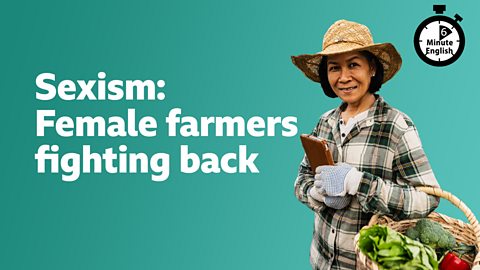
Sexism: Female farmers fighting back
Episode 231228 / 28 Dec 2023
How can female farmers beat rural sexism?


Invasive species: Why don't we eat them?
Episode 231207 / 07 Dec 2023
Could we eat invasive species?

What and where is Little Italy?
Episode 231130 / 30 Nov 2023
Mozzarella, ricotta, cannolis and focaccia... Where are we? Little Italy of course!

Social media and teenage health
Episode 231123 / 23 Nov 2023
What are the health risks of social media for teenagers?








Sounds that make you want to scream
Episode 230928 / 28 Sep 2023
Are there any sounds you find upsetting?




The stories behind our names
Episode 230831 / 31 Aug 2023
What do our names reveal about our culture and family history?


Are you unhappy at work?
Episode 230817 / 17 Aug 2023
Does work leave you feeling bored and exhausted?







Is it wrong to eat plants?
Episode 230629 / 29 Jun 2023
Should we treat plants with the same consideration we treat animals with?



The art of subtitling
Episode 230608 / 08 Jun 2023
Hear how subtitles can help bring TV and movies to life

Ecotourism: good or bad?
Episode 230601 / 01 Jun 2023
We discuss the growing popularity of ecotourism.
Can climate change cause more disease?
Episode 230525 / 25 May 2023
With warming temperatures, mosquitos are now spreading to new areas, including Europe.



Ice and the origins of life on Earth
Episode 230504 / 04 May 2023
We talk about an essential element for life to thrive.

Women in politics
Episode 230427 / 12 Apr 2023
We discuss some of the reasons why women make up only 26% of the world's politicians.

What's the point of museums?
Episode 230420 / 20 Apr 2023
We discuss the role of museums in the 21st century and the items taken from different countries.

How culture affects sadness
Episode 230413 / 11 Apr 2023
What ways do you think culture can influence sadness?

Would you eat a Kalette?
Episode 230406 / 06 Apr 2023
Hear about a new kind of vegetable making an entrance in British kitchens

Do you get jealous easily?
Episode 230330 / 06 Mar 2023
Let's talk about the ugly green-eyed monster


Food and mood
Episode 230316 / 16 Mar 2023
We look at the link between what you eat and how you feel.
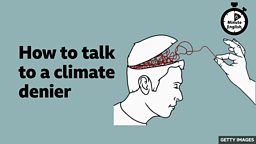
How to talk to a climate denier
Episode 230309 / 09 Mar 2023
The dos and don'ts of trying to discuss science with someone who doesn't believe in it

Losing your mother tongue
Episode 230302 / 02 Mar 2023
Hear the story of a woman who replaced her native Czech for English.

The health benefits of apples
Episode 230223 / 23 Feb 2023
Could 'an apple a day keep the doctor away'?

Doomscrolling: Why do we do it?
Episode 230209 / 27 Jan 2023
What is doomscrolling and why are we attracted to bad news? Listen to find out!

Exercise for the lazy
Episode 230202 / 22 Jan 2023
What's the least amount of exercise you should do to stay healthy?

Can AI have a mind of its own?
Episode 230126 / 26 Jan 2023
Hear about the software engineer who became 'friends' with his computer
Climate change: Are there too many people?
Episode 230119 / 13 Jan 2023
Does the size of your carbon footprint depend on where in the world you were born? Listen to find out!

The hidden life of buffets
Episode 230112 / 12 Jan 2023
Neil and Sam discuss buffet meals and the history behind them.

Songwriting
Episode 230105 / 05 Jan 2023
Writing a memorable song isn't easy. So is there an art to good songwriting?