6 Minute English
Intermediate level
Women in politics
Episode 230427 / 12 Apr 2023

Introduction
It is often said that the qualities of empathy and understanding - often associated with women - are most needed in politics today. Yet, while women make up over half the world's population, only 26 percent of the world's politicians are women. Why is this? Neil and Beth discuss some of the reasons, and teach you related vocabulary as well.
This week's question
Britain has had three female prime ministers, all from the Conservative party. First was Margaret Thatcher, who was followed in 2016 by Theresa May, and after that by Liz Truss, who resigned after only a short time in office. But for how long was Liz Truss prime minister?
a) 45 days
b) 1 year and 45 days
c) 2 years and 45 days
Listen to the programme to find out the answer.
Vocabulary
misogyny
hatred of, or prejudice against, women
coached
specially trained or instructed in how to improve at a particular skill
attire
the clothes you are wearing
walk a tightrope
be in a difficult situation that requires careful and considered behaviour
collaborative
involving several people working together for a particular aim
my way or the highway
(idiom) used as a warning that someone will only accept their own way of doing things
TRANSCRIPT
Note: This is not a word-for-word transcript
Beth
Hello. This is 6 Minute English from BBC Learning English. I'm Beth.
Neil
And I'm Neil. Differences between men and women have existed forever, but in modern times imbalances in the opportunities for men and woman have widened. One area where this imbalance is widest is politics.
Beth
When we think of female politicians, the names Margaret Thatcher, Angela Merkel, Indira Gandhi, or Jacinda Ardern all come to mind. But, while women make up over half the world's population, only 26% of the world's politicians are women.
Neil
How much of this is because of misogyny - hatred and prejudice against women? It seems that the surprise resignation of New Zealand's prime minister, Jacinda Ardern, was partly because of the misogynistic abuse she received online, so in this programme we'll be asking: why is life so hard for women in politics? And, of course, we'll be learning some useful new vocabulary as well.
Beth
But before that, I have a question for you, Neil. Britain has had three female prime ministers, all from the Conservative party. First was Margaret Thatcher, who was followed in 2016 by Theresa May, and after that by Liz Truss, who resigned after only a short time in office. But for how long, exactly, was Liz Truss prime minister? Was it:
a) 45 days?
b) 1 year and 45 days? or,
c) 2 years and 45 days?
Neil
I think the answer is 45 days.
Beth
OK, Neil. I'll reveal the answer later. One of the biggest barriers for female politicians is that politics has traditionally been seen as a man's world. When Margaret Thatcher became prime minister in 1979, she had to manage a group of men who were not used to being told what to do by a woman. Here, Professor Rosie Campbell, Director of the Global Institute for Women's Leadership, explains to BBC World Service programme, The Real Story, how Mrs Thatcher's solution to this problem was to appear more masculine.
Rosie Campbell
She was deliberately coached to change her voice and to behave in a way that was more stereotypically masculine, at the same time as presenting herself, in terms of her attire, in a very feminine way which really showed the tightrope she had to walk in order to seem strong enough to be the leader, but not subverting norms of what it is to be a woman. So I think, you know, whatever you might think of Margaret Thatcher, that was a very challenging tightrope walk that she had to do.
Neil
Margaret Thatcher was coached to behave more like a man, for example by lowering her voice. If you are coached, you are specially trained in how to improve at a particular skill.
Beth
At the same time she was also advised to appear feminine, especially in her attire - the clothes she wore. In trying to present both male and female sides of herself, Mrs Thatcher walked a tightrope - an idiom meaning to be in a difficult situation that requires carefully considered behaviour.
Neil
The point is that none of these demands were made of the men in Mrs Thatcher's government. Even today, the way women in politics behave or dress is commented on and criticised far more than men, with the result that fewer women are willing to expose themselves to public scrutiny - a situation which has only got worse since the internet, and with it, sexist and misogynistic abuse on social media.
Beth
Paradoxically, it is often said that the qualities of empathy and understanding - often associated with women - are most needed in politics today. According to former prime minister Helen Clark, who was New Zealand's first female elected leader, it's not just that women are more caring - they also bring a different leadership style, as she explained to BBC World Service programme, The Real Story:
Helen Clark
I think that women are known for more collaborative styles and politics, less likely to be the, you know, top down, heavy-handed… you know, my way or the highway, more open to evidenced debate. I think it's certainly informed the way that that I led. I think it also informed the priorities that I had.
Neil
Helen Clark believes women leaders are more collaborative - they prefer working cooperatively with several people to achieve a common goal. She contrasts this with a stricter, more dictatorial leadership style by using the expression, my way or the highway - an idiom used as a warning that someone will only accept their way of doing things.
Beth
In fact, adopting such dictatorial approaches has been the end of many political leaders, including Mrs Thatcher and, more recently, Liz Truss… which brings me back to my question, Neil - how long did Liz Truss last as prime minister?
Neil
I guess it was 45 days. Was I right?
Beth
That was... the correct answer! Liz Truss was prime minister for just 45 days, the shortest premiership of any British leader ever, male or female. OK, let's recap the vocabulary we've learned in this programme on women in politics, starting with misogyny - the dislike or hatred of women.
Neil
If you are coached in something, you are trained or instructed in how to improve that particular skill.
Beth
Attire means the clothes you are wearing.
Neil
If you have to walk a tightrope, you're in a difficult situation that requires careful behaviour.
Beth
The adjective collaborative involves several people working together for a particular purpose.
Neil
And finally, the idiom it's my way or the highway can be used as a warning that someone will only accept their own way of doing things. Once again, our six minutes are up. See you soon!
Beth
Bye!
6 Minute English dhihoo kanaa
Sexism: Female farmers fighting back
Episode 231228 / 28 Dec 2023
How can female farmers beat rural sexism?

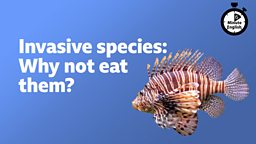
Invasive species: Why don't we eat them?
Episode 231207 / 07 Dec 2023
Could we eat invasive species?

What and where is Little Italy?
Episode 231130 / 30 Nov 2023
Mozzarella, ricotta, cannolis and focaccia... Where are we? Little Italy of course!

Social media and teenage health
Episode 231123 / 23 Nov 2023
What are the health risks of social media for teenagers?






Sounds that make you want to scream
Episode 230928 / 28 Sep 2023
Are there any sounds you find upsetting?




The stories behind our names
Episode 230831 / 31 Aug 2023
What do our names reveal about our culture and family history?

Are you unhappy at work?
Episode 230817 / 17 Aug 2023
Does work leave you feeling bored and exhausted?






Is it wrong to eat plants?
Episode 230629 / 29 Jun 2023
Should we treat plants with the same consideration we treat animals with?

The art of subtitling
Episode 230608 / 08 Jun 2023
Hear how subtitles can help bring TV and movies to life
Ecotourism: good or bad?
Episode 230601 / 01 Jun 2023
We discuss the growing popularity of ecotourism.
Can climate change cause more disease?
Episode 230525 / 25 May 2023
With warming temperatures, mosquitos are now spreading to new areas, including Europe.



Ice and the origins of life on Earth
Episode 230504 / 04 May 2023
We talk about an essential element for life to thrive.
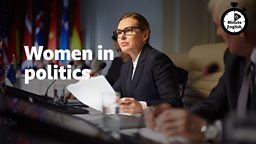
Women in politics
Episode 230427 / 12 Apr 2023
We discuss some of the reasons why women make up only 26% of the world's politicians.
What's the point of museums?
Episode 230420 / 20 Apr 2023
We discuss the role of museums in the 21st century and the items taken from different countries.

How culture affects sadness
Episode 230413 / 11 Apr 2023
What ways do you think culture can influence sadness?

Would you eat a Kalette?
Episode 230406 / 06 Apr 2023
Hear about a new kind of vegetable making an entrance in British kitchens

Do you get jealous easily?
Episode 230330 / 06 Mar 2023
Let's talk about the ugly green-eyed monster

Food and mood
Episode 230316 / 16 Mar 2023
We look at the link between what you eat and how you feel.
How to talk to a climate denier
Episode 230309 / 09 Mar 2023
The dos and don'ts of trying to discuss science with someone who doesn't believe in it
Losing your mother tongue
Episode 230302 / 02 Mar 2023
Hear the story of a woman who replaced her native Czech for English.

The health benefits of apples
Episode 230223 / 23 Feb 2023
Could 'an apple a day keep the doctor away'?

Doomscrolling: Why do we do it?
Episode 230209 / 27 Jan 2023
What is doomscrolling and why are we attracted to bad news? Listen to find out!

Exercise for the lazy
Episode 230202 / 22 Jan 2023
What's the least amount of exercise you should do to stay healthy?

Can AI have a mind of its own?
Episode 230126 / 26 Jan 2023
Hear about the software engineer who became 'friends' with his computer
Climate change: Are there too many people?
Episode 230119 / 13 Jan 2023
Does the size of your carbon footprint depend on where in the world you were born? Listen to find out!

The hidden life of buffets
Episode 230112 / 12 Jan 2023
Neil and Sam discuss buffet meals and the history behind them.

Songwriting
Episode 230105 / 05 Jan 2023
Writing a memorable song isn't easy. So is there an art to good songwriting?