6 Minute English
Intermediate level
Making male friends
Episode 230914 / 14 Sep 2023

____________________________________________________________________________
Learn more about friends and family
____________________________________________________________________________
Introduction
It is often thought that men are much worse than women at making and keeping friends. How true is this? Neil and Beth discuss this and teach you some useful vocabulary.
This week's question
According to Oxford University's Institute of Cognitive Anthropology, how many close friends do we need for our mental wellbeing?
Is it:
a) five?
b) ten? or,
c) twenty?
Listen to the programme to hear the answer.
Vocabulary
times are tough
periods of trouble, unhappiness or financial difficulty in life
get through
(phrasal verb) manage to live through a difficult situation
drift away
gradually move further and further apart from someone until your relationship with them is broken
Billy No-Mates
(slang) a person with no friends
double-edged sword
something that has unfavourable as well as favourable consequences
outgoing
very friendly; enjoys meeting and talking to people
TRANSCRIPT
Note: This is not a word-for-word transcript.
Neil
Hello. This is 6 Minute English from BBC Learning English. I’m Neil.
Beth
And I’m Beth. There’s a famous English saying, ‘a friend in need is a friend indeed’, and it’s true - everyone needs friends to share life’s ups and downs. Do you have many friends, Neil?
Neil
Yes, I have some close friends, but maybe not as many as I’d like.
Beth
That’s interesting because often it’s women who have many friends while men find it harder to maintain strong friendships, especially as they get older. In fact, according to one recent survey, only 27% of British men say they have a least six close friends.
Neil
So, is it true that men find it difficult to make friends? We’ll be hearing from, Max Dickins, author of a new book on male friendships called, ‘Billy No-Mates’, and, as usual, we’ll be learning some useful new vocabulary as well.
Beth
But first I have a question for you. We know that close friends are important, not just for having fun but for good mental health as well. So according to research by Oxford University’s Institute of Cognitive Anthropology, how many close friends to we need for our mental wellbeing? Is it:
a) five?
b) ten? or,
c) twenty?
Neil
I’ll say we need at least five close friends.
Beth
OK, Neil. I’ll reveal the answer at the end of the programme. Now, however many friends you have, it’s a stereotype that women are better than men at making and keeping close friends. Here’s Claudia Hammond outlining the problem for BBC Radio 4 programme, All in the Mind:
Claudia Hammond
Now, When times are tough, friends are often the people who get us through, who are there to listen, to reassure, maybe to advise us, if that's what we want. So why do we sometimes find it hard to make friends, or that the friends we used to have seemed to have somehow drifted away? Now, there is an idea that women are much better at maintaining their friendships, and that men are more likely to hang out with whoever is around rather than to nurture those relationships, and we were wondering whether this was really true or is that just a stereotype?
Neil
Claudia uses the phrase, times are tough, to describe a situation of trouble, unhappiness or financial difficulty. Friends help us get through these difficult periods of life. The phrasal verb, get through, has several meanings, but here it means manage to live through an unpleasant period of time.
Beth
The problem may be that your friends have drifted away – gradually moved further and further away until your connection with them has broken. And it seems that’s especially true for men.
Neil
That’s right. When author, Max Dickins, was getting married, he realised he didn’t have any close male friends he could ask to be his ‘best man’, the person who helps the groom at a wedding. This led him to write the book, ‘Billy No-Mates’, looking at why he didn’t have any close male friends. Here’s Claudia Hammond again talking with Max for BBC Radio 4 programme, All in the Mind:
Claudia Hammond
Max it's interesting that you kind of went public on this, if you like… Your book is even called ‘Billy No-Mates’ the very thing that, you know, a lot of us would dread being. It can't have been easy to decide to say this publicly…
Max Dickins
No, it's a real double-edged sword being the face of a book called ‘Billy No-Mates’ I've gotta say… but I think.. so loneliness doesn't look like me. I'm in my early to mid-30s, I'm pretty outgoing, I'm quick to buy my round, it shouldn't look like me, but increasingly it does. So loneliness isn't just the elderly anymore it's younger people…
Beth
Max called his book Billy No-Mates, slang for a person with no friends. It’s a memorable book title, but Max says being the public face of a book called 'Billy No-Mates' is a double-edged sword - something with unfavourable as well as favourable consequences.
Neil
In fact, Max doesn’t look like someone with no friends: he’s young, generous, and outgoing – an adjective describing someone who’s friendly and enjoys meeting people. But increasingly, loneliness is affecting younger men, thanks partly to social media which can make it seem as though everyone is having a great time with their mates, except you!
Beth
Max thinks the answer is getting out and meeting people in ‘third spaces’, places like sports clubs or reading groups which are separate from either home or work.
Neil
All of which helps get closer to the magical number of friends needed for good mental health. I think it’s time you revealed the answer to your question, Beth .
Beth
Yes, I asked how many close friends we need for our mental wellbeing. You said it was five, which was… the correct answer! According to Oxford University’s, Professor Robin Dunbar, we need a core circle of five close friends, plus a wider support network of about ten, making a total number of fifteen friends for good mental health. OK, let’s recap the vocabulary from the programme, starting with the phrase times are tough which describes periods of trouble or difficulty in life.
Neil
If you get through something, you manage to live through a difficult situation.
Beth
To drift away means to gradually move further apart from someone until your relationship with them eventually ends.
Neil
Billy No-Mates is slang for someone who has no friends.
Beth
A double-edged sword describes something with unfavourable as well as favourable consequences.
Neil
And finally, the adjective outgoing describes someone who is very friendly and enjoys talking to people. Once again, our six minutes are up. Goodbye for now!
Beth
Bye!
ሐድሽ ፓድካስትታት ተመልከት 6 Minute English
Sexism: Female farmers fighting back
Episode 231228 / 28 Dec 2023
How can female farmers beat rural sexism?

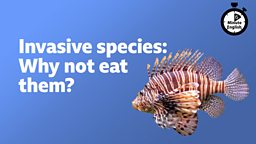
Invasive species: Why don't we eat them?
Episode 231207 / 07 Dec 2023
Could we eat invasive species?

What and where is Little Italy?
Episode 231130 / 30 Nov 2023
Mozzarella, ricotta, cannolis and focaccia... Where are we? Little Italy of course!

Social media and teenage health
Episode 231123 / 23 Nov 2023
What are the health risks of social media for teenagers?







Sounds that make you want to scream
Episode 230928 / 28 Sep 2023
Are there any sounds you find upsetting?




The stories behind our names
Episode 230831 / 31 Aug 2023
What do our names reveal about our culture and family history?


Are you unhappy at work?
Episode 230817 / 17 Aug 2023
Does work leave you feeling bored and exhausted?







Is it wrong to eat plants?
Episode 230629 / 29 Jun 2023
Should we treat plants with the same consideration we treat animals with?


The art of subtitling
Episode 230608 / 08 Jun 2023
Hear how subtitles can help bring TV and movies to life

Ecotourism: good or bad?
Episode 230601 / 01 Jun 2023
We discuss the growing popularity of ecotourism.
Can climate change cause more disease?
Episode 230525 / 25 May 2023
With warming temperatures, mosquitos are now spreading to new areas, including Europe.



Ice and the origins of life on Earth
Episode 230504 / 04 May 2023
We talk about an essential element for life to thrive.

Women in politics
Episode 230427 / 12 Apr 2023
We discuss some of the reasons why women make up only 26% of the world's politicians.

What's the point of museums?
Episode 230420 / 20 Apr 2023
We discuss the role of museums in the 21st century and the items taken from different countries.
How culture affects sadness
Episode 230413 / 11 Apr 2023
What ways do you think culture can influence sadness?

Would you eat a Kalette?
Episode 230406 / 06 Apr 2023
Hear about a new kind of vegetable making an entrance in British kitchens

Do you get jealous easily?
Episode 230330 / 06 Mar 2023
Let's talk about the ugly green-eyed monster


Food and mood
Episode 230316 / 16 Mar 2023
We look at the link between what you eat and how you feel.
How to talk to a climate denier
Episode 230309 / 09 Mar 2023
The dos and don'ts of trying to discuss science with someone who doesn't believe in it

Losing your mother tongue
Episode 230302 / 02 Mar 2023
Hear the story of a woman who replaced her native Czech for English.

The health benefits of apples
Episode 230223 / 23 Feb 2023
Could 'an apple a day keep the doctor away'?

Doomscrolling: Why do we do it?
Episode 230209 / 27 Jan 2023
What is doomscrolling and why are we attracted to bad news? Listen to find out!

Exercise for the lazy
Episode 230202 / 22 Jan 2023
What's the least amount of exercise you should do to stay healthy?

Can AI have a mind of its own?
Episode 230126 / 26 Jan 2023
Hear about the software engineer who became 'friends' with his computer

Climate change: Are there too many people?
Episode 230119 / 13 Jan 2023
Does the size of your carbon footprint depend on where in the world you were born? Listen to find out!

The hidden life of buffets
Episode 230112 / 12 Jan 2023
Neil and Sam discuss buffet meals and the history behind them.

Songwriting
Episode 230105 / 05 Jan 2023
Writing a memorable song isn't easy. So is there an art to good songwriting?