6 Minute English
Intermediate level
Ice and the origins of life on Earth
Episode 230504 / 04 May 2023

Introduction
The James Webb Space Telescope recently detected the coldest ices ever in outer space, something Nasa scientists think could explain the origins of life on Earth. Sam and Neil talk about science and teach you related vocabulary.
This week's question
We know ice is frozen water, but do you know the chemical symbol for water?
a) H2O
b) HO2
c) H2O2
Listen to the programme to find out the answer.
Vocabulary
primordial soup
environment on Earth before there were any plants or animals, and which formed the conditions for life
building blocks of life
most basic biological and chemical units capable of supporting living plants and animals
comet
large object made of dirt and ice travelling around the sun with a bright, burning tail
lightning
flash of bright light produced by electricity moving in the atmosphere
organic
relating to living plants and animals; food grown without the use of artificial chemicals
chain reaction
series of chemical reactions in which one change causes another, which in turn, causes another
TRANSCRIPT
Note: This is not a word-for-word transcript.
Sam
Hello. This is 6 Minute English from BBC Learning English. I’m Sam.
Neil
And I’m Neil.
Sam
Have you ever made a snowman or enjoyed a cold drink on a hot summer’s day? Slippery in winter and cooling in summer, ice is made when water gets so cold it freezes. But there’s much more to ice than skiing holidays and cold drinks.
Neil
Yes, in an exciting discovery, the James Webb Space Telescope recently detected the coldest ices ever in outer space, something Nasa scientists think could explain the origins of life on Earth.
Sam
For years scientists have debated how life started on our planet. Billions of years ago, long before the dinosaurs, animals or even plants existed, the Earth had a watery environment of oxygen-free gases and chemicals known as the primordial soup. It had the potential for life to develop, but something was missing.
Neil
So how did we jump from the primordial soup to the first living plants, animals, and eventually humans? And how does ice fit into the story? That’s what we’ll be finding out in this programme, and as usual, we’ll be learning some useful new vocabulary as well.
Sam
But first I have a question for you, Neil. We know ice is frozen water, but do you know the chemical symbol for water? Is it:
a) H2O ?
b) HO2 ? or
c) H2O2 ?
Neil
Well, I really hope I get this right. I think the answer is H2O.
Sam
OK. We’ll find out or check if you’re right later in the programme. Astronomer, Professor Melissa McClure, worked with the Nasa scientists who found ice on Europa, one of Jupiter’s moons. Here she explains to BBC World Service programme, Science in Action, one theory linking ice to the beginnings of life on Earth.
Professor Melissa McClure
There's sort of these two alternatives for how you could have had life arise on Earth, and one is that the very basic building blocks, like water, and methane, and CO2 – like, those molecules were definitely brought to Earth by ices in comets, and maybe once they were on Earth, then they reacted with either geothermal heat or some kind of lightning strike to form more complex molecules.
Neil
Earth’s primordial soup lacked the building blocks of life – a phrase describing the most basic biological and chemical units needed to support living things, elements like oxygen and carbon.
Sam
Professor McClure thinks these missing elements were brought to Earth in comets - large bright balls of dirt and ice which travel around the Sun in outer space.
Neil
It’s possible that when comets hit Earth billions of years ago, elements in the ice were scattered and struck by lightning – a bright flash of light produced by electricity moving in the atmosphere. This resulted in the complex molecules needed for life on Earth.
Sam
Exactly how this happened is not known, but it involves biomolecules, molecules like DNA which are found in living things. Ice is not a biomolecule, but when it mixes with carbon, the atoms in ice molecules change to produce complex molecules – and that’s when interesting things start to happen. Here’s Professor McClure again, explaining more to BBC World Service’s, Science in Action.
Professor Melissa McClure
If they have a carbon atom in them then they’re complex organic molecules, so things like very simple alcohols like methanol or ethanol, like what you would drink, are complex organic molecules. And these molecules could react and start a sort of a reaction chain that would eventually lead to something like a biomolecule.
Neil
Ice can react with other elements to create organic molecules, for example the alcohol, methanol. Here, the adjective organic means related to living plants and animals. That’s different from how we use the word to talk about ‘organic food’, meaning food that hasn’t been grown using artificial chemicals.
Sam
When these organic molecules met the primordial soup - so the theory goes - it produced a chain reaction – a series of chemical reactions in which one change causes another. It was this chain reaction which created the first living cells and eventually, humans. Quite impressive for a little piece of frozen water!
Neil
Speaking of water, Sam, what was the answer to your question about the chemical symbol for water? I said it was H2O.
Sam
Which was the right answer, Neil! Each molecule of water, and ice, contains two atoms of H, that’s hydrogen, joined to one atom of oxygen. OK, let’s recap the vocabulary we’ve learned from the programme, starting with primordial soup – the environment on Earth before there were any plants or animals, which created the conditions for life.
Neil
The phrase the building blocks of life refers to the most basic biological and chemical units needed to support living plants and animals.
Sam
A comet is a large object travelling in space which orbits the sun and has a bright, burning tail.
Neil
Lightning is a flash of bright light produced by electricity moving in the atmosphere.
Sam
The adjective organic means relating to living plants and animals. And ‘organic food’ means food which has been grown without using chemicals.
Neil
And finally, a chain reaction is a series of chemical reactions in which one change causes another, which in turn, causes another. Once again, our six minutes are up. Goodbye!
Sam
Bye bye!
ሐድሽ ፓድካስትታት ተመልከት 6 Minute English
Sexism: Female farmers fighting back
Episode 231228 / 28 Dec 2023
How can female farmers beat rural sexism?
Invasive species: Why don't we eat them?
Episode 231207 / 07 Dec 2023
Could we eat invasive species?
What and where is Little Italy?
Episode 231130 / 30 Nov 2023
Mozzarella, ricotta, cannolis and focaccia... Where are we? Little Italy of course!

Social media and teenage health
Episode 231123 / 23 Nov 2023
What are the health risks of social media for teenagers?



Sounds that make you want to scream
Episode 230928 / 28 Sep 2023
Are there any sounds you find upsetting?



The stories behind our names
Episode 230831 / 31 Aug 2023
What do our names reveal about our culture and family history?

Are you unhappy at work?
Episode 230817 / 17 Aug 2023
Does work leave you feeling bored and exhausted?


Is it wrong to eat plants?
Episode 230629 / 29 Jun 2023
Should we treat plants with the same consideration we treat animals with?

The art of subtitling
Episode 230608 / 08 Jun 2023
Hear how subtitles can help bring TV and movies to life
Ecotourism: good or bad?
Episode 230601 / 01 Jun 2023
We discuss the growing popularity of ecotourism.
Can climate change cause more disease?
Episode 230525 / 25 May 2023
With warming temperatures, mosquitos are now spreading to new areas, including Europe.

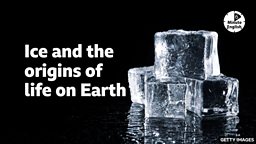
Ice and the origins of life on Earth
Episode 230504 / 04 May 2023
We talk about an essential element for life to thrive.

Women in politics
Episode 230427 / 12 Apr 2023
We discuss some of the reasons why women make up only 26% of the world's politicians.
What's the point of museums?
Episode 230420 / 20 Apr 2023
We discuss the role of museums in the 21st century and the items taken from different countries.

How culture affects sadness
Episode 230413 / 11 Apr 2023
What ways do you think culture can influence sadness?
Would you eat a Kalette?
Episode 230406 / 06 Apr 2023
Hear about a new kind of vegetable making an entrance in British kitchens

Do you get jealous easily?
Episode 230330 / 06 Mar 2023
Let's talk about the ugly green-eyed monster

Food and mood
Episode 230316 / 16 Mar 2023
We look at the link between what you eat and how you feel.
How to talk to a climate denier
Episode 230309 / 09 Mar 2023
The dos and don'ts of trying to discuss science with someone who doesn't believe in it
Losing your mother tongue
Episode 230302 / 02 Mar 2023
Hear the story of a woman who replaced her native Czech for English.
The health benefits of apples
Episode 230223 / 23 Feb 2023
Could 'an apple a day keep the doctor away'?

Doomscrolling: Why do we do it?
Episode 230209 / 27 Jan 2023
What is doomscrolling and why are we attracted to bad news? Listen to find out!

Exercise for the lazy
Episode 230202 / 22 Jan 2023
What's the least amount of exercise you should do to stay healthy?
Can AI have a mind of its own?
Episode 230126 / 26 Jan 2023
Hear about the software engineer who became 'friends' with his computer
Climate change: Are there too many people?
Episode 230119 / 13 Jan 2023
Does the size of your carbon footprint depend on where in the world you were born? Listen to find out!
The hidden life of buffets
Episode 230112 / 12 Jan 2023
Neil and Sam discuss buffet meals and the history behind them.

Songwriting
Episode 230105 / 05 Jan 2023
Writing a memorable song isn't easy. So is there an art to good songwriting?