_____________________________________________________________________________________________________
Download a free 6 Minute English worksheet and transcript!
Try our free interactive quiz!
______________________________________________________________________________________________________
Try more episodes of 6 Minute English:
- Do you like garlic?
- Is breakfast the most important meal of the day?
- Did a civilisation exist on Earth before humans?
______________________________________________________________________________________________________
Introduction
We all remember playgrounds when we were children – slides, swings and climbing frames. But have you heard of the new playgrounds which are designed to include things that others might consider junk... like old tyres and wooden pallets! Pippa and Phil discuss this and teach you some new vocabulary.
This week's question
In which country did adventure playgrounds start off after the Second World War?
a) France
b) Germany
c) Denmark
Listen to the programme to hear the answer.
Vocabulary
at first glance
seeing something for the first time, before having a chance to consider it more carefully
hidey-hole
small place for hiding things in, or hiding yourself in
tend to (do something)
do something often and be likely to do it again in the future
by far
by a great amount
one hundred percent
(informal) completely; used to emphasise that you agree completely with a statement
coping strategies
psychological ways of managing the stress of emotionally challenging situations

TRANSCRIPT
Note: This is not a word-for-word transcript.
Pippa
Hello, this is 6 Minute English from BBC Learning English. I'm Pippa.
Phil
And I'm Phil. What was your favourite game when you were a child, Pippa?
Pippa
I think my favourite game was skipping with a skipping rope. How about you?
Phil
Well, I could never skip, so I think I just preferred playing football.
Pippa
Ahh! Well, that's a good game to play in the playground.
Phil
Eighty years ago, it was quite common for children in Britain's cities to play in bombsites, the ruins of houses which had been destroyed in World War II. Today the idea is back in fashion, with kids playing not in bombsites but in 'junk playgrounds', also called 'adventure playgrounds'. In contrast to pre-made playgrounds, where swings and slides are fixed in place, adventure playgrounds provide pieces of building materials for kids to build things themselves.
Pippa
Reporter William Kremer went to see one such playground in Wrexham, North Wales, for BBC World Service programme People Fixing the World:
William Kremer
At first glance,the land is little more than a junkyard. There are stacks of used wooden pallets and big reels for holding wires. But if you look a little bit closer, you'll see crooked homemade structures, hidey-holes and turrets. Children run barefoot. They swing on ropes and throw themselves down a makeshift water slide.
Pippa
At first glance, William sees only junk. The phrase at first glance means looking at something for the first time, before having a chance to look more carefully.
Phil
Adventure playgrounds are indeed full of junk: pieces of construction material like old tyres, planks of wood and lengths of rope. But look closely and you'll see children using the junk to play, building dens and hidey-holes. A hidey-hole is a small place for hiding things or, in this case, for children to hide themselves.
Pippa
In this episode, we'll be hearing how adventure playgrounds are giving kids the freedom and space to play. As usual, we'll be learning some useful new words and phrases. And remember – you can find all this episode's vocabulary, along with a transcript, on our website, bbclearningenglish.com.
Phil
But now I have a question for you, Pippa. We know that adventure playgrounds started off after the Second World War, but in which country? Was it:
a) France,
b) Germany, or
c) Denmark?
Pippa
Hmm… I think maybe France. I think French children maybe were very adventurous.
Phil
OK. Well, we'll find out the answer to that question later in the programme. Adventure playgrounds give kids the freedom to choose how they play. According to child development expert Dr Anna Housley Juster, this freedom is vital, as she explains here to BBC World Service's People Fixing the World:
Anna Housley Juster
It's true. We do tend to minimise play in certain ways, but actually after the most basic needs are met for children – so, food, shelter, water, safe place to be – play is by far the most important factor for healthy child development.
Pippa
Anna thinks play is as important as a child's basic needs, like food and safety, but unfortunately the importance of play tends to be minimised. If something tends to happen, it happens often and is likely to happen again.
Phil
Anna says that after a child's basic needs are met, play is by far the most important factor in a healthy childhood. She uses the phrase by far to mean by a great amount. For example, your teacher might say, "You're by far the best student in class!"
Pippa
The freedom to take controlled risks in a safe environment is what Anna calls 'self-directed play'. Here, she explains more to Myra Anubi, presenter of BBC programme People Fixing the World:
Myra Anubi
So, what you're saying is letting kids play… free play actually, or play on their own and, kind of, come up with the ideas – that's really crucial for their development.
Anna Housley Juster
It's one hundred percent crucial for their development. In… what I meant when I said that it's protective is that kids build resiliency, confidence, coping strategies, regulation strategies. So many of the skills that we know lead to healthy human development are developed in play.
Phil
Myra mentions the importance of free play and Anna says it's one hundred percent crucial, meaning completely. You can also say, "One hundred percent," as an informal response to mean: "Yes, I agree with you completely."
Pippa
Adventure playgrounds have lots of small dangers: hard pieces of wood, sharp metal, nails. According to Anna, taking small risks when playing with these makes kids more resilient and builds coping strategies – a term for the psychological ways children develop to manage challenging situations. And Phil, I think it's time for the answer to your quiz question.
Phil
Yes, I asked you in which country adventure playgrounds started. You said France, but I'm afraid the correct answer was Denmark. They were introduced by Danish architect Carl Theodor Sorensen. OK. Let's recap the vocabulary we've learned, starting with the phrase at first glance – when you see something quickly, without a chance to consider it more carefully.
Pippa
A hidey-hole is a small place for hiding things in, or hiding yourself in.
Phil
If people tend to do something, they do it often and will probably continue to do it in the future.
Pippa
The phrase by far means by a great amount.
Phil
Saying one hundred percent means completely and can be used to emphasise a statement or show that you totally agree with it.
Pippa
And finally, coping strategies are psychological ways of managing your emotions in challenging situations. Once again, our six minutes are up, but remember – you can find many more trending topics, plus a quiz and worksheet for this episode, on our website, bbclearningenglish.com. Hope to see you there soon, but for now it's goodbye.
Phil
Goodbye!
Next
Find an A-Z list of our programmes.
Try The Reading Room.
Latest 6 Minute English
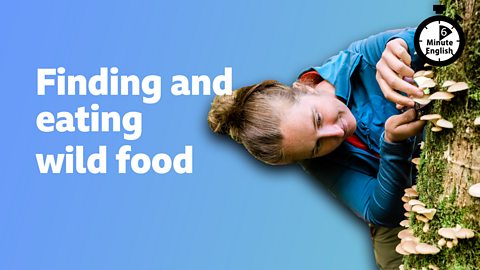
Finding and eating wild food
Episode 251218 / 18 Dec 2025
Would you know how to spot a Death Cap mushroom?
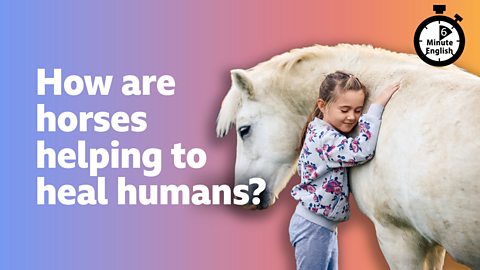
How are horses helping to heal humans?
Episode 251211 / 11 Dec 2025
Could your next therapist be a horse?

What’s your favourite flavour of crisp?
Episode 251204 / 04 Dec 2025
Have you ever tried a crisp sandwich?
How are influencers affecting politics?
Episode 251127 / 27 Nov 2025
Do you follow politics on social media?

Do you have good dining etiquette?
Episode 251120 / 20 Nov 2025
What's the worst thing someone can do while eating?



Is breakfast the most important meal of the day?
Episode 251030 / 30 Oct 2025
Do you usually have a big breakfast, or do you skip it?
Did a civilisation exist on Earth before humans?
Episode 251023 / 23 Oct 2025
Have you ever heard of the Silurian hypothesis?

Are we too fixated on protein?
Episode 251016 / 16 Oct 2025
Is our enthusiasm for protein taking our attention away from other important food groups, like fibre?

What makes a good citizen?
Episode 251009 / 09 Oct 2025
Is a good citizen someone who votes and follows the law? Or is there something more to it?

Have you ever seen a whale?
Episode 251002 / 02 Oct 2025
How have humans treated whales throughout history?
The criminal trade in ancient objects
Episode 250925 / 25 Sep 2025
How are criminals making money from stolen artefacts?

Would you like a robot companion?
Episode 250918 / 18 Sep 2025
How would you feel if you shared your home with a robot?
What causes hearing loss?
Episode 250911 / 11 Sep 2025
As we get older, our hearing naturally gets worse. But what are the causes of this decline?
The joys of writing lists
Episode 250904 / 04 Sep 2025
Shopping lists, to-do lists, check lists – when was the last time you made, or followed, a list?

What's it like to be a twin?
Episode 250828 / 28 Aug 2025
What question would you most like to ask a twin?

What's your favourite snack?
Episode 250821 / 21 Aug 2025
Do you prefer healthy, homemade snacks... or modern, packaged goodies?

Grown-ups buying kids’ toys
Episode 250814 / 14 Aug 2025
Did you know that some adults play with children's toys too?


What is the manosphere?
Episode 250731 / 31 Jul 2025
Have you ever come across a so-called masculinity influencer on social media?
How can we help wild bees?
Episode 250717 / 17 Jul 2025
Did you know that many species of wild bees are endangered in the UK? What can we do to help?

Do you need to declutter your home?
Episode 250710 / 10 Jul 2025
Is your home neat and tidy? Or is it full of stuff you no longer need? You might need to declutter!

How do you say sorry?
Episode 250703 / 03 Jul 2025
Different cultures apologise in different ways. How do people say sorry where you are from?
Are plant-based substitutes healthier than meat?
Episode 250626 / 26 Jun 2025
Processed meat has been shown to be bad for our health, but are plant-based meat substitutes any healthier?
How do babies communicate?
Episode 250619 / 19 Jun 2025
What does it mean when newborn babies wave their arms and legs about?
Can climate change affect our mental health?
Episode 250612 / 12 Jun 2025
Is your mental health being affected by climate change?
How important is politeness?
Episode 250605 / 05 Jun 2025
How would you greet somebody you didn't know?

What's your favourite kind of noodle?
Episode 250529 / 29 May 2025
How much do you know about noodles?

Which cooking oil is the best?
Episode 250515 / 15 May 2025
Are some cooking oils better for your health than others?
Should animals be kept in zoos?
Episode 250508 / 08 May 2025
Are zoos an important scientific resource, or an unnecessary abuse of animal rights?
Can cows prevent wildfires?
Episode 250501 / 01 May 2025
How are cows helping to prevent wildfires in Spain?
How climate change affects animal migration
Episode 250424 / 24 Apr 2025
How is climate change affecting animal migration?

Can AI solve crime?
Episode 250417 / 17 Apr 2025
Could artificial intelligence be used to solve a murder?

Are we getting more allergic to things?
Episode 250403 / 03 Apr 2025
Do you know anyone who has 50+ allergies?
Can we boost the immune system?
Episode 250327 / 27 Mar 2025
Can ginger shots, turmeric and cold water swimming boost your immune system?


Should we eat less rice?
Episode 250313 / 13 Mar 2025
Is it possible to grow rice in a more eco-friendly way?


Young women on social media
Episode 250220 / 20 Feb 2025
How do women in different countries experience the online world?

Rage bait: How online anger makes money
Episode 250213 / 13 Feb 2025
How do people make money from rage bait?


How the world learned to love fast food
Episode 250123 / 23 Jan 2025
How did fast food spread around the world?

Which country has the best schools?
Episode 250116 / 16 Jan 2025
How do you compare education systems?

Eating 50-year-old stew
Episode 250109 / 09 Jan 2025
Would you eat a stew that's been in a pot for 50 years?
Are you drinking enough water?
Episode 250102 / 02 Jan 2025
How much water do you drink every day? Is it enough?