6 Minute English
Intermediate level
The hidden life of buffets
Episode 230112 / 12 Jan 2023

Introduction
Buffets are big meals when people can eat as much as they want. They are a feature of many cultures.Neil and Sam discuss buffet meals and the history behind them. As usual, they teach related vocabulary as well.
This week's question
Buffets are present in countries all around the world. In which country did buffets begin?
a) The United States of America
b) Sweden
c) China
Listen to the programme to find out the answer.
Vocabulary
eyes bigger than your belly
(idiom) used when someone has taken more food than they can eat
pile up
gather a large quantity of something into a one place to form a pile
get your money's worth
get good value for the money you have spent
vicious circle
problem or difficult situation which has the effect of creating new problems which then make the original situation even worse
knock your socks off
(idiom) amaze and impress someone
caterer
person or company which provides food and drink for special social occasions
TRANSCRIPT
Neil
Hello. This is 6 Minute English from BBC Learning English. I’m Neil.
Sam
And I’m Sam.
Neil
Have you ever been to an all-you-can-eat buffet, Sam? You know – a meal in a restaurant where you can eat as much food as you like.
Sam
Yes, I went to an Indian buffet once. I didn’t eat all day before the meal, but I only managed to finish three or four plates…well, maybe five!
Neil
It sounds like your eyes were bigger than your belly, or stomach – a phrase describing someone who has taken more food than they can eat. In this programme we’ll be discussing buffets – a feast of many different food dishes where diners are allowed to eat as much as they want – or as much as their stomachs will allow. And, of course, we’ll be learning some new vocabulary as well.
Sam
The popularity of buffets is booming, especially in Middle Eastern and Asian countries where the variety of foods means there’s something for everyone. But feasts are big and boastful - usually too much is cooked, and buffets have been criticised for waste.
Neil
We’ll hear more soon, but first I have a question for you, Sam. The word ‘buffet’ originated from the French name for the table on which food was served, but buffets themselves don’t come from France. So in which country did buffets begin?
a) The United States of America
b) Sweden
c) China
Sam
Well, the US is famous for supersizing food so I’ll guess a) America.
Neil
OK, Sam. We’ll find out the answer later in the programme. John Wood, owner of cooking company Kitchen Cut, knows a lot about buffets – he used to run a one thousand seat breakfast buffet at the five-star Jumeirah Beach Hotel in Dubai. Here John shares his observations on human buffet behaviour with BBC World Service programme, The Food Chain.
John Wood
There are different people that treat buffets in different ways. Some people think this is a great opportunity to try little bits and lots of everything, and we come back as many times as I like. And other people just - whether they don't like getting up and down, which is understandable from their table - just want to pile it high, and people they want to getvalue for money. So, if you're paying $100, $200 a head for a buffet, you're gonna pile it up high and take the most expensive things you can you know, and get your money's worth.
Sam
John says buffet diners want to get their money’s worth – get good value for the money they spend, so they often pile up food on their plate. If you pile something up, you gather a large amount of it into one place to build what’s called a pile.
Neil
But buffets are not just about eating until you explode - they’re also an opportunity to show off to your friends. Weddings are big in India, and usually include a buffet. The richer the people getting married, the bigger the buffet, sometimes inviting as many as five thousand guests. If each guest eats around six dishes, we’re taking about a seriously big buffet!
Sam
Sandeep Sreedharan is a wedding caterer from Goa in South India – he owns a company which provides the food and drink for special social occasions. Here he talks with Ruth Alexander, presenter of BBC World Service, The Food Programme, about organising an Indian wedding buffet:
Sandeep Sreedharan
It's a very vicious circle, I think, right? Everybody wants to overwhelm everybody around you.
Ruth Alexander
OK. That's the aim. They are out to impress - they want to ‘wow’ the guests - knock their socks off.
Sandeep Sreedharan
Knock their socks off. They should just go back saying, ‘I couldn't eat even half of it!’, you know. Some people just come for eating. They don't even worry about who's wedding is it… They know that… ‘Who's the caterer? Ah, these guys are catering. Oh my God, this is gonna be great.
Sam
Wedding buffets are designed to amaze and overwhelm the guests with their huge displays of food. They need to ‘wow’ the guests, or knock their socks off – an idiom meaning to amaze and impress someone.
Neil
The problem is that no matter how extravagant and expensive one buffet is, the next one has to be even more impressive, something Sandeep calls a vicious circle – a difficult situation which has the effect of creating new problems which then make the original situation even worse.
Sam
It seems the secret to enjoying a buffet is trying a little bit of everything, without stuffing yourself until you can’t move – although in the past, I think, that was exactly the idea.
Neil
OK, it’s time to reveal the answer to my question - where did the buffets originally come from?
Sam
I guessed it was from the United States. Was I right?
Neil
That was… the wrong answer, I’m afraid, Sam. In fact buffets are thought to have come from Sweden in the Middle Ages.
Sam
OK, let’s recap the vocabulary we’ve learned, starting with the expression, eyes bigger than your belly, or eyes bigger than your stomach,used when someone has taken more food than they can eat.
Neil
If you pile up your plate,you gather a large quantity of food together into a pile.
Sam
The phrase to get your money’s worth means to get good value for the money you have spent .
Neil
A vicious circle is a problematic situation, having the effect of creating new problems which then make the first situation even worse.
Sam
The idiom to knock your socks off means to wow, amaze or impress someone.
Neil
And finally, a caterer is a person or company which provides food and drink for special social occasions. Once again, our six minutes are up. Bye for now!
Sam
Bye!
Latest 6 Minute English
Sexism: Female farmers fighting back
Episode 231228 / 28 Dec 2023
How can female farmers beat rural sexism?


Invasive species: Why don't we eat them?
Episode 231207 / 07 Dec 2023
Could we eat invasive species?

What and where is Little Italy?
Episode 231130 / 30 Nov 2023
Mozzarella, ricotta, cannolis and focaccia... Where are we? Little Italy of course!

Social media and teenage health
Episode 231123 / 23 Nov 2023
What are the health risks of social media for teenagers?







Sounds that make you want to scream
Episode 230928 / 28 Sep 2023
Are there any sounds you find upsetting?




The stories behind our names
Episode 230831 / 31 Aug 2023
What do our names reveal about our culture and family history?


Are you unhappy at work?
Episode 230817 / 17 Aug 2023
Does work leave you feeling bored and exhausted?





Is it wrong to eat plants?
Episode 230629 / 29 Jun 2023
Should we treat plants with the same consideration we treat animals with?

The art of subtitling
Episode 230608 / 08 Jun 2023
Hear how subtitles can help bring TV and movies to life
Ecotourism: good or bad?
Episode 230601 / 01 Jun 2023
We discuss the growing popularity of ecotourism.

Can climate change cause more disease?
Episode 230525 / 25 May 2023
With warming temperatures, mosquitos are now spreading to new areas, including Europe.


Ice and the origins of life on Earth
Episode 230504 / 04 May 2023
We talk about an essential element for life to thrive.

Women in politics
Episode 230427 / 12 Apr 2023
We discuss some of the reasons why women make up only 26% of the world's politicians.
What's the point of museums?
Episode 230420 / 20 Apr 2023
We discuss the role of museums in the 21st century and the items taken from different countries.

How culture affects sadness
Episode 230413 / 11 Apr 2023
What ways do you think culture can influence sadness?
Would you eat a Kalette?
Episode 230406 / 06 Apr 2023
Hear about a new kind of vegetable making an entrance in British kitchens

Do you get jealous easily?
Episode 230330 / 06 Mar 2023
Let's talk about the ugly green-eyed monster

Food and mood
Episode 230316 / 16 Mar 2023
We look at the link between what you eat and how you feel.
How to talk to a climate denier
Episode 230309 / 09 Mar 2023
The dos and don'ts of trying to discuss science with someone who doesn't believe in it
Losing your mother tongue
Episode 230302 / 02 Mar 2023
Hear the story of a woman who replaced her native Czech for English.
The health benefits of apples
Episode 230223 / 23 Feb 2023
Could 'an apple a day keep the doctor away'?

Doomscrolling: Why do we do it?
Episode 230209 / 27 Jan 2023
What is doomscrolling and why are we attracted to bad news? Listen to find out!
Exercise for the lazy
Episode 230202 / 22 Jan 2023
What's the least amount of exercise you should do to stay healthy?

Can AI have a mind of its own?
Episode 230126 / 26 Jan 2023
Hear about the software engineer who became 'friends' with his computer
Climate change: Are there too many people?
Episode 230119 / 13 Jan 2023
Does the size of your carbon footprint depend on where in the world you were born? Listen to find out!
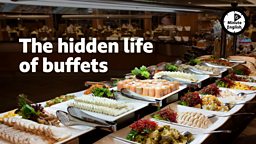
The hidden life of buffets
Episode 230112 / 12 Jan 2023
Neil and Sam discuss buffet meals and the history behind them.

Songwriting
Episode 230105 / 05 Jan 2023
Writing a memorable song isn't easy. So is there an art to good songwriting?