Asylum hotel firm hands back almost £14m in profits amid anger over service

 Getty Images
One of the UK's biggest asylum accommodation providers, Mears, has had to return £13.8m to the Home Office after making more profit than its contracts allow.
The company, which also provides asylum services in Scotland and the north of England, recorded its highest rate of profit in Northern Ireland.
The BBC has seen complaints from more than a dozen families and individuals who lived in Mears' accommodation in Northern Ireland.
Mears said repayments were "appropriate and agreed" and that all accommodation is approved and regularly inspected by the Home Office.
A spokesperson told the BBC they had not been given enough detail to investigate the specific claims made by residents.
How are they profiting?
The Home Office pays Mears a fee for each asylum seeker it provides food, shelter and services to.
The company's overall rate of profit on these contracts is capped at around 6%, but Mears' operations across the UK exceeded that limit to the tune of £13.8m.
Mears recorded its highest rate of profit in Northern Ireland, peaking at 17%.
That was partly due to the fact asylum seekers in Northern Ireland don't have to be dispersed among different local authorities like they do in the rest of UK, reducing transport and administrative costs.
The company said it is working to end its use of hotels with around 246 asylum seekers currently housed in them in Northern Ireland.
'This profit was at their expense'
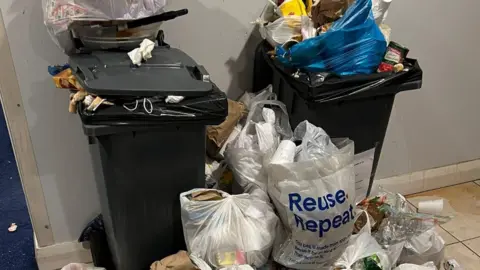
Former residents of Mears' accommodation told BBC News NI they believed the company made its profits by denying them essentials like enough food, heating and access to hygiene.
A father who lived with his disabled children in one of the accommodations spoke to BBC News NI through an interpreter and on condition of anonymity.
Ali, which is not his real name, said his two children, who suffer from spinal muscular atrophy, had declining health while living at the hotel.
He told BBC News NI they arrived able to walk but by the time they left, they couldn't walk.
"Because of this space, because of the food provided for them, because the toilet wasn't suitable for disabilities. We had to carry them, me and my wife.
"I'm so sad and angry because they're providing service for vulnerable people. I have two vulnerable kids and this profit that they make and this money that they save, it was at their expense.
"They used us to make this money, and they affected my children's health," he said.
'Begging for eggs and milk'
 Handout
Noor, not her real name, was placed in a Belfast hotel that she claims was unclean and had mould.
Her teenage daughter uses a wheelchair and has complex needs, meaning she requires special meals and could not eat the standard food offered by Mears.
When Noor complained, Mears said adjustments could not be made without an occupational health assessment which had a five-month waiting list.
Her daughter's health rapidly declined.
She was later diagnosed with malnutrition from her poor intake of food. Her doctor urged Mears to relocate her to accommodation where alternative food could be made.
Afterwards the family was moved to accommodation with cooking facilities, but Noor claims Mears often failed to give them enough groceries, or the items they needed.
"When we gave them list of the stuff that my daughter will eat, they wouldn't respond, and they will bring only the stuff they want."
When a pre-existing illness became more acute her daughter ended up in intensive care in hospital.
Noor believes it was linked to her malnourishment.
"It was a very tough and horrible experience for my daughter.
"What I hear now about them making all this money, it makes me so sad and angry that I was at that time begging them for eggs and milk and they wouldn't provide it for my children."
'Reasonable adjustments'
A Mears spokesperson told the BBC it responded to and fulfilled requests for specific food items in hotels. It rejected claims it failed to act on Noor's later requests for additional food, saying it was not responsible for providing groceries to those in dispersed accommodation.
The spokesperson said its role was limited to that of accommodation provider, adding that delays in health assessments were issues for the public bodies responsible.
Mears added that it works "to ensure that families with a child who has a disability or complex needs receive tailored support", making "every reasonable adjustment" possible.
The accommodation provider said all accommodation is approved and regularly inspected by the Home Office, whose "quarterly surveys of people living in Mears accommodation show overall satisfaction levels of around 90%".
It said its menus meet NHS nutritional standards and that any dietary requirements including allergies are recorded.
It said overall "feedback on food has been good and we take on board any comments and requests".
'Reality of life in hotels misunderstood'
 Getty Images
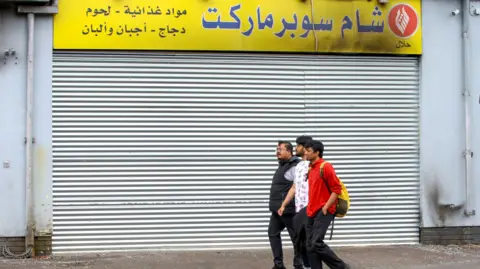
Hotel accommodation, leased by asylum accommodation providers, has been unpopular both with local communities and those advocating for asylum seekers.
Liz Griffith, head of migration justice at the Law Centre NI, said that the reality of life in hotels was misunderstood.
"When you hear that kind of money you think maybe asylum seekers must be living in luxury. That is absolutely not the case," she said.
Describing the accommodation as "basic" and "spartan", she said it was "absolutely not suitable" for "families who have a child with additional special needs".
'Money should be supporting public services'
A recent report by the Home Affairs Committee said the wider system of asylum accommodation provision has been marked by "flawed contracts" and "incompetent delivery".
It said hotels had been used as a "go-to" solution, driving increased profits for the companies involved.
The expected cost of these contracts from 2019 to 2029 has more than tripled, rising from £4.5bn to £15.3bn.
Mears holds an estimated £2.5bn in contracts, £0.4bn of them in Northern Ireland.
The report also criticised the time taken for the Home Office to recoup the £13.8m excess profit recorded by Mears.
"This money should be supporting the delivery of public services, not sitting in the bank accounts of private businesses," it said.
Mears said it works on an open book basis with the Home Office and, following an independent audit, had made agreed repayments to the government.