6 Minute English
ระดับกลาง
Did Taylor Swift fans cause an earthquake?
Episode 241010 / 10 Oct 2024

_____________________________________________________________________________________________________
Download a free 6 Minute English worksheet!
Download a free transcript!
______________________________________________________________________________________________________
Try more episodes of 6 Minute English:
______________________________________________________________________________________________________
Introduction
Could 73,000 Taylor Swift fans cause an earthquake? Phil and Georgie discuss this and teach you some useful vocabulary.
This week's question
In 1992, the band Madness caused two earthquakes that saw local residents evacuated from their homes. But at which London venue did the concert take place? Was it:
a) Hyde Park?
b) The Royal Albert Hall? or
c) Finsbury Park?
Listen to the programme to hear the answer.
Vocabulary
(someone or something) rocks your world
someone or something has a positive effect on you, making your life enjoyable
peak
the highest point of something
in unison
together, at the same time
flex
bend without breaking
not be in the same league
(idiom) not nearly as good or important as someone or something else
comparable
similar (in size, amount or quality) to something else
TRANSCRIPT
Note: This is not a word-for-word transcript.
Phil
Hello. This is 6 Minute English from BBC Learning English. I'm Phil.
Georgie
And I'm Georgie.
Phil
If you're a 'Swiftie', that's a fan of pop star, Taylor Swift, her music rocks your world.
Georgie
I like that phrase, 'rock your world', Phil. It means that something makes your life enjoyable, right?
Phil
Well, yes but actually no, Georgie. I mean, Taylor Swift literally rocks the world! At a recent concert in Edinburgh, as part of Taylor Swift's 'Eras' tour, her fans' energetic dancing literally moved the Earth, with seismic activity usually associated with earthquakes detected four miles away!
Georgie
Yes, it's hard to believe, but in this programme we'll be hearing about the 'Swift-quake', a powerful force like an earthquake, coming not from nature, but from a pop concert! And, as usual, we'll be learning some useful new vocabulary as well.
Phil
Great. But first I have a question for you, Georgie. Actually, Taylor Swift's Edinburgh show wasn't the first music concert to trigger seismic waves. In 1992, the band Madness caused two earthquakes that saw local residents evacuated from their homes. But at which London venue did the concert take place? Was it:
a) Hyde Park?
b) The Royal Albert Hall? or
c) Finsbury Park?
Georgie
I'll guess the concert was held at the Royal Albert Hall.
Phil
OK, Georgie, I'll reveal the correct answer at the end of the programme. Following Taylor Swift's Edinburgh concert, seismologists Emma Greenough and James Panton from Cardiff University, wanted to see if the same thing would happen at Taylor's concert in Cardiff. Seismologists are scientists who study earthquakes and seismic waves. Emma and James set up their equipment to monitor and record ground motion as the concert got started, as James explains here to Marnie Chesterton, presenter of BBC Radio 4 programme, 'Inside Science':
Marnie Chesterton
Tell me about the peak on this graph that you're seeing, and what that actually corresponds to.
James Panton
In this top graph of the red wiggly line, we're looking at the ground velocity in essentially metres per second. So, that's the velocity that the ground is vibrating up and down.
Marnie Chesterton
So, this is literally people stamping up and down.
James Panton
Yes, so this is all of the energy combined from the 73,000 people in the stadium, jumping in unison and stamping in unison.
Marnie Chesterton
James, the British Geological Survey recorded 23.4 nanometres of movement in Edinburgh. What's that actually mean?
James Panton
So, what that means is that they recorded the ground flexing up and down by a distance of 23 nanometres.
Georgie
James's equipment recorded seismic movement when Taylor Swift started to sing. Her hit song, Cruel Summer, created a peak - the highest point - in the graph which James's machine was drawing. The peak was made by thousands of Swifties jumping up and down in unison, together and at the same time, creating something like a mini earthquake.
Phil
The seismologists measured a ground movement of 23 nanometres. That may not sound much, but remember this is the earth itself actually flexing or bending without breaking.
Georgie
So, the ground is shaking, music is blasting, and thousands of fans are dancing. But does this qualify as an earthquake, scientifically speaking? Here's James Panton and Marnie Chesterton again for BBC Radio 4's, Inside Science:
Marnie Chesterton
James, impressive as this is to see coming up on your seismograph, this is not the same league really as an earthquake.
James
No, definitely not. There have been some people who have tried to convert the energy output from concerts into a local magnitude scale to make it comparable to an earthquake, and when that's happened, we find magnitudes that are generally less than one.
Phil
Sadly, the answer to Georgie's question is 'no' – the Taylor Swift concert wasn't technically an earthquake. Marnie says the concert was not in the same league, an idiom meaning not nearly as good or important as something else.
Georgie
Yes, the energy created by the music's sound waves and thousands of fans jumping did move the earth, but not in a way that's comparable, or similar, to a real earthquake. By definition, an earthquake must break the earth's crust, and is caused by either the movement of tectonic plates or a volcano. Officially, Taylor Swift didn't cause an earthquake, but for the Swifties it probably felt like one!
Phil
All of which brings us back to my question, Georgie. I asked you about another earth-shattering concert involving the British band, Madness, but where in London did the show take place?
Georgie
And I guessed it was at The Royal Albert Hall.
Phil
Which was the wrong answer, I'm afraid, Georgie. In fact, the concert happened in Finsbury Park. OK, let's recap the vocabulary we've learned in this programme starting with the phrase, rock your world, meaning that someone or something has a positive effect on you, making your life enjoyable.
Georgie
A peak is the highest point of something.
Phil
When things happen in unison, they happen together, at the same time.
Georgie
To flex means to bend without breaking.
Phil
If you say something is not in the same league as something else, you mean it's nowhere near as good or important.
Georgie
And finally, the adjective comparable means similar in size, amount, or quality. Once again, our six minutes are up, but remember to join us again next time for more trending topics and useful vocabulary, here at 6 Minute English. Goodbye for now!
Phil
Bye!
6 Minute English ล่าสุด
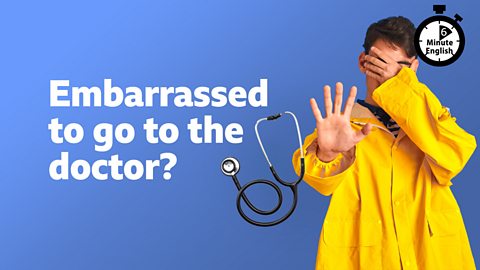
Embarrassed to go to the doctor?
Episode 241226 / 26 Dec 2024
Have you ever been embarrassed to go to the doctor?
Call centres: Are you talking to AI?
Episode 241219 / 19 Dec 2024
Have you ever phoned up a company and had your call held in a queue? Could AI make this less painful?

Making 'mum friends'
Episode 241212 / 12 Dec 2024
Is making new ‘mum friends’ the positive experience it’s often described as?
Can you trust ancestry DNA kits?
Episode 241205 / 05 Dec 2024
Are DNA ancestry tests a reliable way to trace your ancestry?
How babies learn to talk
Episode 241128 / 28 Nov 2024
What do babies need to learn to do to be able to talk?

The bond between sisters
Episode 241114 / 14 Nov 2024
Are the stereotypes about older and younger sisters true?


Why you need a good night's sleep
Episode 241031 / 31 Oct 2024
Why is it so important to get a good night's sleep?
Divorce: Why does it happen?
Episode 241024 / 24 Oct 2024
How is divorce talked about in different countries?
Did Taylor Swift fans cause an earthquake?
Episode 241010 / 10 Oct 2024
Did Taylor Swift move the Earth?


Learning a new food culture
Episode 240926 / 26 Sep 2024
Would you find it different to adapt to a new food culture?

Saving water in the driest place on Earth
Episode 240919 / 19 Sep 2024
How do farmers in the driest place on Earth manage to grow crops? With this solution!



Chocolate: Meet a real Willy Wonka
Episode 240829 / 29 Aug 2024
Would you like to be a chocolate maker, like Roald Dahl's Willy Wonka?

Why we love dumplings
Episode 240822 / 22 Aug 2024
Warning! This episode might make you very hungry...

Kids and climate change
Episode 240815 / 15 Aug 2024
What are young people's thoughts on climate change?

The science of falling in love
Episode 240801 / 01 Aug 2024
What's really happening in our brain when we fall in love?
AI to reduce animal testing
Episode 240718 / 18 Jul 2024
Could AI reduce the need for animal testing?

Why read books, not screens?
Episode 240718 / 25 Jul 2024
Why is it better to read from a book than a screen?

The school that puts the kids in charge
Episode 240711 / 11 Jul 2024
What happens when you put the kids in charge of the school?

What can we learn from toddlers?
Episode 240704 / 04 Jul 2024
Learn to speak to yourself in the way that toddlers do!
How learning to read changes lives
Episode 240627 / 27 Jun 2024
How can literacy change people's lives?
Building a better world with wood?
Episode 240620 / 20 Jun 2024
How can buildings made from wood help our mental health?

How names can tell painful stories
Episode 240613 / 13 Jun 2024
Could our name have painful baggage?
E-rickshaws driving away pollution
Episode 240606 / 06 Jun 2024
Could E-rickshaws give us cleaner air?




Bitter food, better health?
Episode 240509 / 09 May 2024
Could bitter foods be better for your health?




Disability in music and theatre
Episode 240321 / 21 Mar 2024
Learn about the people who are making it easier for disabled musicians and music fans to perform and see live music


Sewing to fight period poverty
Episode 240307 / 07 Mar 2024
Period poverty affects over 500 million people worldwide. How can a volunteer project help?
Plastic waste eaten by enzymes
Episode 240229 / 29 Feb 2024
Plastics can be difficult to recycle. Could a recently discovered enzyme help?
Feed your brain
Episode 240222 / 22 Feb 2024
Food is fuel for our brains. So, what should we be eating?

Food for new mums
Episode 240215 / 15 Feb 2024
Having a baby is exhausting! What do mothers need to eat after giving birth?

Fighting loneliness with soup
Episode 240208 / 08 Feb 2024
Hear how a project in the Netherlands is helping in the fight against loneliness


How the language of menus matters
Episode 240125 / 25 Jan 2024
Why is the language used on menus important?