6 Minute English
Intermediate level
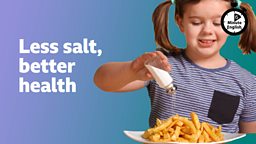
Less salt, better health
Episode 240905 / 05 Sep 2024

_____________________________________________________________________________________________________
Download a free 6 Minute English worksheet!
Download a free transcript!
Learn more about food
______________________________________________________________________________________________________
Try more episodes of 6 Minute English:
______________________________________________________________________________________________________
Introduction
Are we all eating too much salt? Neil and Georgie teach you some useful vocabulary.
This week's question
Which of the following everyday foods contains most salt?
a) meat?
b) bread? or,
c) pasta?
Listen to the programme to hear the answer.
Vocabulary
preserve (food)
treat food to prevent it from rotting so that it can be stored and eaten later
nomads
people who travel from one place to another, often with animal livestock, rather than living in one place all the time
dairy products
food which is made from milk, for example butter, cheese or yoghurt
take a step back
(idiom) temporarily withdraw from a situation in order to think about it more calmly
look at the bigger picture
(idiom) consider the overall meaning of something as opposed to specific details
premature
happening too soon or before the proper time
TRANSCRIPT
Note: This is not a word-for-word transcript.
Neil
Hello. This is 6 Minute English from BBC Learning English. I'm Neil.
Georgie
And I'm Georgie. Do you know the five tastes which give food its flavour, Neil? There's sweet…
Neil
Yes… and er, sour, bitter…
Georgie
And salty! Everyone knows that salt makes food taste better by enhancing the flavours of the ingredients. There's even a phrase you'll see in many recipes – 'add a pinch of salt'.
Neil
But exactly how much salt makes a 'pinch' of salt? The World Health Organisation, or WHO, recommends a daily salt intake of less than 5g, about the same as a teaspoon. In fact, the human body needs salt - at least 1g a day to survive. But most of us eat far too much, increasing the risk of high blood pressure and heart disease. In this programme, we'll be asking: how much salt is too much? And, as usual, we'll be learning some useful new vocabulary as well.
Georgie
Great! But first I have a question for you, Neil. The reason it's difficult to know how much salt you consume is that it's hidden in food, especially processed food. So, which of the following everyday foods do you think contains most salt? Is it:
a) meat?
b) bread? or,
c) pasta?
Neil
Well, I'm going to guess that meat is the saltiest of those foods.
Georgie
OK Neil, I'll reveal the answer later in the programme. Marian Sumbiva lives in Astana, the capital of Kazakhstan, a country where people eat, on average, 17g of salt a day. That's more than three times the amount recommended by the WHO. Here, Marian explains some of the reasons behind this to BBC World Service programme, 'The Food Chain':
Marian Sumbiva
We consume lots of salt, which is due to historical heritage, because when we were nomads, for centuries and centuries we travelled and wandered across the steppes, and here, we had to carry lots of meat which could be preserved only adding salt. And even the milk products, the dairy products, are also very much salty for the same reasons.
Neil
Besides improving its flavour, salt can be used to preserve food, to stop it from going bad. Traditionally, people in Kazakhstan were nomads, they travelled from place to place with their animals, rather than living in one place all the time. Treating food with salt gave them enough to eat during the long winter months. They even did it with dairy products, foods which are made from milk, such as cheese and butter.
Georgie
So, salt has a long, and useful, history. But there's a big difference between traditional Kazakh nomads and the health problems associated with modern processed food. When we eat too much salt, the body dilutes it by retaining water. And as a result, the heart works harder to pump liquid around the body. This causes high blood pressure which, over time, can lead to heart disease.
Neil
Globally, governments are fighting this health risk in different ways. The Australian government reduced its recommended salt intake to 6g a day, while the British government has passed laws forcing food companies to reduce the amount of salt they use, and now recommends just 5g of salt per day.
Georgie
Clare Collins is professor of nutrition at the University of Newcastle in Australia. Here, she explains more about these salt recommendations to BBC World Service programme, 'The Food Chain':
Prof Clare Collins
I think you just gotta take a step back, and look at the bigger picture, like arguing whether it should be 5g or 6g… The issue is that around the world, salt intakes are very high, contributing to high blood pressure, contributing to premature strokes, premature mortality, and we need to address it in a way that's culturally appropriate for each country.
Georgie
Instead of arguing over grams of salt, Professor Collins thinks we should take a step back and look at the bigger picture. She uses two idioms: take a step back,which means to temporarily withdraw from a situation in order to think about it more calmly, and look at the bigger picture - to consider the overall meaning of something, not just the details.
Neil
Yes, the problem remains that overconsumption of salt is causing premature health problems, problems which are happening sooner than they should. By limiting salt and processed food, most people can enjoy long, healthy lives. And if you don't like your food unsalted, try adding herbs and spices instead.
Georgie
Well, speaking of salty foods, I think it's time to reveal the answer to my question, Neil. If you remember, I asked you which everyday food contains most salt.
Neil
And I guessed it was meat…
Georgie
Which was… the correct answer! Meat contains the highest amount of salt - around 19% - followed by bread with 14%, and pasta with 7%. OK, let's recap the vocabulary we've learned in this programme starting with the verb 'to preserve food', meaning to do something to stop it rotting so it can be eaten later.
Neil
Nomads are people who travel from one place to another, often with animal livestock, rather than living in one place all the time.
Georgie
Dairy products are foods such as cheese and butter, which are made from milk.
Neil
If you take a step back, you temporarily remove yourself from a situation in order to reevaluate it.
Georgie
The idiom 'to look at the bigger picture' means to consider the overall meaning of something rather than the specific details.
Neil
And finally, the adjective premature describes something which happens too soon or before the proper time. Once again, our six minutes are up. Goodbye for now!
Georgie
Bye!
Correction: In the programme we say that meat contains 19% salt, making it the saltiest type of everyday food. In fact it’s some processed meat and meat dishes that contains 19% salt, according to the British Heart Foundation.
Latest 6 Minute English
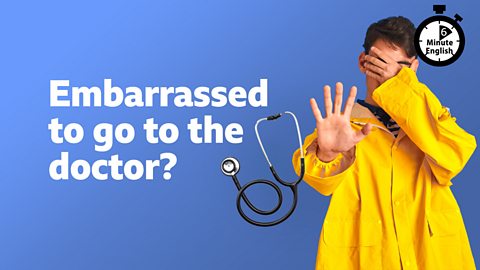
Embarrassed to go to the doctor?
Episode 241226 / 26 Dec 2024
Have you ever been embarrassed to go to the doctor?

Call centres: Are you talking to AI?
Episode 241219 / 19 Dec 2024
Have you ever phoned up a company and had your call held in a queue? Could AI make this less painful?

Making 'mum friends'
Episode 241212 / 12 Dec 2024
Is making new ‘mum friends’ the positive experience it’s often described as?
Can you trust ancestry DNA kits?
Episode 241205 / 05 Dec 2024
Are DNA ancestry tests a reliable way to trace your ancestry?

How babies learn to talk
Episode 241128 / 28 Nov 2024
What do babies need to learn to do to be able to talk?

The bond between sisters
Episode 241114 / 14 Nov 2024
Are the stereotypes about older and younger sisters true?


Why you need a good night's sleep
Episode 241031 / 31 Oct 2024
Why is it so important to get a good night's sleep?

Divorce: Why does it happen?
Episode 241024 / 24 Oct 2024
How is divorce talked about in different countries?

Did Taylor Swift fans cause an earthquake?
Episode 241010 / 10 Oct 2024
Did Taylor Swift move the Earth?
Learning a new food culture
Episode 240926 / 26 Sep 2024
Would you find it different to adapt to a new food culture?

Saving water in the driest place on Earth
Episode 240919 / 19 Sep 2024
How do farmers in the driest place on Earth manage to grow crops? With this solution!

Chocolate: Meet a real Willy Wonka
Episode 240829 / 29 Aug 2024
Would you like to be a chocolate maker, like Roald Dahl's Willy Wonka?
Why we love dumplings
Episode 240822 / 22 Aug 2024
Warning! This episode might make you very hungry...
Kids and climate change
Episode 240815 / 15 Aug 2024
What are young people's thoughts on climate change?


The science of falling in love
Episode 240801 / 01 Aug 2024
What's really happening in our brain when we fall in love?
AI to reduce animal testing
Episode 240718 / 18 Jul 2024
Could AI reduce the need for animal testing?

Why read books, not screens?
Episode 240718 / 25 Jul 2024
Why is it better to read from a book than a screen?

The school that puts the kids in charge
Episode 240711 / 11 Jul 2024
What happens when you put the kids in charge of the school?

What can we learn from toddlers?
Episode 240704 / 04 Jul 2024
Learn to speak to yourself in the way that toddlers do!
How learning to read changes lives
Episode 240627 / 27 Jun 2024
How can literacy change people's lives?

Building a better world with wood?
Episode 240620 / 20 Jun 2024
How can buildings made from wood help our mental health?

How names can tell painful stories
Episode 240613 / 13 Jun 2024
Could our name have painful baggage?

E-rickshaws driving away pollution
Episode 240606 / 06 Jun 2024
Could E-rickshaws give us cleaner air?



Bitter food, better health?
Episode 240509 / 09 May 2024
Could bitter foods be better for your health?






Disability in music and theatre
Episode 240321 / 21 Mar 2024
Learn about the people who are making it easier for disabled musicians and music fans to perform and see live music


Sewing to fight period poverty
Episode 240307 / 07 Mar 2024
Period poverty affects over 500 million people worldwide. How can a volunteer project help?
Plastic waste eaten by enzymes
Episode 240229 / 29 Feb 2024
Plastics can be difficult to recycle. Could a recently discovered enzyme help?
Feed your brain
Episode 240222 / 22 Feb 2024
Food is fuel for our brains. So, what should we be eating?

Food for new mums
Episode 240215 / 15 Feb 2024
Having a baby is exhausting! What do mothers need to eat after giving birth?
Fighting loneliness with soup
Episode 240208 / 08 Feb 2024
Hear how a project in the Netherlands is helping in the fight against loneliness

How the language of menus matters
Episode 240125 / 25 Jan 2024
Why is the language used on menus important?