6 Minute English
中级
Saving dead languages
Episode 231005 / 05 Oct 2023

____________________________________________________________________________
Learn more about language
____________________________________________________________________________
Introduction
Before the arrival of European settlers, Australia was home to more than 200 languages. Many of these have died out since, but some have now been brought back to life. Barngala is one of these. Neil and Phil discuss the revival of Barngala and teach you some useful vocabulary.
This week's question
Which of the following Aboriginal languages is still spoken in Australia?
a) Djinang?
b) Alawa?
c) Gagadu?
Vocabulary
missionary
person who is sent to a foreign country to teach their religion (often Christianity) to the people living there
heathen
person who belongs to no religion, or to a religion that is not Christianity, Judaism, or Islam
in quotation marks
used to show the actual words spoken or written by someone else; used ironically to show scepticism, disagreement or belief that a word is misused
topsy-turvy
upside down; disorganised
right the wrongs of the past
take action to correct a historical injustice
TRANSCRIPT
Note: This is not a word-for-word transcript.
Neil
Hello. This is 6 Minute English from BBC Learning English. I’m Neil.
Phil
And I’m Phil. And now that we’ve done our hellos, let’s hear some greetings in different languages from around the world. But what do these languages have in common?
Neil
I'm afraid I don't know what they have in common because I don't recognise any of them.
Phil
Well, sadly the one thing uniting these languages is that they’re all endangered. We often hear about animals at risk of extinction, but a recent study by the Australian National University found that out of the world’s 7000 existing languages, half are under threat.
But what can be done to save languages from dying out? That’s what we’ll be discussing in this programme, and, as usual, we’ll be learning some useful new vocabulary as well.
Neil
But first I have a question for you, Phil, and it’s about a country which used to be one of the most linguistically rich places on Earth, Australia. Before European settlers arrived in the 1800s, Australia had over 200 languages spoken by the native Aboriginal people who had lived there for thousands of years. Many Aboriginal languages were destroyed by the brutal laws of the Australian government at the time, however some survived. So, which of the following Aboriginal languages is still spoken today?
Is it:
a) Djinang?
b) Alawa?
c) Gagadu?
Phil
Hmm, I’ll guess it’s Djinang.
Neil
OK, Phil, I’ll reveal the answer later in the programme. The sad truth is that it was no accident that the Aboriginal languages died out, given the cruel treatment of Aboriginal people. Children were removed from their mothers and sent to schools thousands of miles away to learn English, and even today Aboriginal communities experience racism and poverty.
Phil
Another Aboriginal language, Barngarla, officially died in 1960 when its last native speaker, Elder Moonie Davis, passed away. But Barngarla has been brought back to life, and today it’s spoken between parents and children, and even learned in school.
Neil
So, how did a dead language with no living speakers come back to life? The unusual answer involves a dictionary and a professor of linguistics. Here’s Professor Ghil’ad Zuckermann telling his story for BBC World Service programme, People Fixing The World.
Professor Ghil’ad Zuckermann
I had a dictionary written by a German Lutheran Christian missionary in 1844. His name was Clamor Wilhelm Schumann, and he wrote the dictionary with up to 3500 words, which is a lot, because he wanted to Christianise the, in quotation marks, “heathens”. So, it’s a topsy-turvy, righting the wrong of the past, by using a tool written for one goal in order to achieve the diametrically opposite goal.
Phil
Professor Zuckermann found an English-to-Barngala dictionary written in 1844 by a German missionary – a person sent to a foreign country to teach their religion to the people living there. Christian missionaries used the dictionary to teach English to what they called "Aboriginal heathens". Heathen is an old-fashioned word for someone who belongs to no religion, or to a religion that is not Christianity, Judaism, or Islam.
Neil
Professor Zuckermann puts the word “heathen” in quotation marks. The phrase 'in quotation marks' is used to show the actual words someone else has written or said, but here the phrase is used ironically. Professor Zuckermann is questioning the real meaning of the word “heathens”. He is signalling that he doesn’t think Aboriginals are heathens at all, a bit like adding a wink at the end of a sentence so people know you’re not serious.
Phil
What’s ironic is that Professor Zuckermann used the missionary’s dictionary not to spread Christianity and English, but to save an Aboriginal language from extinction, so he calls it 'topsy-turvy', meaning upside down.
Neil
Professor Zuckermann also says he is 'righting the wrongs of the past', a phrase which means doing something to correct a historical injustice from the past, in this case, the destruction of Aboriginal language and culture.
Phil
Speaking your own language is about more than communication, it means knowing your roots and feeling good about yourself. I think it’s time you reveal the answer to your question, Neil.
Neil
OK. Well Phil, you guessed that Djinang was another living Aboriginal language, which was… the correct answer! Right, let’s recap the vocabulary we’ve learned starting with missionary, someone sent to spread their religion to a foreign country.
Phil
'Heathen' is an old-fashioned name for someone who believes in no religion.
Neil
The phrase 'in quotation marks' is used to show the actual words spoken or written by someone else. It can also be used ironically to show scepticism, disagreement or belief that a word is misused.
Phil
'Topsy-turvy' means upside down or disorganised.
Neil
If you right the wrongs of the past you try to correct a historical injustice.
Phil
Once again our six minutes are up. Goodbye for now!
Neil
Bye!
最新 6 Minute English

Sexism: Female farmers fighting back
Episode 231228 / 28 Dec 2023
How can female farmers beat rural sexism?

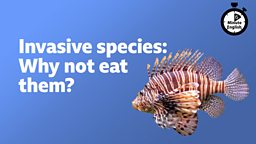
Invasive species: Why don't we eat them?
Episode 231207 / 07 Dec 2023
Could we eat invasive species?

What and where is Little Italy?
Episode 231130 / 30 Nov 2023
Mozzarella, ricotta, cannolis and focaccia... Where are we? Little Italy of course!

Social media and teenage health
Episode 231123 / 23 Nov 2023
What are the health risks of social media for teenagers?






Sounds that make you want to scream
Episode 230928 / 28 Sep 2023
Are there any sounds you find upsetting?




The stories behind our names
Episode 230831 / 31 Aug 2023
What do our names reveal about our culture and family history?


Are you unhappy at work?
Episode 230817 / 17 Aug 2023
Does work leave you feeling bored and exhausted?







Is it wrong to eat plants?
Episode 230629 / 29 Jun 2023
Should we treat plants with the same consideration we treat animals with?


The art of subtitling
Episode 230608 / 08 Jun 2023
Hear how subtitles can help bring TV and movies to life
Ecotourism: good or bad?
Episode 230601 / 01 Jun 2023
We discuss the growing popularity of ecotourism.
Can climate change cause more disease?
Episode 230525 / 25 May 2023
With warming temperatures, mosquitos are now spreading to new areas, including Europe.



Ice and the origins of life on Earth
Episode 230504 / 04 May 2023
We talk about an essential element for life to thrive.

Women in politics
Episode 230427 / 12 Apr 2023
We discuss some of the reasons why women make up only 26% of the world's politicians.
What's the point of museums?
Episode 230420 / 20 Apr 2023
We discuss the role of museums in the 21st century and the items taken from different countries.

How culture affects sadness
Episode 230413 / 11 Apr 2023
What ways do you think culture can influence sadness?

Would you eat a Kalette?
Episode 230406 / 06 Apr 2023
Hear about a new kind of vegetable making an entrance in British kitchens

Do you get jealous easily?
Episode 230330 / 06 Mar 2023
Let's talk about the ugly green-eyed monster


Food and mood
Episode 230316 / 16 Mar 2023
We look at the link between what you eat and how you feel.

How to talk to a climate denier
Episode 230309 / 09 Mar 2023
The dos and don'ts of trying to discuss science with someone who doesn't believe in it

Losing your mother tongue
Episode 230302 / 02 Mar 2023
Hear the story of a woman who replaced her native Czech for English.

The health benefits of apples
Episode 230223 / 23 Feb 2023
Could 'an apple a day keep the doctor away'?

Doomscrolling: Why do we do it?
Episode 230209 / 27 Jan 2023
What is doomscrolling and why are we attracted to bad news? Listen to find out!

Exercise for the lazy
Episode 230202 / 22 Jan 2023
What's the least amount of exercise you should do to stay healthy?

Can AI have a mind of its own?
Episode 230126 / 26 Jan 2023
Hear about the software engineer who became 'friends' with his computer

Climate change: Are there too many people?
Episode 230119 / 13 Jan 2023
Does the size of your carbon footprint depend on where in the world you were born? Listen to find out!

The hidden life of buffets
Episode 230112 / 12 Jan 2023
Neil and Sam discuss buffet meals and the history behind them.

Songwriting
Episode 230105 / 05 Jan 2023
Writing a memorable song isn't easy. So is there an art to good songwriting?