6 Minute English
中级
Restoring trust in science
Episode 220630 / 30 Jun 2022

Introduction
Recent events like the Covid pandemic and climate crisis have put scientists under pressure from critics motivated by political views. American Astronomer Neil deGrasse Tyson wants people to understand the difference between opinion and fact. Sam and Rob talk about the topic and teach you related vocabulary.
This week's question
For centuries, the Earth was thought to be the centre of the Universe - but who was the first astronomer to have the correct idea that, in fact, the Earth and the planets revolve around the Sun?
a) Nicolaus Copernicus
b) Isaac Newton
c) Galileo Galilei
Listen to the programme to find out the answer.
Vocabulary
cosmology
the study of the origin and nature of the universe
double-check
make certain something is correct by carefully examining it again
duplicate
repeat or copy something in exactly the same way
cross the t’s and dot the i’s
(idiom) pay close attention to the details of the activity or task you are doing
regurgitate
repeat something without properly understanding it
objective truth
scientifically proven truth about the natural world which is not influenced by human bias, opinions or emotion
Transcript
Note: This is not a word-for-word transcript.
Sam
Hello. This is 6 Minute English from BBC Learning English. I’m Sam.
Rob
And I’m Rob.
Sam
Once in a while along comes a scientist who captures the public imagination and communicates their passion for science in an exciting and understandable way.
Rob
In this programme, we’ll be meeting one of America’s best-known popular scientists. Astronomer Neil deGrasse Tyson. He’s a man with a gift for communicating and inspiring people with his television shows and books on cosmology – the study of the origin and nature of the universe.
Sam
In his day job he runs the Hayden Planetarium in New York’s American Museum of Natural History, but Neil’s real mission is to encourage scientific thinking among the American public.
Rob
We’ll be hearing from the famous astronomer, and learning some new vocabulary, soon. But first I have a question for you, Sam. Science is ever-changing with new discoveries updating our understanding all the time. For centuries, the Earth was thought to be the centre of the Universe - but who was the first astronomer to have the correct idea that, in fact, the Earth and the planets revolve around the Sun?
a) Nicolaus Copernicus
b) Isaac Newton
c) Galileo Galilei
Sam
Hmm, I’ll say it was c) Galileo.
Rob
OK, Sam. I’ll reveal the correct answer later in the programme. Recent events like the Covid pandemic and climate crisis have put scientists under pressure from critics motivated by political views. Neil deGrasse Tyson thinks facts are not dependent on politics, but should be established with the scientific method, a process of finding the truth through testing and experimentation.
Sam
Here’s Neil explaining more about the scientific method to BBC World Service programme, HardTalk.
Neil deGrasse Tyson
If you have a brilliant idea and you test it and it unearths so much of what has been known before, we’re gonna double-check that – the rest of us – we’ll say, ‘But did he do it? Did he cross his t’s and dot his i’s? Did he … Let me check the power that’s driving his experiment, you know, the wall current, let me check how that was conceived and done’. And if no-one can duplicate your results, it’s not a result.
Rob
Before scientists can confirm the truth of an experiment, their findings must be doubled-checked - making certain something is correct by carefully examining it again. This process is called ‘peer review’ - other scientists double-checking the experiment to make sure everything was done correctly. One way they do this is to duplicate, or repeat, the experiment to see if they get the same result.
Sam
In other words, Neil wants scientists to have crossed the t’s and dotted the i’s, a phrase which means paying attention to the small details of whatever you are doing.
Rob
A scientific approach requires an open mind and critical thinking, but Neil believes the most important thing is to know the difference between fact and opinion. People have opinions about all kinds of things but that doesn’t make what they believe a fact.
Sam
Yet fact and opinion are becoming harder to separate. As protests by anti-vaccine groups and climate change deniers have shown, many Americans, even presidents, seem suspicious of scientific fact. It’s a worrying trend that Neil thinks is a result of the US education system, as he told BBC World Service programme, HardTalk.
Neil deGrasse Tyson
It has to do with how science is taught in schools. It’s currently taught as a body of information, a satchel of facts that are imparted upon you and then you regurgitate that for an exam. That’s an aspect of science, but it’s not the most important part of science. The most important part of science is knowing how to question things and knowing when an answer has emerged that represents an objective truth about this world.
Rob
Neil says that science is taught by encouraging students regurgitate facts - to repeat information without properly understanding it.
Sam
Knowledge is important, but what’s also needed is a questioning attitude than can recognise objective truth - a truth about the natural world which is not influenced by human bias, opinions or emotion. Without that, anyone is free to call whatever they like a ‘fact’, which only leads to chaos.
Rob
Right. No matter how hard I believe that the Moon is made of cheese, or the Sun goes round around the Earth, believing it doesn’t make it true.
Sam
That sounds like something Neil deGrasse Tyson would agree with – and maybe Galileo too!
Rob
Yes. In my question I asked who first came up with the idea that the Earth revolves around the Sun.
Sam
And I said it was Renaissance astronomer, Galileo.
Rob
Which was the wrong answer, I’m afraid. Galileo knew the Earth revolved around the Sun, but the first person with the idea was Polish astronomer, Nicolaus Copernicus, in 1543 – unfortunately, centuries before the invention of television could spread the news of this objective truth – a provable truth which is uninfluenced by human bias or opinion.
Sam
OK, let’s recap the rest of the vocabulary from our chat about American scientist Neil deGrasse Tyson and his love of cosmology - the study of the Universe.
Rob
To double-check something means to make certain it’s correct by carefully re-examining it. One way scientists do this is to duplicate, or repeat exactly, an experiment.
Sam
The idiom ‘cross the t’s and dot the i’s’ means to pay close attention to the details of what you are doing.
Rob
And finally, if you regurgitate facts, you just repeat them without properly understanding them – something a true scientist would never do!
Sam
Once again, our six minutes are up. Goodbye for now!
Rob
Bye!
最新 6 Minute English

United against food waste
Episode 221229 / 16 Dec 2022
According to the UN, one third of the food we grow ends up in the rubbish bin - how can we stop this?
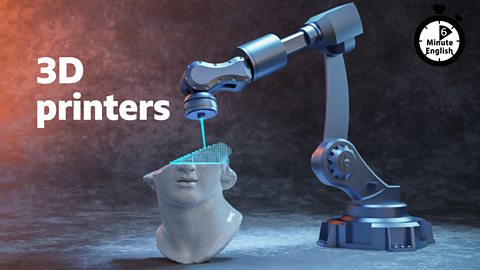
3D printers
Episode 221222 / 16 Dec 2022
How are 3D printers providing solutions to some of our medical problems?
Deep-sea mining: Good or bad for the planet?
Episode 221208 / 29 Nov 2022
Learn about an idea to deal with climate change that could affect marine ecosystems.
Can music mend a broken heart?
Episode 221201 / 24 Nov 2022
Is music really a cure for a broken heart?
The art of conversation
Episode 221124 / 24 Nov 2022
We discuss whether the art of conversation is being lost in the era of social media
Qatar's World Cup workers
Episode 221117 / 17 Nov 2022
Hear about the workers who built the World Cup stadiums
Controlling the weather
Episode 221110 / 10 Nov 2022
How people are trying to manipulate the weather

Are Halloween costumes too scary?
Episode 221027 / 25 Oct 2022
We discuss whether Halloween costumes are now too scary to be fun.
Does climate change make you anxious?
Episode 221020 / 20 Oct 2022
We discuss how extreme weather events are affecting our mental health.

Are artistic brains different?
Episode 221006 / 06 Oct 2022
We talk about Mozart, Jimi Hendrix and teach you vocabulary.


English for dating online
Episode 220922 / 22 Sep 2022
We discuss the language used for online dating
Man vs beast: Who is more efficient?
Episode 220915 / 15 Sep 2022
We discuss the advantages of the design of the human body
Are you following your dreams?
Episode 220908 / 08 Sep 2022
Hear the inspiring story of people who are doing it
Do emojis make language better?
Episode 220901 / 01 Sep 2022
Are emojis turning us into lazy writers?
Being a beauty influencer
Episode 220825 / 25 Aug 2022
Hear about women who are using social media to change attitudes to beauty

Women in the workplace
Episode 220818 / 18 Aug 2022
Hear about the career-killing tasks that are holding women back in the workplace
How pandemics end
Episode 220804 / 04 Aug 2022
We talk about previous periods in which deadly diseases went global
Confused by modern idioms?
Episode 220728 / 28 Jul 2022
Having a Groundhog Day? Keen to break the internet? Learn some modern idioms.
Which are more dangerous: sharks or humans?
Episode 220721 / 21 Jul 2022
How sharks have become an endangered species.
Climate change and animal evolution
Episode 220714 / 14 Jul 2022
Can today's animals evolve quickly enough to survive a changing climate?
Preserving traditional recipes
Episode 220707 / 07 Jul 2022
Missing your mother's cooking? We talk about traditional dishes.
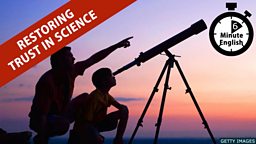
Restoring trust in science
Episode 220630 / 30 Jun 2022
Astronomer Neil deGrasse Tyson's quest to highlight the difference between opinion and fact
The Manhattan Project
Episode 220623 / 23 Jun 2022
In this episode, we discuss the events leading to the creation of the first atomic bomb.

Island life: Is it paradise?
Episode 220616 / 16 Jun 2022
What is life really like in the Pacific islands?

The technology of translation
Episode 220609 / 31 May 2022
What is the relationship between translation, technology and the human brain?
Queen Elizabeth II: What is the Platinum Jubilee?
Episode 220602 / 02 Jun 2022
We talk about a very British tradition
Can VR treat fears and phobias?
Episode 220512 / 12 May 2022
Hear how tech is helping people change their behaviour for the better

Remembering Desmond Tutu
Episode 220428 / 28 Apr 2022
Deep convictions and a sense of humour - we talk about a man who helped end apartheid in South Africa.
Discoveries of the Deep Sea
Episode 220421 / 21 Apr 2022
We talk about an extreme environment which is stranger than fiction
Rhetoric: How persuasive are you?
Episode 220414 / 14 Apr 2022
We talk about an art that started with ancient Greek philosophers
Britain's love affair with coffee
Episode 220407 / 07 Apr 2022
It's not all about tea. Britons love coffee too!
Optimists vs Pessimists
Episode 220331 / 11 Mar 2022
Listen to a conversation about optimists and pessimists
The world of Agatha Christie
Episode 220324 / 24 Mar 2022
Hear a chat about the queen of murder mystery, who had her books translated into over 100 languages

Why laughter is the best medicine
Episode 220310 / 10 Mar 2022
Shouldn't we take laughter more seriously?
Is being kind good for you?
Episode 220303 / 03 Mar 2022
Listen to what scientists are saying about the benefits of giving others a helping hand
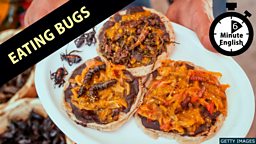
Eating bugs
Episode 220224 / 24 Feb 2022
Would you eat a cricket? How about a portion of nice crunchy ants?
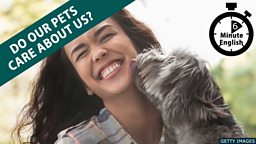
Do our pets care about us?
Episode 220210 / 10 Feb 2022
We wonder what all that licking is really all about
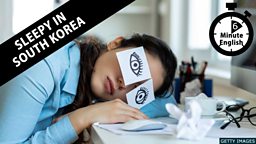
Sleepy in South Korea
Episode 220203 / 03 Feb 2022
Life in a place where people work, study longer hours and get less sleep than anywhere else
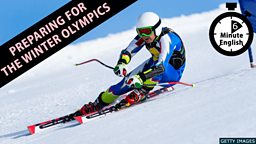
Preparing for the Beijing Winter Olympics
Episode 220127 / 27 Jan 2022
Artificial snow, coronavirus and controversy surround the Beijing Games starting soon.
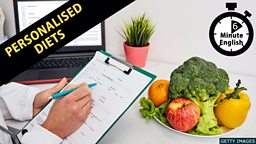
Are personalised diets the best way to be healthy?
Episode 220120 / 20 Jan 2022
Learn how microbes help digest food and have an impact in our bodies.