6 Minute English
Intermediate level
What decides our taste?
Episode 241003 / 03 Oct 2024

_____________________________________________________________________________________________________
Download a free 6 Minute English worksheet!
Download a free transcript!
______________________________________________________________________________________________________
Try more episodes of 6 Minute English:
______________________________________________________________________________________________________
Introduction
What makes us like the flavours we like? Phil and Beth discuss this and teach you some useful vocabulary.
This week's question
What is the most popular flavour of crisps in the UK? Is it:
a) salt and vinegar?
b) cheese and onion? or,
c) prawn cocktail?
Listen to the programme to hear the answer.
Vocabulary
broaden (or expand) your horizons
investigate something in a new way in order to increase the range of your knowledge, understanding or experience
chastise
strongly punish or criticise
colour-blind
unable to see the difference between certain colours, especially green and red
pointless
without purpose or meaning, and a waste of time
I would say that, wouldn't I?
of course I would say that; used to imply there's some reason that what the speaker is saying is obviously biased towards them
subjective
based on personal opinions and feelings rather than on objective facts
TRANSCRIPT
Note: This is not a word-for-word transcript.
Phil
Hello. This is 6 Minute English from BBC Learning English. I'm Phil.
Beth
And I'm Beth. Now, let's talk about food.
Phil
OK. What food do you love? What food do you hate? If you ask around, you'll soon see there's no right or wrong answer – it's all a question of taste.
Beth
But our taste, it turns out, isn't simply a matter of opinion. Rather, scientists have discovered that taste is influenced by our genes and DNA. So, in this programme we'll be asking, what is taste? Why can't we agree on it? And is it worth listening to experts whose job is to tell us what to eat and drink? And, as usual, we'll be learning some useful new vocabulary as well.
Phil
Great, but first I have a question for you, Beth. A good way of finding out about British tastes is with the nation's best-loved snack, crisps. So, what is the most popular flavour of crisps in the UK? Is it:
a) salt and vinegar?
b) cheese and onion? or,
c) prawn cocktail?
Beth
I'm going to guess cheese and onion.
Phil
OK, Beth, I'll reveal the answer later in the programme. Science's understanding of how taste works started only 25 years ago with the discovery of taste receptors, cells located in the taste buds on your tongue.
Beth
But people's taste is unique to them. What tastes sweet to me, might taste sour or salty to someone else, and this is because of differences in the receptors we're born with. In other words, taste is partly genetic. Here's Danielle Reed, researcher at the Monell Chemical Senses Center in Philadelphia explaining more to BBC World Service programme, 'The Food Chain':
Danielle Reed
…when we first started doing genetic studies, we really just confined ourselves to looking at a few Europeans, people of European ancestry. And so, our understanding of the broad diversity of humans on the planet was extremely limited. We are broadening our horizons and studying people of Asian and African ancestry, and that has really opened up the knowledge that people are much more diverse than we ever realised…
[…]
Ruth Alexander
And what you're saying is, "No, taste isn't a matter of opinion, it's a matter of biology".
Danielle Reed
Exactly and we wouldn't... you know, for our friends who are colour-blind, we wouldn't chastise them for not being able to see red or for dressing in colours we don't appreciate, but we feel very free to criticise our friends' sense of taste.
Phil
It was only when scientists looked outside Europe to the rest of the world that they realised the diversity of human taste. Danielle says they broadened their horizons, they investigated something in a new way to increase their knowledge and understanding of it.
Beth
Danielle compares taste to another genetically controlled condition, being colour-blind or unable to see the difference between certain colours like green and red. You wouldn't chastise – criticise or punish - someone for being colour-blind, so why criticise someone's taste?
Phil
But, if scientists are telling us taste is largely genetic, what about restaurant critics and wine connoisseurs, people whose job it is to tell us what to eat and drink? Are their opinions any better than our own? Here's David Kermode, wine judge for the International Wine and Spirits Competition, speaking with Ruth Alexander for BBC World Service's, 'The Food Chain':
Ruth Alexander
Scientists have established that taste is individual and to a large extent actually genetic. So I wonder, does that render the wine competition a pointless exercise?
David Kermode
No. I mean, I would say that wouldn't I? But of course, individual taste is subjective. We all have our own personal prejudices in whatever sphere of life you want to go into, but we are encouraged, I mean ordered almost, to park those prejudices.
Beth
Since people's tastes are naturally different, Ruth asks if wine competitions are pointless, without purpose and a waste of time. Being a wine judge, David, of course disagrees, using the phrase, but I would say that, wouldn't I? This phrase means something like, 'of course I would say that'. It implies there's some reason that what the speaker is saying is obviously biased towards them.
Phil
David admits that taste is subjective, based on personal opinions and feelings rather than on facts.
Beth
I think it's time to reveal the answer to your question, Phil.
Phil
Right. I asked for Britain's most popular flavour of crisp, and you said, cheese and onion which was… the correct answer! OK, let's recap the vocabulary we've learned in this programme starting with the phrase to broaden or expand your horizons meaning 'to explore something in a new way which increases your knowledge and understanding of it'.
Beth
To chastise means to strongly punish or criticise.
Phil
A colour-blind person is unable to distinguish certain colours especially greens and reds.
Beth
Something which is pointless, has no purpose or meaning and is a waste of time.
Phil
The phrase I would say that wouldn't I? is a tag question meaning, 'of course I would say that'.
Beth
And finally, if something is subjective, it's influenced by personal beliefs or feelings, rather than based on facts. Once again, our six minutes are up. Goodbye for now!
Phil
Bye!
የቅርብ 6 Minute English
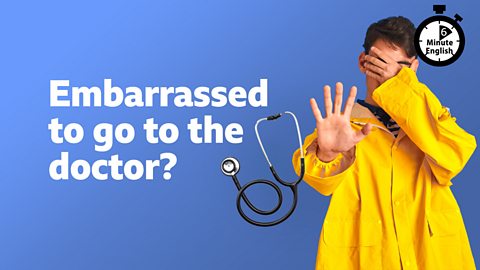
Embarrassed to go to the doctor?
Episode 241226 / 26 Dec 2024
Have you ever been embarrassed to go to the doctor?

Call centres: Are you talking to AI?
Episode 241219 / 19 Dec 2024
Have you ever phoned up a company and had your call held in a queue? Could AI make this less painful?

Making 'mum friends'
Episode 241212 / 12 Dec 2024
Is making new ‘mum friends’ the positive experience it’s often described as?
Can you trust ancestry DNA kits?
Episode 241205 / 05 Dec 2024
Are DNA ancestry tests a reliable way to trace your ancestry?

How babies learn to talk
Episode 241128 / 28 Nov 2024
What do babies need to learn to do to be able to talk?

The bond between sisters
Episode 241114 / 14 Nov 2024
Are the stereotypes about older and younger sisters true?


Why you need a good night's sleep
Episode 241031 / 31 Oct 2024
Why is it so important to get a good night's sleep?

Divorce: Why does it happen?
Episode 241024 / 24 Oct 2024
How is divorce talked about in different countries?


Did Taylor Swift fans cause an earthquake?
Episode 241010 / 10 Oct 2024
Did Taylor Swift move the Earth?
Learning a new food culture
Episode 240926 / 26 Sep 2024
Would you find it different to adapt to a new food culture?

Saving water in the driest place on Earth
Episode 240919 / 19 Sep 2024
How do farmers in the driest place on Earth manage to grow crops? With this solution!


Chocolate: Meet a real Willy Wonka
Episode 240829 / 29 Aug 2024
Would you like to be a chocolate maker, like Roald Dahl's Willy Wonka?
Why we love dumplings
Episode 240822 / 22 Aug 2024
Warning! This episode might make you very hungry...

Kids and climate change
Episode 240815 / 15 Aug 2024
What are young people's thoughts on climate change?


The science of falling in love
Episode 240801 / 01 Aug 2024
What's really happening in our brain when we fall in love?
AI to reduce animal testing
Episode 240718 / 18 Jul 2024
Could AI reduce the need for animal testing?

Why read books, not screens?
Episode 240718 / 25 Jul 2024
Why is it better to read from a book than a screen?

The school that puts the kids in charge
Episode 240711 / 11 Jul 2024
What happens when you put the kids in charge of the school?

What can we learn from toddlers?
Episode 240704 / 04 Jul 2024
Learn to speak to yourself in the way that toddlers do!
How learning to read changes lives
Episode 240627 / 27 Jun 2024
How can literacy change people's lives?

Building a better world with wood?
Episode 240620 / 20 Jun 2024
How can buildings made from wood help our mental health?
How names can tell painful stories
Episode 240613 / 13 Jun 2024
Could our name have painful baggage?

E-rickshaws driving away pollution
Episode 240606 / 06 Jun 2024
Could E-rickshaws give us cleaner air?



Bitter food, better health?
Episode 240509 / 09 May 2024
Could bitter foods be better for your health?





Disability in music and theatre
Episode 240321 / 21 Mar 2024
Learn about the people who are making it easier for disabled musicians and music fans to perform and see live music

Sewing to fight period poverty
Episode 240307 / 07 Mar 2024
Period poverty affects over 500 million people worldwide. How can a volunteer project help?
Plastic waste eaten by enzymes
Episode 240229 / 29 Feb 2024
Plastics can be difficult to recycle. Could a recently discovered enzyme help?
Feed your brain
Episode 240222 / 22 Feb 2024
Food is fuel for our brains. So, what should we be eating?

Food for new mums
Episode 240215 / 15 Feb 2024
Having a baby is exhausting! What do mothers need to eat after giving birth?
Fighting loneliness with soup
Episode 240208 / 08 Feb 2024
Hear how a project in the Netherlands is helping in the fight against loneliness

How the language of menus matters
Episode 240125 / 25 Jan 2024
Why is the language used on menus important?