Find out the basics of political participation in the UK
There are three parts to the political participation in the UK making section of National 5 Modern Studies:
- Rights and responsibilities of individuals in the UK
- What opportunities are there to participate in UK politics?
- How do individuals, parties and the media participate in elections?
Look through this article for a quick look at these areas, or to revise what you have already learned.
Click on the links to get more detailed information on each section.
What rights and responsibilities do people have in the UK?
Video - Rights and responsibilities
Watch this video on the rights and responsibilities of people living in the UK.
Rights and responsibilities
The Human Rights Act of 1998 sets out the rights and freedoms of everyone in the UK.
Alongside our own rights, we must be aware of our responsibilities to protect the human rights of others.
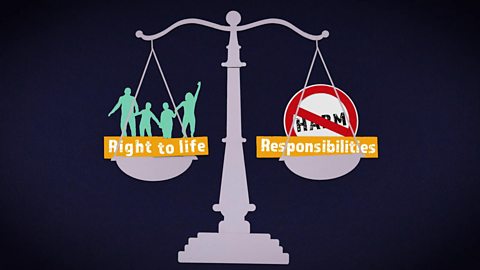
So everyone has the right to life but this is balanced by the responsibility not to harm or endanger other people's lives.
And we have the right to protection from discrimination balanced by the responsibility not to discriminate against each other.
In the UK, we all have the right to speak freely about all topics in society, including voicing criticism or support for the government.
But it is our responsibility to not use hateful or derogatory language about an individual or group in society.
Everyone in the UK has the right to express their views in a number of different ways, from joining pressure groups, unions or political parties to signing petitions, marching on the street, and sharing views online and in person.
There are some differences in the rights and responsibilities we have in Scotland as opposed to the rest of the UK.
In Scotland, everyone over 16 years of age and who is on the electoral register has the right to vote in local council and Scottish Parliament elections and referenda.
But voters must be over 18 years of age to take part in UK Parliament elections.
Wherever they live, all voters have the responsibility to accept the election results, even if they disagree with the outcome.
The UK has signed up to the United Nations' Universal Declaration of Human Rights.
- this affects both reserved and devolved matters
- UK institutions have to consider international human rights when making decisions on devolved matters
In the UK our human rights are protected by the Human Rights Act 1998.
- individuals who feel their rights have been breached can take a case to Scottish and UK courts
- public bodies must work to uphold individuals' rights
- new laws passed by the UK Parliament must comply with the act
The rights people in the UK have are balanced by responsibilities to ensure that other people's rights are upheld.
| Rights | Responsibilities |
|---|---|
| right to vote | accept the result of democratic elections |
| right to freedom of speech | refrain from using hateful or derogatory language about an individual or group in society |
| right to protest | keep within the law, avoid violence or intimidation and protest using peaceful methods |
| freedom of association | pay membership fees and do not damage the group's name through poor language or behaviour |
Find out more detail about the rights and responsibilities of individuals in the UK
What opportunities are there to participate in UK politics?
Individuals have many ways to participate in democratic political life. All have benefits and limits.
| method | benefit | limit |
|---|---|---|
| vote | direct say in who represents you | you may be outnumbered by other voters |
| express opinion | easy to give views in person/on social media | may reach limited audience |
| petition | petitions on UK Parliament's petition site considered by MPs | must have 100,000 signatures or more |
| protest | may have influence through numbers involved | can only influence decision makers, not make direct change |
| join political group | can work with others towards common goals | individual power could be limited and may have to accept overall party/group position |
| stand as a candidate | if elected can be directly involved in decision making | need to win enough votes for election |
Find out more detail about what opportunities are there to participate in UK politics?
How do individuals, parties and the media participate in elections?
Individuals can participate in elections by:
- voting - anyone aged 18 or over can vote in elections to the UK Parliament
- staying informed - being aware of issues helps people decide who to vote for
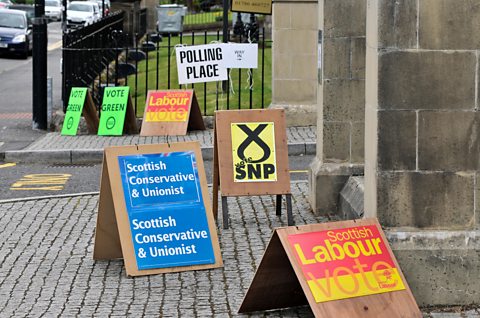
- supporting a candidate - displaying posters, delivering leaflets and canvassing door-to-door
- standing as a candidate - people can stand as a party candidate or independent candidate
Political parties can participate in elections by:
- producing a manifesto - a manifesto outlines policies and plans for government, letting people know what they are voting for
- campaigning - canvassing, leafleting and holding public meetings and events help a party spread its message
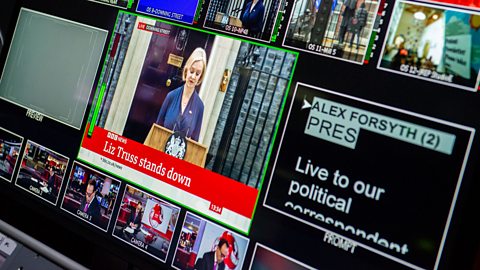
- engaging with the media - coverage on TV, radio, social media and newspapers help parties reach the wider public
Media can participate in elections by:
- informing - telling voters about parties and issues, and covering events of the election and campaigns themselves
- holding to account - questioning candidates and parties on their policies and ability to deliver
- influence
- TV and radio must remain neutral
- newspapers and social media can take political sides and attempt to sway how people vote
Find out more detail about how individuals, parties and the media participate in elections?
More on Democracy in the UK
Find out more by working through a topic
- count9 of 18