How fair is representation at the UK Parliament?
Quick version
Representation of women
- There are now 263 female MPs (40%), highest ever.
- Women make up 51% of UK population but only make up 40% of MPs and hold 46% of Cabinet roles.
- Two party leaders are women; and so far there has been three female Prime Ministers and one female Speaker.
- Barriers include family responsibilities, costs of campaigning, limited maternity support, and fewer women in local politics, meaning limited experience and selection chances.
- Solutions include requiring parties to report diversity, strengthen online harassment laws, and improve facilities and flexible working in parliament.
Representation of people from ethnic minorities
- There are 90 MPs (14%) from ethnic minority backgrounds.
- Only one party leader and 12% of Cabinet from ethnic minorities.
- Barriers: racism, abuse, biased selection, financial challenges.
- Solutions: diversity targets, anti-harassment measures, Local Government Association's Be A Councillor programme aims to increase representation at local government level.
Representation of people with disabilities
- Since 2024, nine MPs (1.4%) declared themselves disabled vs 20% of population.
- Barriers: access issues, negative attitudes, additional costs of campaigning.
- Solutions: The Equality Act 2010 protects potential candidates from being discriminated against, parliament's diversity strategy aims to remove physical and social barriers, a new Access to Elected Office Steering Group could help improve representation.
Learn more in depth
How are women represented in the UK Parliament?
As of 2025, in total 693 women have been elected to the House of Commons since the Parliament (Qualification of Women) Act 1918 which allowed women aged 21 and over to stand for Parliament.
Over the course of the last few Parliaments that rate is increasing slowly – in 2010 the Commons was 22% female; and in 2017 it was 32% and in 2019 it was 35%.
As of the General Election of July 2024, of the total of 650 MPs:
- 387 were men
- 263 were women
This is the highest number and proportion of female MPs ever recorded and an increase of 43 from the 2019 General Election.
- This means approximately 40% of MPs are women.
- Women make up 51% of the UK population.
- Women are still under-represented in Parliament.
Female representation in political parties
As of October 2025, there are 264 female MPs:
- 186 (46%) are Labour
- 32 (44%) are Liberal Democrats
- 29 (24%) are Conservatives
- 3 (75%) are Greens
- 3 (75%) represent Plaid Cymru
- 2 (29%) represent Sinn Fein
- 1 (11%) represents the SNP
- 1 (20%) represents Reform UK
- 1 (20%) represents the Democratic Unionist Party-1 (50%) represents the Social Democratic and Labour Party
- 1 (100%) represents the Alliance Party
- 4 (22%) are Independent.
How many women are in leadership positions?
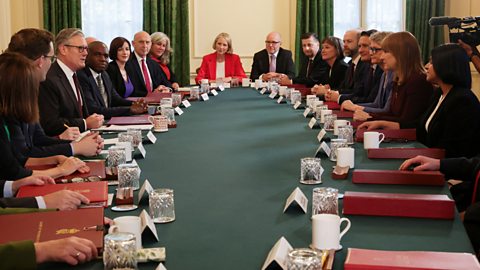 Image source, WPA Pool / Getty Images
 As of October 2025, of the 13 political parties represented in the House of Commons, only two are led by a woman:
- Kemi Badenoch, leader of the Conservative Party is the first black woman to lead a political party in the UK
- Claire Hanna, leader of the Social Democratic and Labour Party (SDLP)
As of February 2025, there have been 58 UK Prime Ministers. Only three have been women.
In 2024 Rachel Reeves became the first female Chancellor of the Exchequer.
Only one woman has served as Speaker of the House of Commons.
Image source, WPA Pool / Getty Images As of February 2025, of the total of 23 MPs and three Peers serving in the UK Government:
- 14 were men
- 12 were women
This means 46% of the UK Cabinet are women. This is 5% below the proportion of women in the UK.
What barriers are there to women serving as MPs?
There are a number of social and political barriers that may prevent women from standing as an MP or continuing to serve:
- women are still seen as the main carers in the family - this can make it difficult to balance the work of an MP with family life
- working as an MP in Westminster takes people away from their home for most of the week - this makes serving as an MP difficult for women with family and caring responsibilities, particularly for MPs in constituencies a long distance from London
- women are under-represented at other levels of political representation, for example as local councillors - this can make it difficult to build up political experience and more difficult to be selected as a candidate for election to parliament
- campaigning to become an MP can be expensive and time consuming - this can be difficult for women who are more likely to have lower income
- political meetings held in evenings can clash with family and caring commitments
- lack of maternity pay or maternity leave may put off women who want to start a family
Women and people from minority groups may face additional barriers while serving as MPs.
In 2022, a House of Commons Women and Equalities Committee report found that:
- as well as there being fewer female MPs, on average women sit as MPs for much shorter periods.
- several female MPs stood down from Parliament at the 2019 general election citing intolerable online harassment, abuse, and threats of violence
- some female MPs described the House of Commons as a "boys club"
In October 2018, an independent report found evidence of "a corrosive culture, in which bullying and harassment, in particular of women, have become normalised"
There can also be practical issues that female MPs are more likely to face:
- late sittings in the House of Commons can interfere with family and caring responsibilities
- most car parking spaces are narrow and in an underground car park that it difficult to access for MPs when they have children with them, or have a pushchair, or for MPs with disabilities.
What measures can encourage fair representation of women?
Since January 2019, MPs on parental leave, or experiencing some issues to do with fertility treatment, pregnancy or childbirth can vote using a proxy scheme.
In November 2019, Stella Creasy became the first MP to appoint a locum for her maternity cover.
The Ministerial and other Maternity Allowance Act 2021 allows government ministers on parental leave to have their duties covered during their absence.
A campaign called This Mum Votes was set up in 2021 to encourage mothers to stand for selection and election as political representatives. The campaign aims to support them with “challenges related to childcare, the cost of standing for election, and mentorship”.
In its 2022 report, the House of Commons Women and Equalities Committee recommended the following steps to encourage better representation of women:
- Requiring political parties to report on the diversity of their Parliamentary candidates.
- The Government using its Online Safety Bill to strengthen sanctions against those who target female politicians with threatening and harmful online harassment and abuse.
- Surveying MPs on their opinion of facilities in parliament for carers and those with disabilities or health conditions, and working practices, such as hybrid working, which could help to increase accessibility.
MPs from ethnic minorities
The definition for 'ethnic minority' is taken from the UK Parliament, which uses the term to mean everyone except the 'white' ethnic group in Great Britain, and except the 'white' and 'Irish Traveller' categories in Northern Ireland.
No MPs from minority ethic groups were elected between 1929 and 1987.
- 4 were elected in 1987
- This rose to 53 in 2017
- 66 were elected in 2019
As of the General Election of July 2024, of the total of 650, 90 MPs are from minority ethnic backgrounds. This is 14% of MPs.
In 2024/25, 16% of the UK population identify as belonging to an ethnic minority.
This means that ethnic minorities are slightly underrepresented in the House of Commons.
How many people from ethnic minorities are in leadership positions?
As of October 2025, of the 13 political parties represented in the House of Commons, only one is led by a woman:
- Kemi Badenoch, leader of the Conservative Party is the first black woman to lead a political party in the UK
As of February 2025, there have been 58 UK Prime Ministers. Only one has been from a minority ethnic background.
As of February 2025, of the total of 23 MPs and three Peers serving in the UK Government:
- 3 are from ethnic minorities.
This means 12% of the UK Cabinet are from ethnic minorities. This is 4% below the proportion of the UK population.
What barriers to being an MP do people from ethnic minorities face?
Like women, people from ethnic minority backgrounds face social, political and practical barriers to becoming an MP:
People from ethnic minority backgrounds are under-represented at other levels of political life, for example as local councillors - this can make it difficult to build up political experience and more difficult to be selected as a candidate for election to parliament.
Campaigning to become an MSP can be expensive and time consuming - this can be difficult for people from ethnic minority backgrounds who are more likely to have lower income.
The low number of MSPs from ethnic minority backgrounds means there is a lack of role models - this might create the impression that being an MSP is not a role for people from ethnic minorities to pursue.
A lack of people from ethnic minority backgrounds in political life can limit the support and networks that can help develop political skills and experience.
The majority of current MPs are white. Those incumbent MPs who choose to stand for re-election are likely to be reselected by their party. This acts as a barrier to potential new candidates from ethnic minorities, or other minority groups.
In 2020, 62% of black or minority ethnic MPs in an ITV survey said they had experienced racism while working in parliament, with 51% saying they had experienced racism from other MPs.
Research from the Electoral Commission into the 2024 UK parliamentary general election found that, alongside women, candidates from ethnic minority backgrounds faced increased levels of abuse and intimidation that affected their campaigning, including increased likelihood of receiving offensive social media posts about their ethnicity (55%) or religion (41%).
How can representation of people from ethnic minorities be encouraged?
 Image source, Grant Faint / Getty Images
The UK Parliament aims to "make parliament more accessible, diverse and free from discrimination" through its Inclusion and Diversity Strategy 2023-2027.
The strategy has three main aims:
- decreasing the ethnicity pay gap
- improving accessibility
- fostering inclusive environments
Creating a more inclusive environment is seen as a way to encourage more candidates from minority ethnic backgrounds. Work on this area includes improving understanding of different faiths and beliefs throughout parliament. Moves to recruit more staff from minority ethnic backgrounds, and to increase representation in jobs with higher pay and more responsibility could increase the number of potential candidates for election.
In 2024, the think tank British Future produced a report on diversity in parliament. It recommended:
better data should be collected on diversity to better understand and address representation challenges.
parliament should increase publicity for existing job placements and apprenticeship schemes based in parliament among under-represented groups
certain elections should no longer require candidates to pay a deposit to stand. This would remove a financial barrier for people from ethnic minority groups who are more likely to have lower income
The Local Government Association (LGA) runs a programme called Be A Councillor, which encourages people from underrepresented groups to stand for election at local level. This is aimed at potential independent candidates as well as those from the main political parties. Experience as a councillor is regularly a step towards becoming an MP, so schemes like this may ultimately lead to more people from ethnic minorities becoming MPs.
Image source, Grant Faint / Getty ImagesHow are people with disabilities represented at Westminster?
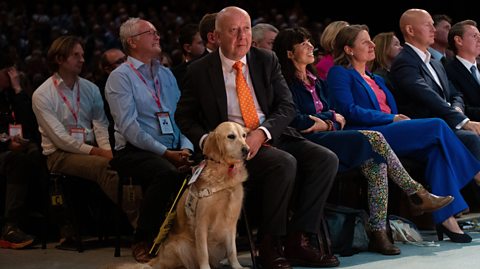 Image source, SOPA Images / Getty Images
 As of June 2024, there are nine MPs who have declared themselves to be disabled.
This is 1.4% of the House of Commons. This is much lower than the 20% of people in the UK identify as having some form of disability (when mental health issues are included).
Image source, SOPA Images / Getty Images What barriers are there to people with disabilities serving as MPs?
People with disabilities face social, political and practical barriers to becoming an MP:
people with disabilities are under-represented at other levels of political life, for example as local councillors - this can make it difficult to build up political experience and more difficult to be selected as a candidate for election to parliament.
campaigning to become an MP can be expensive and time consuming - this can be difficult for people with disabilities who are more likely to have lower income.
people with some disabilities face additional costs to campaigning or serving as a political representative, for example:
- transport
- equipment like assistive technology
- support such as interpreters or carers
the low number of MPs with disabilities means there is a lack of role models - this might create the impression that being an MP is not a role for people with disabilities to pursue.
a lack of people with disabilities in political life can limit the support and networks that can help develop political skills and experience.
In 2021, research carried out by University of London and University of Strathclyde for the UK Government Equalities Office found that:
Disabled people face barriers when participating in party politics, including venue accessibility, lack of interpretation, inaccessible formatting of materials, lack of facilities, and cultural barriers.
Many disabled people faced barriers to being selected as a party candidate, for example difficulties in fully participating in assessment days, completing application processes, and campaigning for support from local party members. Some faced negative attitudes about their ability to fulfil the roles of candidate or political representative.
Physical barriers, such as lack of accessible transport and inaccessible buildings, made some campaigning difficult and could involve high financial costs.
How can representation of people with disabilities be improved?
Under the Equality Act 2010, political parties must not discriminate against disabled members or candidates.
They are required to make reasonable adjustments to ensure fair treatment, and positive action is allowed to encourage and enable disabled people to participate in politics and seek public office.
Several UK political parties and government bodies have mentoring schemes, and internships, to increase representation of disabled people in politics.
The UK Parliament's Diversity Strategy 2023-2027 aims to improve accessibility and foster inclusive environments in Parliament, which could help remove physical and social barriers for potential MPs with disabilities.
Removing some of the financial barriers for standing as a candidate, for example paying a deposit, could help candidates with disabilities who are more likely to have lower income.
The Local Government Association's Be A Councillor programme aims to encourages people from underrepresented groups to stand for election at local level. This includes potential candidates with disabilities.
Some working practices, for example hybrid working, virtual voting or proxy voting that would benefit women MPs could also benefit MPs with disabilities or long term health conditions, who may face difficulties with travel to and from Parliament, or with remaining in parliament for long sessions.
The Access to Elected Office Steering Group, was set up in 2025 to champion the inclusion of disabled people in political life.
The group will have a funding to cover additional costs that candidates incur because of their disability, for example travel or translation.
Disabled candidates and elected representatives have identified several strategies that candidates themselves can use to overcome barriers, including:
- building support networks
- increasing visibility via social media
- incorporating assistive technologies
- challenging perceptions
(Source: gov.uk)
Quiz
Recap what you have learned
Women in Parliament
- Since 1918, 693 women have been elected to the House of Commons and representation has steadily grown.
- After the July 2024 General Election, women hold 263 seats (40%), the highest number ever.
- Women are 51% of the population but remain under-represented holding only 46% of Cabinet roles
- Only 2 party leaders are women: Kemi Badenoch (Conservative) and Claire Hanna (SDLP).
- Just 3 of 58 Prime Ministers have been women and there has only ever been one female Speaker of the House of Commons.
- Barriers to representation include family responsibilities, abuse, high campaign costs, limited maternity support and under-representation at other levels of political representation.
- Solutions include the Women and Equalities Committee 2022 report, requiring reporting candidate diversity, the online Safety Bill to tackle harassment of female politicians and improvement of parliament facilities and working practices.
Ethnic minority representation
- Representation from ethnic minority backgrounds in the UK began in 1987 with 4 MPs; now there are 90 MPs (14%), still below 16% population share.
- Only one party leader and 12% of people in the Cabinet are from ethnic minorities.
- Barriers to representation include racism, online abuse, biased selection, and financial challenges.
- Improvement measures include adopting diversity targets, publishing candidate data, strengthening protections against harassment and promote inclusive practices.
Disability representation
- 9 MPs (1.4%) identify as disabled compared to 20% of UK population.
- Disabled candidates face access issues, negative attitudes, and high costs for campaigning and support.
- There are legal protections under The Equality Act 2010 and ongoing diversity initiatives to provide practical support and inclusion.
More on Democracy in the UK
Find out more by working through a topic
- count17 of 18
- count18 of 18
- count1 of 18