The structure of the Earth
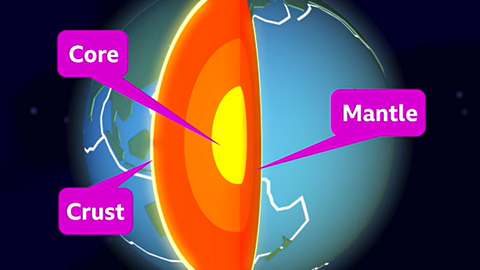
The Earth is made up of different layers:
- the core at the centre, which is mainly metal
- the mantle, which is mainly rock
- the crust, which is the part we can see
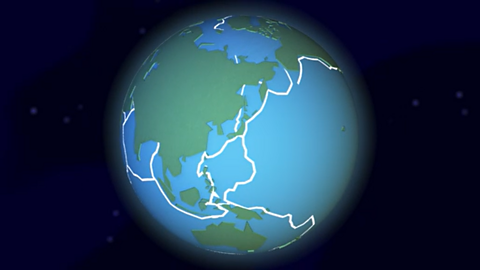
The crust (together with the upper layer of the mantle) is made up of different pieces, called tectonic plates. These plates fit together like a jigsaw and are moving at a rate of a few centimetres a year, in different directions and at different speeds.
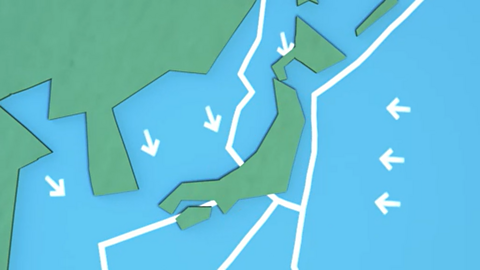
Some plates slide past each other, others move away from each other and some bump into each other.
Sometimes these plates lock together when they meet. This is called a plate boundary or a fault line.
What happens during an earthquake?
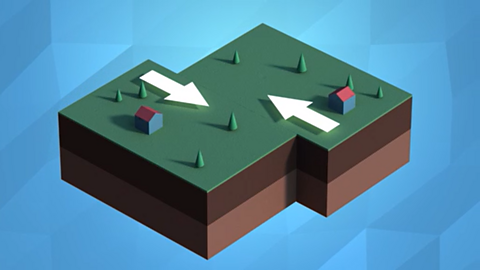
As plates move in different directions over long periods of time, friction causes energy to build up.
It becomes so great that the energy is released, which creates a shock wave - an earthquake.
If an earthquake is beneath the ocean it can create a series of huge waves, called a tsunami.
There are thousands of earthquakes across the world each day.
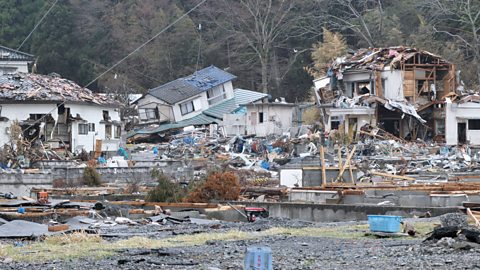
Watch: How do earthquakes work?
Jelly is my favourite pudding. This one is particularly wobbly for some reason. Oh… it’s an EARTHQUAKE!
This one is quite weak, and earthquakes here in Japan are actually quite common so there’s no need to panic.
To understand earthquakes we need to look at the structure of the Earth.
The Earth is made up of different layers.
At the centre is the core, around that is the mantle, and on the outside is the crust.
The Earth’s crust is cracked into different pieces called plates, a bit like an eggshell.
These plates are very slowly moving and shifting around and where two plates move towards each other, you find the most powerful earthquakes.
Friction causes pressure to build up until it becomes so great that it is suddenly released as a shock wave. This is the earthquake.
Most earthquakes are so small they can only be detected by special equipment.
But some can be so powerful they can destroy whole towns and cities in minutes.
Sometimes, if an earthquake occurs under the ocean, it creates a huge wave called a tsunami.
Although earthquakes in the UK are very weak and rare, for many countries like Japan, they are relatively common.
People living in those countries will take extra precautions, like building earthquake-resistant buildings that sway with the shock wave, or by providing earthquake shelters.
They even practise what to do if an earthquake strikes, like taking cover under a sturdy piece of furniture to protect themselves from falling debris.
Earthquakes are a fact of life in this part of the world, so as soon as an earthquake ends, it’s business as usual. Err… more jelly please! …Oh
Asks for more jelly in Japanese
Earthquake scale and impacts
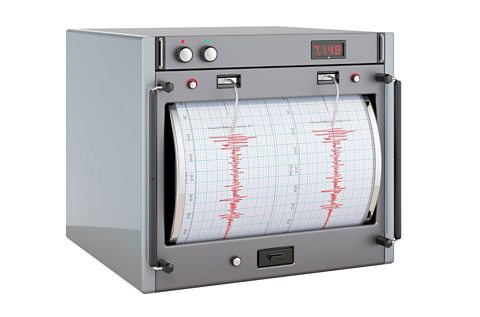
Some earthquakes are so small that they can only be detected by specialist equipment. Others can be so intense that they can destroy towns and cities.
The Richter magnitude scale is used to measure the size of earthquakes. The higher the number, the more powerful the earthquake and the higher the chance that it will cause real damage.
The largest earthquake recorded in the UK happened in 1931, in the North Sea, and measured 6.1 on the Richter scale.
| Number on Richter scale | How many happen in the world per year? | What does it mean? |
|---|---|---|
| 2.5 or less | Millions each year | Usually not felt, but some can be recorded by scientists |
| 2.5 to 5.4 | 500,000 per year | Often felt, but only causes minor damage |
| 5.5 to 6.0 | 1,000 per year | Can cause slight damage to buildings and other structures |
| 6.1 to 6.9 | 100 per year | May cause a lot of damage in very populated areas |
| 7.0 to 7.9 | 10-15 per year | Major earthquake and serious damage caused |
| 8.0 or greater | Once every year or two | This is a very large earthquake which can totally destroy large areas |
Source: USGHS/Modified Mercalli Intensity
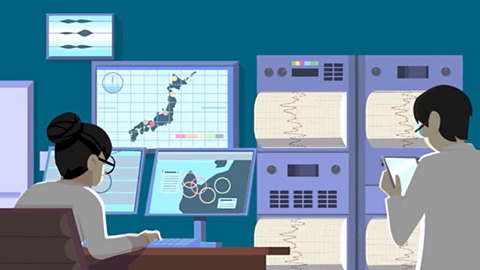
Many earthquakes occur around the Pacific Ocean. People who live there, in countries such as Japan, are used to earthquakes happening and build earthquake-resistant buildings that sway with the shock waves rather than fall down.
Although there are earthquakes in the UK, they are rare and so small that most people do not feel them.
Activity: Quiz – Earthquakes
Bitesize Primary games. game
Play fun and educational primary games in science, maths, English, history, geography, art, computing and modern languages.

More on The natural world
Find out more by working through a topic
- count6 of 8
- count7 of 8
- count8 of 8
- count1 of 8