What is a passive verb?
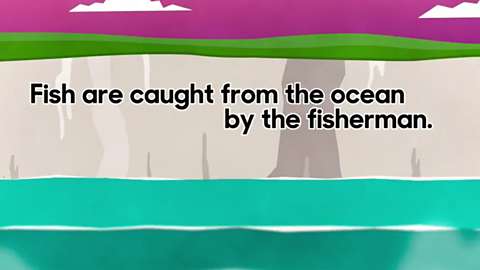
When the subject of a sentence isn't doing something, the verb is passive.
On the other hand, a sentence is active when the subject performs the verb (action).
For example, in this sentence the verb is active.
Mr Brewer kicked the ball
Whereas, in this sentence the verb is passive.
The ball was kicked by Mr Brewer
Take a look at this slideshow to learn more about passive verbs, and test what you've learned with the activity and quiz below.

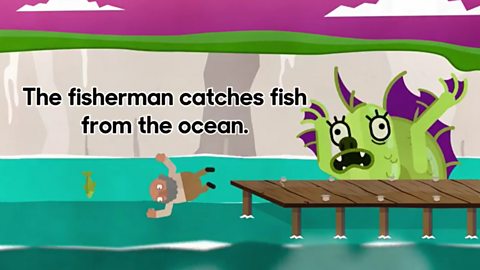
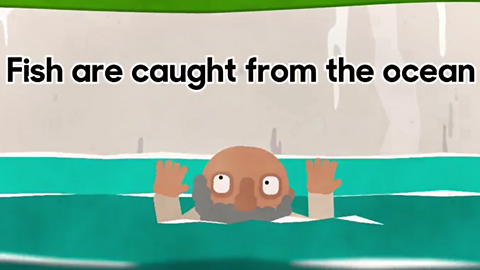
Image caption, This is Frieda Fishmonster. She always enjoys a passive sentence.



1 of 8
End of image gallery
Activity 1
Activity 2
Play our fun English game Crystal Explorers! game
Use grammar, punctuation and spelling skills to explore jungles, caves and tombs on your mission.

More on Grammar
Find out more by working through a topic
- count6 of 12

- count7 of 12
- count8 of 12
- count9 of 12