When did the Indus civilisation end?
- Historians believe things started to fall apart around 1900BC.
- By 1700BC many Indus cities had been abandoned.
But how did this peaceful, well-organised civilisation collapse in just 200 years?
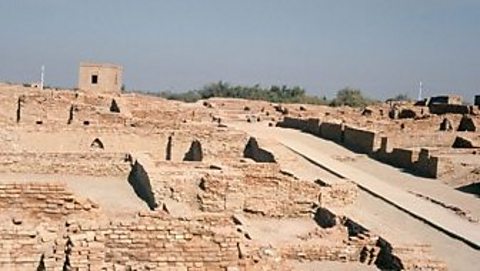
Looking at the ruins we can see many changes.
The cities became overcrowded, with houses built on top of houses.
Important buildings like the Great Bath at Mohenjo-Daro were built over.
People stopped clearing the drains and they became blocked.
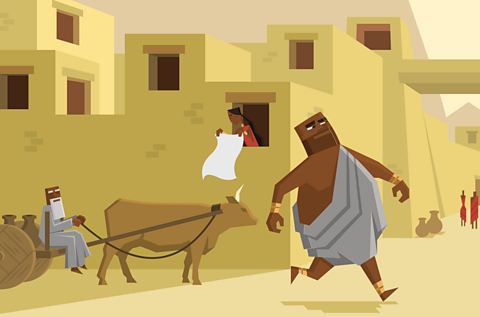
Some traders even hid their valuables under the floors of their homes.
What were they scared of? Why did this happen?
Did trade with other places stop?
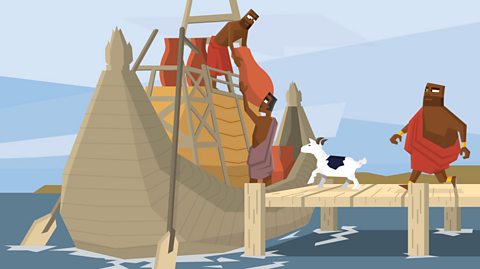
- Trade was very important for the Indus civilisation.
- They traded a lot with Mesopotamia, which was an advanced civilisation in the Middle East.
- Mesopotamia's trade networks collapsed and this would have had a big impact on the Indus cities.
- There would have been less work for traders and for manufacturers, who made the things which the traders sold.
Was there a war?
- Some historians believed the Indus civilisation was destroyed in a large war.
- Hindu poems called the Rig Veda (from around 1500 BC) describe northern invaders conquering the Indus Valley cities.
- It's more likely that the cities collapsed after natural disasters. Enemies might have moved in afterwards.
Did the Indus River move?
Many historians believe the Indus civilisation collapsed because of changes to the land and climate.
The Indus river may have flooded and changed its direction.
The Indus cities were closely linked to the river, so changes in the river flow would have had a terrible effect on them.
Repeated flooding would have made it hard to grow crops.
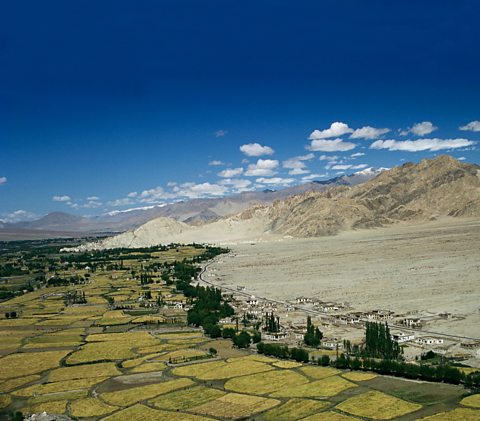
It is believed that at the same time, the Ghagger Hakra River (another river in the area) dried up.
People were forced to leave many of the cities along its banks, such as Kalibangan and Banawali.
People would have starved and diseases would have spread.
How did we discover the Indus Valley?
The Indus Valley lay undiscovered for thousands of years.
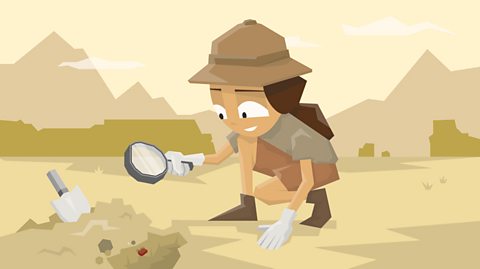
In 1826, a British traveller in India called Charles Masson came across some strange brick mounds.
Thirty years later, engineers building a railway found more bricks.
These bricks were the first evidence of the lost Indus city of Harappa.
Watch: The lost city of Mohenjo-Daro
In the 1920s, archaeologists began to dig at the sites of Harappa and Mohenjo-Daro.
They had discovered two long-forgotten cities and found the Indus Valley civilisation.
The Indus Valley people did not leave great structures, like the Pyramids of Egypt or the Great Wall of China, but they did help shape the modern world.
Visit the ruins of Mohenjo-Daro and find out what archaeologists have discovered about this 'planned city'.
Mohenjo-daro.
Narrator: Archaeologist estimated that in 2500BC Mohenjo-Daro was a city full of over 35,000 people.
Presenter: It was a planned city with a Upper and a Lower town, a huge great bath and with an advanced drainage system.Mohenjo-Daro had a really big main street that seems to go all the way to the city. The street is large enough for lots of traffic to go… carts, people and traders.
With many small streets running off the main street.
Narrator: All the side streets are exactly the same width.
Presenter The main street is 10 metres wide.
Narrator: Is this evidence to show that someone set down and thought about planning this city? It looks as thought the streets and the drainage systems were laid out first then blocks of houses and buildings were built around them. It works like any modern planned city like Milton Keynes or New York.
Presenter: This is my favourite bit of the city. It’s the Great Bath!
Narrator: The Great Bath is in the city’s Upper Town. The archaeologists think that people used this great deep pool for important religious ceremonies.
It had a water supply coming in. There is a slope to the main drainage area which makes it easy to release the water.
It could be possible that the city rulers came here to worship as cleanliness is considered very important to many religions.
Presenter: The Indus people were very civilised. In 2500BC they had toilets. This is a 4,5000 year old loo. They also had a drainage system to carry all the waste.
Activities
Activity 1: Indus Valley culture
Explore the pictures below to find out about the legacy of the Indus Valley culture.
Activity 2: Quiz – What happened to the Indus Valley?
Race Across the Continents game - new update! game
Help this team of adventurers race their way to victory. Explore the globe in this exciting game update to discover new audio voiced by Ade Adepitan and fun animations. Challenge yourself with brand-new achievements and become a high-flyer!

More on Indus Valley
Find out more by working through a topic
- count1 of 8
- count4 of 8