It's the most wonderful time of the year
Christmastime is almost upon us, and it won’t be long until we all partake in our favourite family traditions, enjoy a roast dinner and open wonderful gifts on 25 December. Everyone has an ideal picture of what Christmas looks like, from the dinner table being surrounded by loved ones to baking in the kitchen, taking a trip to a Christmas market or going on a crisp walk first thing.
Many of us will also be dreaming of a white Christmas and seeing snow when we wake up on Christmas morning. But what counts as a white Christmas and when was the last in the UK?
Here, BBC senior weather presenter Kay Crewdson shares her knowledge and tips with BBC Bitesize for all things snow in the UK – as well as the likelihood of us having a white Christmas in 2025. If you also want to know which temperature makes the best snow for building a snowman, you can find out more below!
What is snow?
Typically associated with wintertime and if we’re lucky in the UK, Christmastime, snow is a form of precipitation, which refers to any water that falls from the sky, including rain or sleet.
When the temperature drops and it gets cold, small ice crystals form high in the sky and continue to grow on top of one another, creating snowflakes, which fall through the air. The texture of the snow will vary depending on the air conditions.
For example, snow will be powdery if it falls through cold, dry air and will be wet if the air is slightly wet or it is a bit warmer. For generations, snow has been depicted in Christmas cards, decorations, films and has been sung about to get people into the festive mood.
What are the signs that it's about the snow?
 Image source, Kay Crewdson
Every year, fully trained weather experts and professionals, like Kay Crewdson, provide information to the public after analysing recent data and weather trends from across the globe. But they are also able to spot signs in the weather changing, or in this case, that indicates it could snow, that the public may not be aware of.
When it comes to snow, Kay Crewdson told BBC Bitesize: “We need cold air first and foremost and that typically means winds coming from the north or the east - but not always because a cold westerly can also bring snow if the jet stream (a fast-flowing current of air) is sufficiently down far south.
“You can also get fronts pushing in cold air and bringing in a more organised spell of snow. You’d see building cloud, lowering cloud bases, winds picking up.
“It's never too cold to snow – the lower the temperature, the less moisture there is for snow formation. It doesn't need to be below zero to snow.
“When snowflakes fall from the cloud base into a dry air mass, so sublimation - which is ice to gas and evaporation that cools the air which lowers the temperature - that’s normally when snow is heavy, which leads to a lowering of the snow level. Snow can technically fall when air temperature is in mid-single figures, but the airmass is often too moist here in the UK for it to occur
“Cumulonimbus - which are big heavy rain bearing clouds - might develop over the sea when cold air affection is strong, especially when seas are warm and they can produce snow.”
Image source, Kay CrewdsonWhat temperature means the best snow for a snowman?
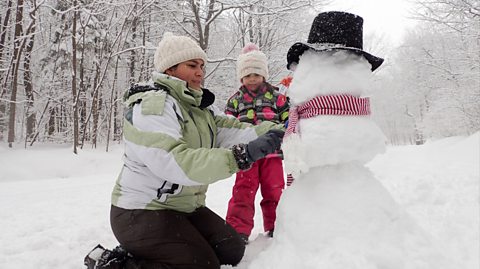
Snow isn’t only beautiful to look at – it's also great to play in. When there’s a blanket of snow outside, it’s not uncommon to see people get wrapped up in their big coats and woolly hats and scarves to head out and lie in the snow to make snow angels or of course, try to make a magnificent snowman.
But what temperature makes the best kind of snow to build a snowman? Kay said: “Zero to two degrees is when we’re likely to see more what we call wet snow, because when it melts, snow can stick together better – so that’s better for snowmen.
“You might hear people say it’s too cold to snow, but if it’s way below freezing, there’s no moisture. It's technically never too cold to snow, but the lower the temperature the less moisture there is and you need that moisture for the snow to form.”
Which areas of the UK get the most snow?
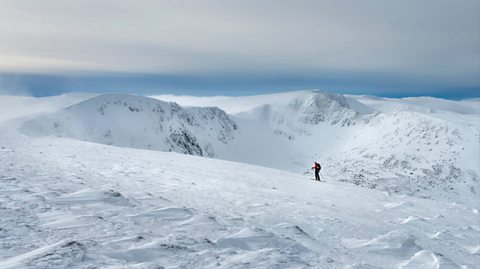
Most of the UK doesn’t tend to get snow often, but when it does - sometimes it doesn’t stick around for long or melts into slush. However, there are some areas that see snow more frequently and these are usually areas on higher ground, away from coastal parts.
Kay said: “It won't come as a surprise that the snowiest areas are in Scotland, The Cairngorms. We look at a climate over a decade - so based on the latest figures from 1981 to 2010, over a 30-year period, Cairngorms had an average of 76.2 days throughout the year.
“The least snowiest areas are low ground in the south and west and they see less than five days on average, sometimes only one or two days.”
Why doesn’t it snow as much in the UK as it does in other countries?
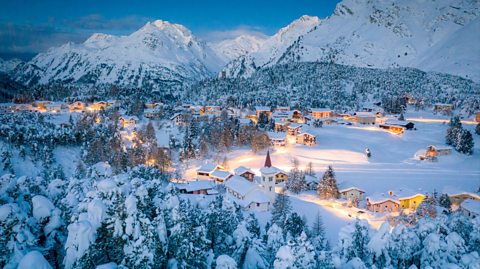
Watching a classic Christmas film, you’ll see many countries across the globe and famous cities be the snowy backdrop of a much-loved, festive film. This may leave you wondering why the UK doesn’t see as much snow as other parts of the world.
But this is mainly due to the fact that in the UK, our prevailing wind is west southwesterly and we are completely surrounded by the sea, which warms colder air masses that reach our shores from the north and east. Kay said other areas are “more prone to cold, dry air masses” as they are not surrounded by water.
She said: “It can be tricky to forecast the snow in the UK, given the marginal temperatures around the UK, the moisture involved and the fact the snow will want to go onto high ground. Whereas if you've got central parts of America or say southern, eastern Europe that has got massive land and is not surrounded by the sea, it's not warming up from below, so we are less likely to see snow compared to them.”
What is a white Christmas and when was the last in the UK?

For generations, festive films and Christmas cards have depicted blankets of snow around the world and in magical, fictional scenes, creating the perfect white Christmas. Even when we don’t see snow during Christmastime, we’re reminded of the term by the classic 1954 musical film of the same name and its title song, sung by Bing Crosby.
But a white Christmas isn’t as common as you think in the UK and what is defined as a white Christmas may not be what you expect. Kay said: “You don't have to have a blanket of snow for it to be considered a white Christmas.
“It has to have a single snowflake falling anywhere in the UK for it to be a white Christmas, but it’s not that ‘Hallmark card’ that you would imagine. Four out of our last five Christmases have been white, but if you ask other people they would say no they weren't because quite a lot of it was mild on average, but there will have been a single snowflake somewhere.
“The previous widespread snow was in 2010, where that was a blanket of snow everywhere. There’s been a widespread covering of snow only four times in the last 51 years.
“For it to be considered widespread - that’s over 40% of weather stations - so snow has fallen on Christmas Day somewhere in the UK for all but 11 of last 60 years – but you wouldn't think that.
“You’re more likely to get snow in February and March than you are in December.”
Are we likely to have a white Christmas in 2025?
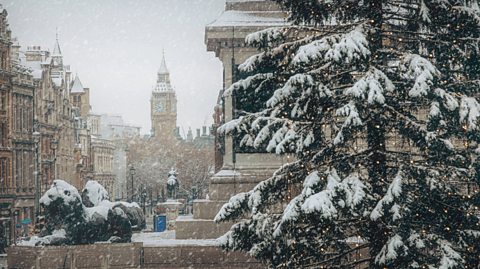
Christmas 2025 is almost upon us and one of the biggest questions on many people’s minds will be whether it is going to snow. At the moment, it may be too early to tell – but as we get closer to 25 December, trusted data will be able to tell us more.
Kay said: “We look at different models - we look at American models, we look at European models – these are all models that are produced from supercomputers that access weather patterns globally and what that weather pattern might have influence over the UK. We look at all of them and we get a trend and that trend is an indication of what might happen.
“At the minute, data up until 21 December is indicating there is a strong likelihood that it will be mild as we head into Christmas week. For the Monday of Christmas week, I’d say there is a pretty strong chance we’ll know what it is, the Friday before, the week of the 19th .
“I’d say you'd have a pretty good idea if it’s going to be cold enough somewhere in the UK to snow – but that would be one snowflake as opposed to wake up on Christmas morning to lots of snow. The reason we want that is because that’s what all the Christmas cards are and of course, climate change has had an impact on our seasons ,so Christmases are milder than they used to be - and you're not going to get a snowman if it's milder.”
This article was written in December 2025