A star is born
In your lifetime, it’s likely you’ve already come across a star – whether that’s spotting some in the night sky or seeing it as a symbol featured in stories, music, art and more. In our universe, few things have stood the test of time like stars…
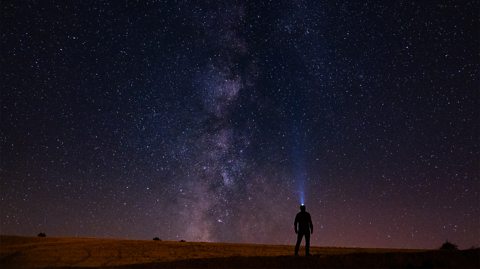
It’s impossible to see many thousands of stars with the naked eye. But luckily for us, through the generations, technology and equipment has continued to develop so we can see them from Earth, through binoculars or telescopes.
Have you ever been curious as to which star is the oldest in the universe? Here, BBC Bitesize takes a closer look at what is believed to be the oldest known star and the paradox that surrounds it.
What is a star and how are they formed?
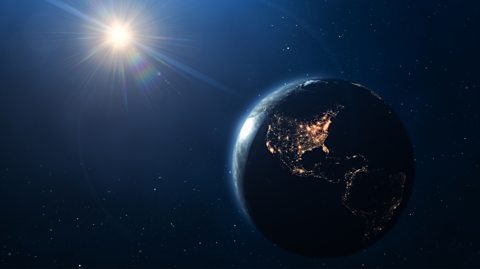
A star is a giant ball of hot gas, consisting mainly of hydrogen, some helium and other elements. All stars begin life in the same way – as a cloud of dust and gas, known as a nebula.
In the lifecycle of a star, it next becomes a protostar and then a main sequence star. All stars develop in different ways, and this depends on their size. If you’ve ever wondered why the colours of stars vary, this is due to their temperature.
For example, blue stars are hot and bright, whereas red stars are smaller and cooler, and often old, dying stars. When stars group together, it is called a galaxy. Galaxies can contain millions or even billions of stars!
Containing millions of stars, galaxies are held together by the force of gravity. Our Sun is a star and although it seems much larger than other stars we see in the sky, this is due to the fact it is much closer to Earth.
What is the oldest star in the universe?
There are stars in the universe that have existed for billions of years – but it can be difficult to measure their exact age. Through the generations, technology and research have continued to advance, but it is widely believed that HD 140283 is the oldest star in the universe.
Similar to the oldest tree in the world, the star is also known as Methuselah, after the biblical patriarch. Grandfather to Noah, Methuselah was the longest-living figure in the Bible, living for 969 years.
The star is metal-poor, meaning it has low metal content and consists of almost pure hydrogen and helium. Since 2017, the star has held the Guinness World Record title as the “oldest star in the galaxy.”
How far away is the oldest star and can we see it?
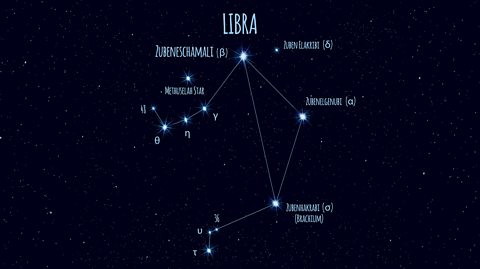
The Methuselah star is estimated to be around 190 light years from Earth in the constellation Libra. A light year is the unit of astronomical distance used by scientists and is the distance travelled by light in one year.
If you look at the night sky on Earth, you’ll see a number of stars, but it is impossible to see many thousands more with just the naked eye alone. However, the Methuselah star can be seen with binoculars or a telescope.
How long have we observed the oldest star?
For centuries, astronomers have studied objects and phenomena that lie outside the Earth’s atmosphere, from the sun to the moon, other planets and of course, stars. Through time, telescopes and other instruments have enabled astronomers to gather more information in their research, as well as make new discoveries.
The Methuselah star has existed for billions of years. But in modern times, it is believed astronomers began observing HD 140283 over a century ago.
How old is the oldest star and is it older than the universe itself?
When it comes to the Methuselah star, its age has posed somewhat of a paradox through the years. Some earlier estimates suggest it to be around 16 billion years old, but many astronomers and experts believe the star to be as old as 14.5 billion years, with an uncertainty margin of around 0.8 billion years.
Its lack of metals suggests it could be a star that formed in the early universe. However, its estimated age poses a dilemma when it comes to the age of the universe.
According to the Big Bang Theory, the whole universe expanded outwards to what exists today around 13.8 billion years ago. This would mean HD 140283 would have existed prior to the Big Bang and be older than the cosmos itself.
A number of scientists and astronomers believe there could be uncertainties in measurements of the star so far which has caused the age discrepancy. Some claim it is not the oldest star, while others believe it is based on its estimated age and what we know about HD 140283.
This article was written in November 2025