What you need to know about Boxing Day
When you think of popular holidays, festivals and events that take place year on year, Christmas is bound to spring to mind. It comes around quickly and is more than just a time for presents – Christmas is a time to spend with your loved ones and celebrate one another.
As we get into late December, many of us get excited for Christmas Eve, Christmas Day and Boxing Day, three consecutive days in the festive calendar. But why is Boxing Day called Boxing Day and when did it begin?
Here at BBC Bitesize, we’ve taken a look back at the history of Boxing Day, from traditions to where it is celebrated around the globe.

What is Boxing Day?

On Boxing Day, many tune in to watch or make the journey to a stadium to support their favourite football team. A much-anticipated date in the football calendar, the Premier League, Championship, League One and League Two all see clubs play a match on Boxing Day.
Also a time to feast, many spend their Boxing Day making the most out of any leftover food from the day before – especially turkey. When there's too much turkey left over, people make everything from turkey curry to turkey sandwiches, turkey soup or turkey pies.
Another tradition is shopping and making the most of the sales. Similar to Black Friday or Cyber Monday, retailers and independents reduce the price of items on Boxing Day - a practice that, before online shopping, would see customers queue outside for hours waiting for the shops to open.
Some also spend their Boxing Day doing a traditional dip in water near them - embracing the cold and even wearing a Santa hat to raise money for charity or just do something fun with loved ones.
Why is it called Boxing Day?
Boxing Day has a long history and through time, there have been several theories as to where the name and holiday originated. The most popular theory is that the name comes from a tradition of gifting boxed gifts to the poor.
Centuries ago, servants would be working and serving those they worked for on 25 December, so would get the following day off for their own celebrations with family and friends. They would be gifted with the boxes as thanks for their service to take home with them.
Others believe the tradition is called Boxing Day in relation to the church, who had a donation box for those in need, which they would distribute after Christmas Day.
Where did Boxing Day originate?
The tradition of gift giving and donations has continued throughout the centuries and evolved into being a huge part of our annual Christmas celebrations. Due to this, the exact time or date when Boxing Day as we know it began is relatively unknown, with many historians and researchers pinpointing the tradition to different eras, countries and religions.
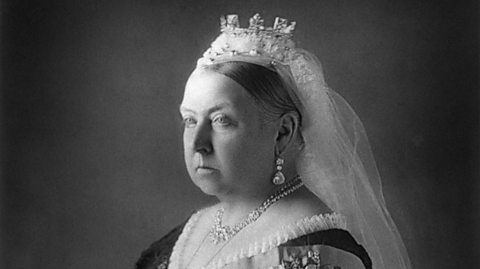
However, in the UK, we know Boxing Day was established as a public holiday in the UK during the reign of Queen Victoria. Queen of the United Kingdom of Great Britain and Ireland for 63 years, Queen Victoria's reign is known as the Victorian age.
When is Boxing Day and is it a Bank Holiday?
Every year, Boxing Day falls on 26 December, the day after Christmas Day. It is also a Bank Holiday, a day where many workers down their tools and enjoy an extra day off.
Bank Holidays first came about when banks and other public offices started to shut shop to celebrate anything from royal events to saints’ days, religious festivals and more. In 1871, politician and banker Sir John Lubbock came up with the Bank Holidays Act, creating four official dates when all banks would close across Britain – and this included Boxing Day.
However, the Boxing Day bank holiday can be moved if 26 December does not fall on a weekday. For instance, if Boxing Day falls on a Saturday, the bank holiday is moved to the following Monday.
If it falls on a Sunday, the bank holiday is moved to the following Tuesday. This is because Christmas Day is also a Bank Holiday, so would fall on the Saturday and take its own Bank Holiday the following Monday.
Do other countries celebrate Boxing Day?

It’s not just the UK that celebrate Boxing Day – it is celebrated all over the world. Many British Commonwealth countries, like Australia and Canada, celebrate Boxing Day, as well as Hong Kong, New Zealand, Barbados, Cyprus and more and have their own traditions.
Boxing Day is not the only holiday celebrated on 26 December. The Christian festival Saint Stephen's Day is also marked on that day and has its own traditions and celebrations across the globe.
Also called the Feast of Saint Stephen, the day commemorates the life of Saint Stephen, who is the first Christian martyr. A public holiday in the likes of Germany, Denmark, the Czech Republic, Slovakia, Romania and more, St Stephen is the patron saint of many things, including altar servers, deacons, headaches and stonemasons.
This article was written in November 2025