|
 |
 |
|
|
|
|
|
||||||||||||||||||||||||||||||||||||||||||||||||||||||||||||||||||||||||||||||||||||||||||||||||||||||||||||||||||||||||||||||||||||||||||||||||||||||||||||||||||||||||||||||||||||||||||||||||
|
|
|
You are in: World: Asia-Pacific | ||||||||||||||||||||||||||||||||||||||||||||||||||||||||||||||||||||||||||||||||||||||||||||||||||||||||||||||||||||||||||||||||||||||||||||||||||||||||||||||||||||||||||||||||||||||||||||||||||
|
|
|
Wednesday, 13 November, 2002, 15:22 GMT
Tearing down the fence

The three girls walk 1,200 miles home
It is both a devastating comment on Australian colonial history, and a beautiful portrayal of a universal fable - the journey home.
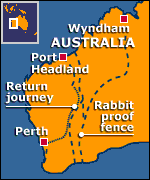
In 1931 they were taken to an orphanage under a government policy of resettling half-caste children in order to "breed out" the aborigine in them. The children, aged between eight and 14, escape the orphanage and trek the 1,200 miles home (1,931 kilometres), navigating by way of the fence built by the settlers to keep the rabbits out of the pastureland. It is a very simple - but extremely powerful - film, with startlingly cinematography, and extraordinary performances from the non-professional young actresses. But the film's real achievement is the empathetic portrayal of AO Neville, the chief protector of Aborigines in charge of western Australia - played by Kenneth Branagh. What makes the film so chilling are the apparent good intentions motivating amiable Mr Neville - despite the girls dubbing him "Mr Devil". He is concerned that the half-castes are forming "an unwanted third race" which will have no clear role in Australian society. "In spite of himself, the native must be helped," Mr Neville pronounces. The film was given a rapturous reception when it opened in Australia. It scored both critical and commercial success, and has received 10 nominations for the Australian Film Institute Awards in December. Despite some Australian politicians producing leaflets urging the electorate not to watch the film, their protests have apparently gone unheeded. Director Phillip Noyce believes this is because the Australian public is finally ready to face the truth about the so-called Stolen Generations.
He acknowledges, however, that most of the country only learned about the extent of the "Stolen Generations" in 1997, when the results of a judicial inquiry were issued. Doris Pilkington, Molly's daughter and the author of the novel on which the film is based, says the film had a big impact on the "Stolen Generations" themselves. "Seeing the movie has enabled them to come to terms with the separation, and the feelings and memories that were suppressed for decades were brought to the surface." Rabbit-Proof Fence is playing at several London cinemas. It opens in Italy on 22 November, and in the US and Canada on 29 November |
|
Internet links:
 The BBC is not responsible for the content of external internet sites Top Asia-Pacific stories now:
Links to more Asia-Pacific stories are at the foot of the page.
|
||||||||||||||||||||||||||||||||||||||||||||||||||||||||||||||||||||||||||||||||||||||||||||||||||||||||||||||||||||||||||||||||||||||||||||||||||||||||||||||||||||||||||||||||||||||||||||||||
|
|
|
 E-mail this story to a friend E-mail this story to a friend |
|
|
|
Links to more Asia-Pacific stories |
|
|
|
||
 |
||||
 |
|
Back to top
|
||
|
----------------------------------------------------------------------------------
To BBC Sport>> | To BBC Weather>> | To BBC World Service>> ---------------------------------------------------------------------------------- © MMIII | News Sources | Privacy ~RS~a~RS~Domestic~RS~q~RS~~RS~z~RS~55~RS~)
|