Play is essential for your little one's development, but not all children play in the same way.
When you see your child play in a repetitive or different way, getting involved gives you an opportunity to see the world through their eyes.
Watch our film below for tips and advice from highly specialist speech and language therapist Neha Makwana on joining in and how it can support children’s language development.
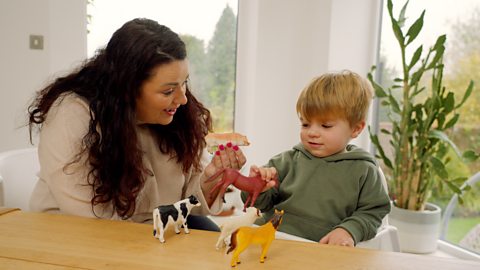
You may find your child plays differently to how you might expect. Maybe they line up their toys or play repetitively. Here are a few things that can help you join in with your child's play, and also help their language development.
If you spot your child playing differently, don't try to change their play or take over - as this might upset them and spoil their fun. Instead, comment on what they are doing.
So it's great that you're not changing the way that she's playing. You're just following her lead, following her interest. Just keeping it fun for her.
If your child is reluctant to let you join in, try copying their sounds or movements to see if they notice you and if they say something or copy your movement back.
Hmmm. Hmmm. Hmmm!
As you can see, she was able to notice you a little bit more. You're able to get her attention in that way.
It felt unnatural at first, but now I know it can help, I'll be doing it more often with her.
Good job. Oh, all fallen down!
So that was really great, the way that you just joined in with her. You know that she really likes stacking. So you kind of re-linked it to her interest.
Sometimes it's really hard for me to not take over for what she's doing.
Play can be a great time to bond and chat with your child, but if they play differently to other children, don't be tempted to insist on how they play. Just find a way to join in with them. They might even show you a new way of playing that you both enjoy.
If you are concerned about your child’s language and communication development, then discuss any issues with your health visitor
We spoke to speech and language therapist Alys Mathers for some additional advice…
What are the benefits of play?
Every child plays in a way that’s best for them.
Play helps them to learn and explore the world, builds their confidence, and it can be a way to calm them down. You don’t need to ‘teach’ your child how to play, even if their style is different from other children.
Getting involved with your child's play and letting them lead shows them that you’re interested in what they’re doing and paying attention to their interests.
Why might my child play differently?
There are lots of different ways to play, and they’re all valuable in building confidence and understanding. Experts call these different types of play 'schema'.
Lining objects up, for example, is one of those schemas, called 'positioning'.
Is repetitive play and ordering a sign of autism?
Repetitive play can be seen in autistic children, but all young children enjoy it to some extent.
Repetitive play can build familiarity and understanding with a toy. Seeing it work the same way every time can feel comforting and build up confidence to explore and experiment with what they know.
It’s also great for language learning – hearing the same song or reading the same story over and over can teach new words that they might not hear in everyday chat, and the familiar rhythms and rhymes can be comforting
Putting objects in order is often called ‘positioning’ - many children engage in this type of play. Lining up and ordering objects helps them learn about the objects around them and link up what they know with what they’re experiencing.