It can be worrying when your child doesn't seem to respond to you, or their attention moves quickly between toys or activities.
Support your little one’s attention span and understanding with these tips and games from highly specialist speech and language therapist Neha Makwana in the film below.
If your child doesn't seem to respond to you, and they're experiencing difficulties with their speech and language development,here are some things you can do which might help them.
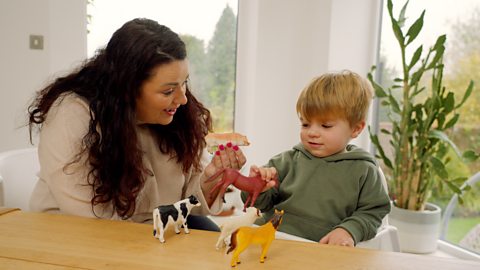
So if you turn off the TV and the radio, so that the child is not interrupted, call their name to get their attention and try and get face to face with your child.
So what would be great is if Rory can face you a little bit.
Rory, face Mummy. Oh, there we are.
Touch can be a really useful way to get your child's attention. Gentle physical prompts, such as touching their hand, helps them to know that you're about to talk to them.
Sometimes I'm at the park, it does really help when I can say "Rory!" but sometimes I just need to touch him as well and he listens.
To help their understanding, it would be really useful to use visual prompts. So using objects that are related to the upcoming activity or the routine.
Rory, now we're tidying.
Bubbles! Finish! Well done.
Using these techniques little and often can really help with their attention skills and improve their language development.

If you are concerned about your child’s language and communication development, then discuss any issues with your health visitor
We spoke to speech and language therapist Alys Mathers for some additional advice…
What should I expect from my child’s attention span?
The ability for a child to focus and pay attention to more than one thing changes as they grow.
Before a child’s first birthday, their attention span is very short, and they may be easily distracted by any sights, movements and sounds nearby.
Children around one to three years old can often only focus on one thing at a time. They won’t be able to properly listen to you if they’re doing another task – which can look like they’re tuning you out! It’s at this age where a gentle touch, or saying your child’s name first can be helpful in directing them to focus on you. They’ll have to stop what they’re doing in order to be able to listen to you.
It’s not until a child is 4 years old where they start to be able to listen while doing a task at the same time, which continues to develop into their school years.
How to improve my child's focus and concentration skills
First things first, removing distractions for both you and your child is a great idea.
Background noise from the television or phones can make it harder for a child to notice when you’re trying to get their attention.
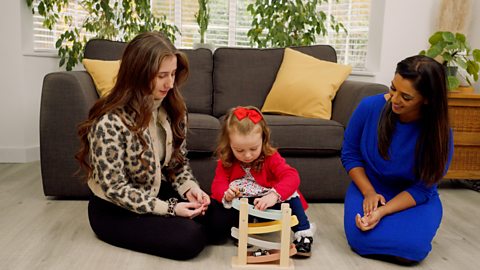
Having too many toys out to play with can also be a distraction, as there can be too many options to choose from. Having one or two toys out at a time will help them focus on one thing at a time.
Rather than leading their interest to a toy, follow their lead – let them choose what toy or activity they like or are interested in, and help them play by talking about it.
Of course, different children have different interests – don’t be worried if sitting with a book or colouring isn’t your little one’s first choice of an activity to focus on!
Strategies to help children’s attention skills
Break up longer tasks or activities into short steps with a break in between. For example, rather than trying to tidy all their toys in one go (where they might lose focus), make a game of tidying away one toy at a time.
Could you find a way to get active before a calmer activity? This could be a way to direct any restless energy, giving them time to get ready to focus on a quieter activity.
For younger children, give them the opportunity to finish what they’re doing before trying to get their attention with a new task. Once they’ve got an aim in mind, it’ll be tricky to change it!