Female wearing orange sweater: When I were doing my academic writing, I were constantly looking at dictionaries and Thesauruses, because I had to keep changing my words.
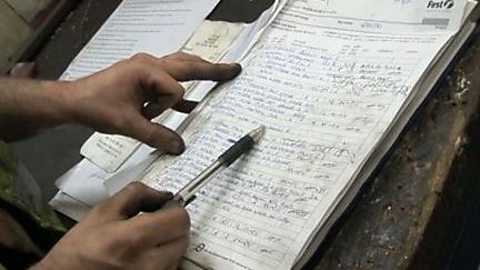
Female working at hotel: Index is very important to me; I have created my own index so I can find my clients in alphabetical order.
It's very important because you can find all the clients very easily.
so, we're looking for Red B, so we go to R, and here you can see the corporate agreement, which is basically the contract between the hotel and the client.
Male Council Worker: In my job with the Council, I have to write reports, and I used dictionaries to identify words what I have difficulties with.
One of the words I always struggle with is assessment.
Just look it up just to make sure that it's correct, then retype it on the computer and submit it.
Female working in florist: As a florist, we use indexes so that we can refer to the prices of the flowers, which vary from day to day, and they're alphabetically arranged for quick reference.
Dictionaries and indexes are both organised in alphabetical order. Dictionaries are also a handy way to check your spelling of a word.
Quick tips for tutors
Types of text includes:
- Information about different text types: persuasive, instructive, informative and descriptive
- Strategies for recognising each type
- Common features of forms
Downloadable Factsheets
Entry 1 & 2 - Alphabetical order
An introduction to alphabetical order.

Entry 1 & 2 - Dictionaries and indexes
An introduction to using dictionaries, thesauruses and indexes to find information.
Entry 3 - Dictionaries
How to use a dictionary to find the meaning of unfamiliar words.
Downloadable Worksheets
Entry 1 & 2 - Recipe index
Activity about looking up recipes in alphabetical order.

Entry 3 - Alphabetical order
Exercise in the use of alphabetical order in dictionaries and indexes.
Entry 3 - Using alphabetical order for filing
Exercise in the use of alphabetical order for filing.