In short...
Themes: Christmas; Christmas traditions; celebrating difference and diversity.
Summary: this assembly is suitable during advent, the period of time before Christmas. It's a fun exploration of some unusual Christmas traditions around the world, including Mexico, Japan and Finland. It celebrates Christmas as a special time for Christians and non-Christians alike.
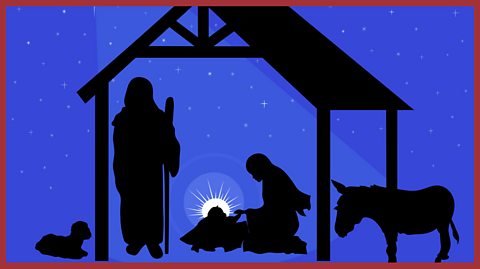
Resources: The framework to download / print (pdf) and an illustration of a nativity scene from Mexico and a traditional nativity scene in silhouette.


The video
It's almost Christmas!
Sparkling lights, Christmas trees and presents are all things we might picture when we think about Christmas.
It is one of the biggest celebrations in the Christian calendar, marking the day Jesus was born.
And in the UK many people celebrate with the same traditions each year.
You might choose to wear a fun or colourful jumper.
(Child) ‘It says "Ho-ho-ho" here and here’.
(Child) ‘It's a reindeer and it's got a red nose’.
(Child) ‘And I'm wearing reindeer leggings’.
Family and friends come together on Christmas day to give presents and have a big meal together.
People put Christmas trees up in their homes covered in shiny decorations and twinkling lights too.
This tradition of bringing a tree into the home for Christmas is a very old one. It started in the UK in the late eighteenth century and became popular during the reign of Queen Victoria.
These children have helped to pick out a very special tree…
Every year since 1947, Norway has given a tree to the people of this country to say thank you for helping during World War II.
The tree is displayed in Trafalgar Square in London.
Today people celebrate Christmas like this all over the world, but there are also lots of other different traditions too!
In Mexico, in the lead up to Christmas Day, people take part in special processions.
This represents the journey Joseph and Mary made in search for a place to stay in Bethlehem. Jesus is represented by a wooden doll.
The procession visits friends’ and neighbours’ houses and everyone sings carols.
At the end, a few houses host a party. Pinata is a popular game that is played!
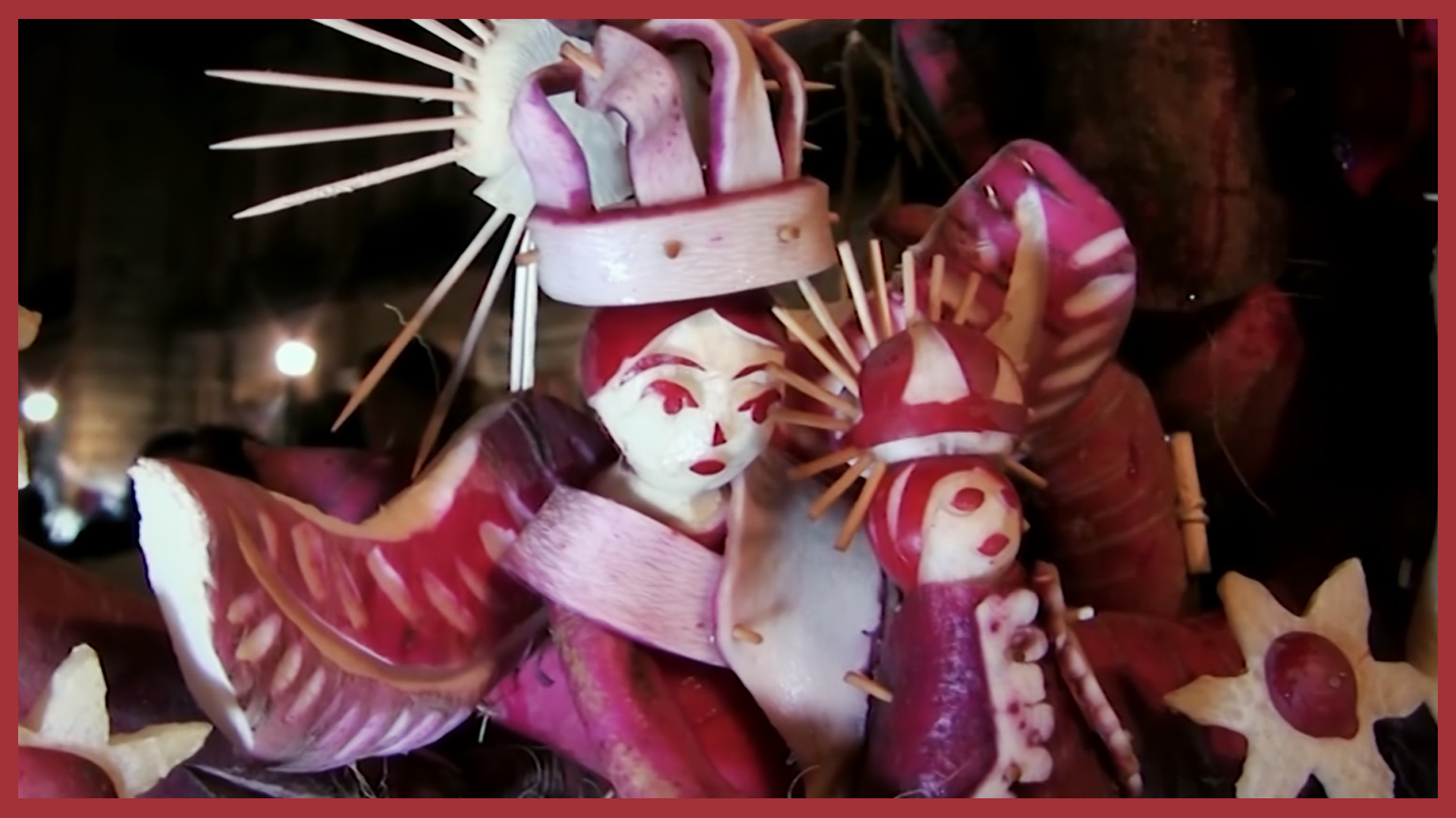
Then, on 24 December, Mexicans celebrate with a festival called the Night of the Radish. People carve these little vegetables into religious scenes.
In Mexico, the main festivities are celebrated on the 6th of January, also known as Three Kings Day.
On the evening of the 5 January, it is a tradition for children to leave their shoes out with a letter asking for the gifts they would like to receive.
And then everyone looks forward to eating a special cake called the Three Kings cake.
It’s made with fruit and nuts that represent the jewels of the Three Kings, and there is a small clay doll inside, representing Jesus.
In Japan, Christmas isn't a religious holiday, but it's still celebrated by many people.
There are lots of impressive light displays.
Like Mexicans, the Japanese have a favourite cake too, with red strawberries and white cream that represent the colours of Christmas.
And it is a tradition to eat fried chicken on Christmas day!
In Iceland, folklore tells of the Yule Troll Family.
The story goes that in the 13 days before Christmas, 13 trolls - known as the Yule Lads - come down from the mountains.
You might not see them, but they like to play tricks on people!
They leave presents for children who have been good, or a gift of a potato for children who have been naughty.
So, Christmas is celebrated in many different ways all around the world, by Christians and non-Christians alike.
What is your favourite Christmas tradition?
(Children) 'Happy Christmas!'
There are a number of secular Christmas traditions that are shared by several countries - eg bringing a tree into the home and decorating it; exchanging presents; sharing a special meal; wearing particular clothes; singing carols. In the UK the tradition of Christmas trees began in the late C18th and was popularised during the reign of Queen Victoria. Each year Norway sends a huge fir tree to the UK to acknowledge support given during World War 2.
There are a number of other Christmas traditions around the world. In Mexico one of the most fascinating is the Night of the Radish, when radishes are carved into tiny nativity scenes. Japan does not celebrate Christmas as a religious festival, but marks it nonetheless with ornate light displays. In Finland tradition tells of a group of mountain dwellers called the Yule Lads who descend to the towns and villages in the days before Christmas to reward good children with presents…and bad ones with a potato.
Christmas is a happy occasion for Christians and non-Christians alike. Happy Christmas!
Duration: 4' 16"
Final words: 'Happy Christmas!'
Video questions
- When did the tradition of bringing a Christmas tree into the home become popular in the UK? (During the Victorian period)
- Which country sends a huge Christmas tree to the UK every year to say thank you? (Norway)
- Can you remember any of the ways Christmas is celebrated in Mexico? (Processions representing the journey of Mary and Joseph; carols; pinata; the Night of the Radish; put shoes out on 5 January; Three Kings Cake)
- What is it traditional to eat on Christmas Day in Japan? (Fried chicken)
- In Finland what do the Yule Lads bring the children? (Presents for those that have been good…a potato for those that have not)
Key links
Assembly framework (pdf) document
Download / print the assembly framework ready for use
Image: the Night of the Radish. image
Click to display image full size
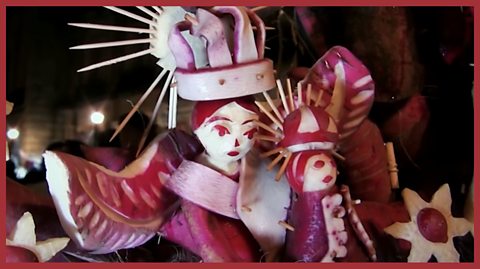
Image: nativity scene. image
Click to display image full size
Suggested assembly framework
1. Entry
Play your chosen music as pupils enter. There are plenty of Christmas hits to choose from - or you could use the instrumental version of one of the songs listed below.
2. Introduction
Ask pupils what their favourite Christmas tradition is and gather a few responses. Tell everyone that Christmas is celebrated all around the world, by Christian and many non-Christian countries alike. The traditions of Christmas in the UK are shared by many other countries; but some countries enjoy very different Christmas traditions. Tell everyone that they're going to watch a short video about Christmas traditions around the world and, as they watch, to think about the possible reasons for differing traditions.
3. The video
Play the video. The duration is 4' 16" and the final words are: 'Happy Christmas!'
4. After the video - Time to talk
Lead a discussion of the video by asking some or all of the following questions:
- Who can tell me why we celebrate Christmas? (It's a Christian festival marking the birth of Jesus Christ)
- Can you remember when the tradition of bringing trees into our homes started? (The 18th century; but it became popular during Queen Victoria’s reign in the 19th century)
- Who can think of a Christmas tradition that might be more recent? (Any sensible response - eg wearing Christmas jumpers)
- In Mexico the people have a special Christmas celebration that isn't on 25 December. Can you remember which day it is and what it's called? (6 January - Three Kings Day).
- What other traditions are there in Mexico? (Any example from the video, including processions, piñata, leaving shoes outside, eating Three Kings' cake, the Night of the Radish)
- Why might it be surprising that people celebrate Christmas in Japan? (Christianity isn’t the main religion in Japan)
- Why do you think it is celebrated in Japan? (Looking for an awareness that Christmas is more than just a religious festival now)
- What could you expect from a visit from the Yule Lads in Iceland? (Mischief, presents or a potato)
- Does that remind you of any part of our Christmas traditions? (Father Christmas, Santa Claus)
Conclude by asking everyone: Turn to the person next to you and tell them what your favourite Christmas tradition is and why.
5. Opportunity to sing
Suggestions from BBC collections below.
6. Opportunity for reflection
Sit quietly now as we think about the things we've heard today…
Christmas is a Christian festival celebrating the birth of Jesus Christ…
But over time Christmas has grown and changed…and now it is an important celebration for many different countries, including non-Christian ones…
The are many different ways that Christmas is celebrated around the world…
But although the celebrations may differ they all have this in common: each is an opportunity to come together with family and friends…to share together and enjoy…
Think to yourself how you will celebrate this Christmas…and how Christmas celebrations unite people all around the world at this special time of year…
7. Opportunity for prayer
Begin with your usual form of address ('Dear God' / 'Dear Lord' / 'Let us pray' / etc) and:
Thank you for the opportunity to come together with family and friends this Christmas.
Help us to celebrate the things that make us all different, but also to remember the many important things that unite us.
And help each of us make this Christmas a truly special time of year.
Amen.
Suggested songs
'Away in a manger' - Come and Praise, Beginning
Away in a manger
No crib for a bed
The little Lord Jesus
Laid down His sweet head
The stars in the sky
Look down where He lay
The little Lord Jesus
Asleep in the hay.
The cattle are lowing
The baby awakes
But little Lord Jesus
No crying He makes
I love You, Lord Jesus
Look down from the sky
And stay by my side
Until morning is night
Be near me, Lord Jesus
I ask You to stay
Close by me forever
And love me I pray
Bless all the dear children
In Your tender care
And fit us for Heaven
To live with You there
And fit us for Heaven
To live with You there
'Silent Night' - Come and Praise, Beginning
Silent night, holy night!
All is calm, all is bright.
Round yon Virgin, Mother and Child.
Holy infant so tender and mild,
Sleep in heavenly peace,
Sleep in heavenly peace.
Silent night, holy night!
Shepherds quake at the sight.
Glories stream from heaven afar
Heavenly hosts sing Alleluia,
Christ the Saviour is born!
Christ the Saviour is born!
Silent night, holy night!
Son of God, love's pure light.
Radiant beams from Thy holy face
With the dawn of redeeming grace,
Jesus Lord, at Thy birth!
Jesus Lord, at Thy birth!
Jesus Lord, at Thy birth.
'Mary had a baby' - Come and Praise, no 123
Mary had a baby, Yes, Lord;
Mary had a baby, Yes, my Lord;
Mary had a baby, Yes, Lord;
The people came to worship him in Bethlehem.What did she name him, Yes, Lord…
She called him Jesus, Yes, Lord…
Where was he born? Yes, Lord…
Born in a stable, Yes, Lord…
Where did they lay him? Yes, Lord…
Laid him in a manger, Yes, Lord…