Government considers advertising or subscription model for BBC

 BBC
BBCThe government will consider new ways of funding the BBC, including via advertising or a subscription model, as it formally begins the process which will decide the corporation's future.
It has published a consultation document - or green paper - asking the public for their views about several funding options, including the possibility of allowing adverts on the BBC.
Another option being considered is a "top-up subscription service", which would offer premium content.
The current licence fee, which costs £174.50 annually, could also be replaced with a different set of rates depending on which of the broadcaster's services people use.
In the green paper, the government says it is "keeping an open mind about the future of BBC funding", adding: "We have not yet identified a preferred model."
The discussions begin the renewal of the BBC charter - the corporation's rulebook and licence to exist - which expires in 2027.
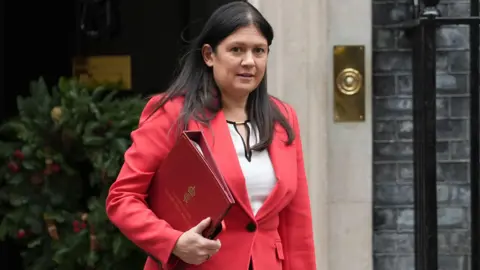
Culture Secretary Nandy said the government was "keeping all options open", but noted they had ruled out general taxation.
"That is because it is essential that the BBC can hold governments of any persuasion to account, including ours, without fear or favour and without being heavily reliant on direct funding from government," she said.
Nandy described the BBC as "an institution that matters deeply to the democratic process in this country and to the health of our nation" and said it "has to have sustainable funding in order to thrive".
The consultation will look at:
- Future funding models, such as allowing advertising or a subscription tier, as well as examining how the World Service should be funded
- The corporation's workplace culture, efficiency, transparency and accountability
- How the BBC can be a success in the streaming era, while ensuring it still commands the public's trust, is accountable to audiences and fully represents communities
- Whether the corporation should be given new responsibilities to counter misinformation and disinformation
- Strengthening the BBC's independence, including examining political appointments to the BBC's board
- Whether the BBC's mission should be updated to put accuracy on the same footing as impartiality
Advertising and subscription
As part of the consultation, the government asks the public what level of advertising they would be comfortable with on BBC platforms.
The options include extensive advertising, which would see the BBC carry adverts on all of its content and services or a more limited advertising model, which would see adverts permitted on some online content and services, but not live TV or radio.
The public are also given the option of supporting the current approach of allowing no advertisements whatsoever.
The government said: "The BBC could potentially generate significant revenue from carrying advertising on its public services, while continuing to make them universally available.
"This funding model supports other public service media providers such as ITV, Channel 4, and Channel 5."
If advertising is allowed, it would mark the first time adverts would be shown on BBC platforms in the corporation's 100-year history.
The consultation also asks about a possible subscription model, which would see the BBC offer users additional services for a certain cost on top of the licence fee.
The public are asked how strongly they agree or disagree that they would be willing to pay for "a top-up subscription service for premium and entertainment content".
The government states in the green paper: "We have not ruled out keeping the current licence fee in place with its current structure.
"However, given the sustainability challenges it is facing, we are also reviewing the scope of services for which the licence fee is required and considering differential rates for specific types of users, to make it more sustainable for the long-term, along with increasing commercial revenue to ease the burden on the public."
 PA Media
The licence fee brought in £3.8 billion last year. Although other funding streams are on the table for now, many media commentators expect the licence fee to remain, with some changes.
Nandy said the BBC was "fundamental to the health of our nation and we want to make sure that we put it on a firm footing for decades to come".
But she also acknowledged recent issues at the corporation: "There have been serious concerns about developments at the BBC, including editorial standards and about political interference.
"These aren't new challenges for the BBC. Throughout its history it's had to navigate them, but we believe that through this charter we can strengthen the amount of accountability within the BBC."
There have been a series of controversies at the BBC in recent months for which it has had to apologise, including Panorama's edit of a speech by President Trump, who is suing the corporation.
Elsewhere, a documentary about children in Gaza that had to be taken down from BBC iPlayer after it emerged the child narrator was the son of a Hamas official and the failure immediately to remove the punk duo Bob Vylan's set from a Glastonbury live stream after offensive comments were made on stage.
Outgoing BBC director general Tim Davie said in a statement: "We welcome the publication of the government's green paper and the start of the public consultation on the future of the BBC. We urge everyone who cares about the success of the UK's world-leading creative industries to have their say.
"At the BBC, we want change, so we can continue to deliver for the UK for generations to come. We want to secure a public service BBC that is independent, sustainably funded for the long term, and meets our audience's needs."
The Reform party wants to scrap the licence fee altogether, while Conservative leader, Kemi Badenoch, threatened to withdraw support for it earlier this year.
The Liberal Democrats are supportive of the licence fee up until 2027. The Green Party did not specifically mention the BBC in its 2024 manifesto.
The consultation will be open for 12 weeks from 16 December 2025 to 10 March 2026.
Next year, following the consultation, the government will publish its own vision for the BBC.
Additional reporting by Emma Saunders.