Appeal launched to save historical colliery

 BBC
BBCCoal mines once dominated the landscape across Staffordshire.
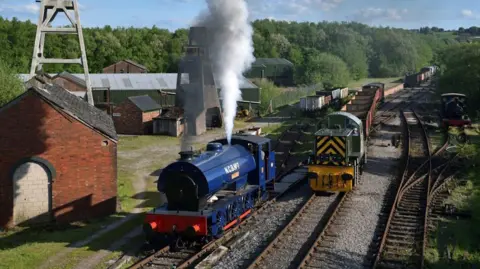
The Foxfield Colliery, which opened near Blythe Bridge in 1880 and closed in 1965, is one of the few sites in the county to still have its railway line in place.
In recent years, the buildings have become derelict, but now a group of volunteers wants to raise much needed cash to stop them from falling into further disrepair.
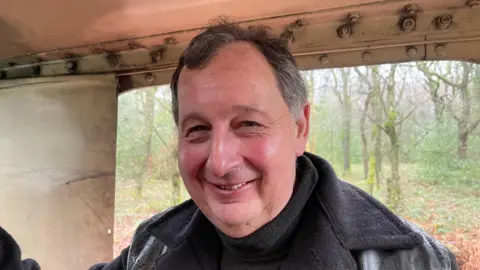
Driver Dave Scragg, who owns a steam locomotive based on the Foxfield Railway line, said it was "critical" the colliery was saved for future generations.
Scragg said they needed £250,000 just to save the colliery buildings from collapsing, and more to bring them up to an "acceptable health and safety standard".
"Operating the railway is expensive, and we want to do more than have it as a museum, we want to get trains shunting trucks and taking passengers to the site," he added.
"It's been at least over 40 years since a passenger train went down to the colliery and we want to showcase this heritage to people again."
The current phase of the project is to allow trains to run on the notorious Foxfield Bank section of the line, which is one of the steepest railway gradients in the country at 1 in 19.
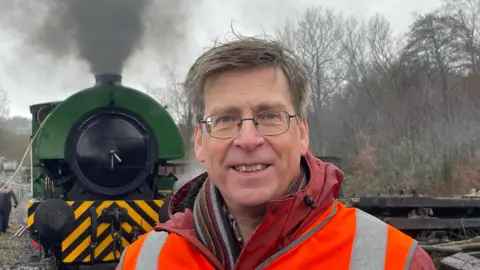
"The colliery is moving from living memory to history, the people who worked it, their story needs preserving," volunteer Mark Smith added.
"This is one of the few remaining examples of an industrial railway left in the country and ultimately we want to share that with members of the public so they can see exactly how trains worked here at Foxfield," he said.
"The colliery is a well known landmark here in North Staffordshire, part of the Cheadle Coalfield. You don't have to dig very far to find coal round here."
 Foxfield Railway
Harry Alcock, 27, started volunteering with the railway when he was a teenager.
He said it was "incredibly important" to preserve and restore the colliery so his generation could see how important it was to the local area.
"Today is the first time we've taken a train down to the colliery since 2019, the line was never built as a passenger line, it's lifeblood was the coal industry," he said.
"This first phase of the project is the crucial bit, because it saves the buildings."
Follow BBC Stoke & Staffordshire on BBC Sounds, Facebook, X and Instagram.