Why so many 'hazardous' plastic beads in River Irwell?

 BBC
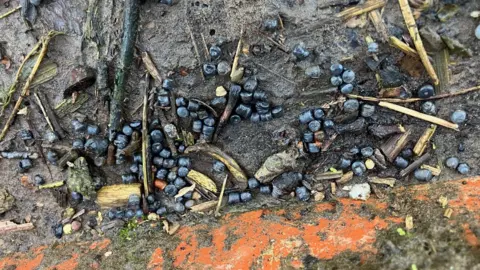
BBCA pollution investigation has been launched by the Environment Agency after a "huge quantity" of small plastic pellets have been found beside a river in Greater Manchester.
The black pellets known as bio-beads, which can be toxic if swallowed by animals, were found strewn on the banks of the River Irwell in Bury.
But what are they? And where have they come from?
What are 'bio beads'?
Bio-beads are plastic pellets used in some sewage treatment works as they provide a large surface area for bacteria to break down organic material into a treated liquid called sewage effluent.
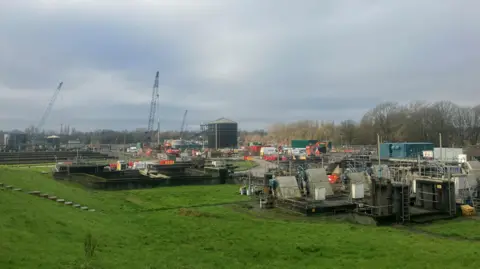
United Utilities use bio-beads at its wastewater treatment plant in Bury to break down sewage before clean water is discharged back into the River Irwell.
Are they harmful?
Bio-beads are a hazard to wildlife because they can be mistaken for food, according to the RSPB, which said "any pollution incident of this kind is deeply concerning".
A spokeswoman for the conservation charity said the beads can "cause blockages that lead to malnutrition where birds feel full because they cannot digest the material".
Jamie Woodward, professor of Physical Geography at the University of Manchester said the pellets can get "trapped in the gut", and can be toxic to wildlife if they contain heavy metals and arsenic.
He said: "We don't know what the concentrations are in this Greater Manchester example, but it would be interesting to know what the composition of these beads is and what sort of contaminants they're carrying."
Why are they in the river?
Caroline Brice spotted the beads in the river around the Springwater Park nature reserve in Whitefield earlier this year.
She volunteers for the Love Springwater Park group and said in the summer she could see "tonnes" of the pellets, adding "you could just scoop them out of the river".
A spokesperson for United Utilities said the firm believes that the "small number" of beads found at Springwater Park in June "may have originated as a result of a minor issue with the treatment process at our works in Bury".
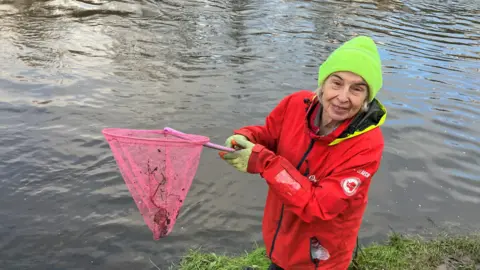
Ms Brice, 70, said the beads were damaging and their release was "not showing any respect for the work we do to care for Springwater Park".
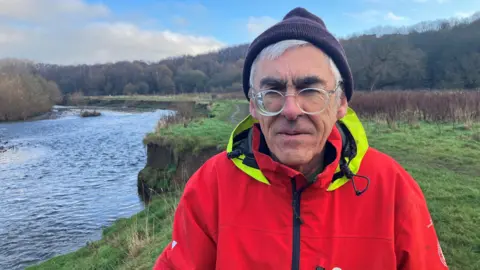
Chris Malkin, also 70, is another volunteer for the group which helps maintain the reserve.
He said: "Back in the summer, a lady alerted us that her dog was coming out of the River Irwell covered in black beads.
"We went down and saw that the riverbed was covered in black beads and there must have been millions of them."
Most of the pellets have now disappeared from Springwater Park but BBC Radio Manchester found thousands of them beside the water at Salford Quays.
Mike Duddy, from the Salford Friendly Anglers Society, said: "Hundreds of thousands of these little black beads were littering the River Irwell before floating into the Manchester Ship Canal and then out towards the Irish Sea."
The 59-year-old added: "These beads look exactly like water snails, which is the staple diet of most fish, and incidents like this are making it more difficult for wildlife to thrive in our rivers".
What happens next?
The Environment Agency said it was investigating the incident.
A spokesman said: "We expect any responsible company to promptly report pollution to us directly, but none reported this spill of plastic beads.
"We are actively investigating this incident and have inspected multiple locations in the Irwell catchment to gather evidence."
The regulator also urged people to contact them if other rivers have been contaminated.
Meanwhile, United Utilities said it is taking action to alleviate the issue.
A spokesman for the firm said: "We have a programme of works to mitigate against the risk of loss of bio-beads at this site.
"Subsequent reports of bio-beads being found in the River Irwell are now being investigated, to see if they originated from our works, or an alternative source."
Listen to the best of BBC Radio Manchester on Sounds and follow BBC Manchester on Facebook, X, and Instagram. You can also send story ideas via Whatsapp to 0808 100 2230.