Bear undergoes procedure to help with fertility

 PA Media
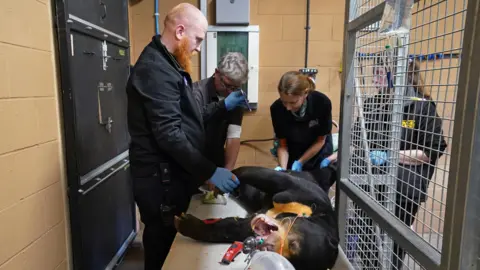
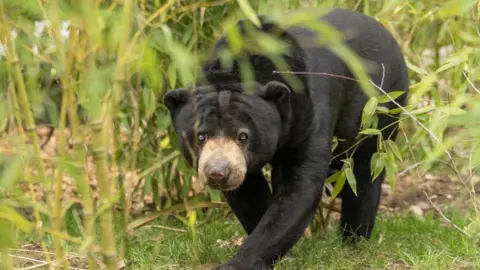
A female sun bear underwent a rare and unusual veterinary procedure to help protect the future of her species at Hertfordshire Zoo.
Kyra has not been able to conceive with her mate, Indera, despite living with him at the site since April 2023.
Last month, veterinarians discovered cysts in her womb, which they believed were the cause of her fertility issues.
On Wednesday, specialist doctors travelled from Germany to remove the cysts at the zoo in Broxbourne.
 Paradise Wildlife Park
The sun bear is part of a crucial European conservation breeding programme.
Tyler Whitnall, managing director at the zoo, said: "This is a complex and unusual procedure, but one that is vital for Kyra and for the international breeding programme.
"If this operation is successful, it offers a real chance to boost the European population and contribute directly to the survival of this incredible species."
Sun bears are classified as a vulnerable species on the International Union for Conservation of Nature Red List, with fewer than 10,000 remaining in the wild.
They are the smallest of all bear species, native to dense forests in south-east Asia, and are recognisable for their bright, golden-patched chests.
Follow Beds, Herts and Bucks news on BBC Sounds, Facebook, Instagram and X.