'A stranger knew more about my life than I did'

 Information Commissioner's Office
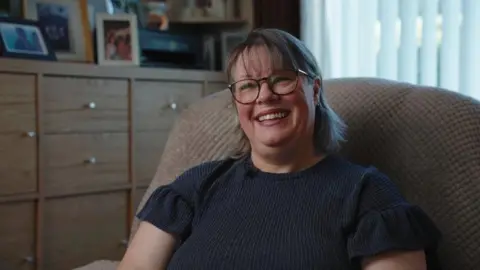
Aged 50, Jackie McCartney was handed an "old battered brown box" by a social worker, which contained all the records that existed about her childhood.
Ms McCartney, who lives in Birmingham, grew up in care and described how "a total stranger knew more about my life than I did". But that was not much. As she received the box, she said she was told "there's not really a lot there".
They were words, she said, that "made me feel as unworthy as a grown adult looking for answers as I felt when I was in care feeling like nobody loved me".
Nine years on from the experience, the battered box and loose papers are, she says, a recurring reminder of why there needs to be better handling of care records, but also better handling of the people who wish to fit together the pieces of their lives.
It comes as a survey by the Information Commissioner's Office (ICO) found 87% of people were left with questions or concerns after they had received their care records, and 71% struggled with poor communication from their local authority.
Earlier this month, the ICO launched the Better Records Together campaign in a bid to support both the people coming out of the care system and organisations handling their information.
"There needs to be more compassion and more care", said Ms McCartney who was in the system between the ages of five and 16. "It's not a file, it's a real person, it's a real life."
'It's your story'
She said: "Whether there was a word, a sentence or a paragraph [in the box], it was important to me.
"It's your life, it's your story and it's important to us all to get those pieces put together."
Ms McCartney said it was not until her children started to ask about her past that she "started allowing memories to come back" and sought answers.
"My children know their story because I give them their story, I've had to rely on the state to tell me mine."
She added that even after she received the files, there had been "more holes than answers".
What was there, she has added to her family's story to underline the value of each piece of knowledge, however small.
Until she accessed it, she said she was unaware of personal information that other people, like her children, had always known.
"On the door of my airing cupboard, I've got my children's date of birth, their weight, their height on their birthdays, but for me, the only thing that was on that door was my name and the day I was born."
When she learned for the first time what time she was born and how much she weighed "me and my family went upstairs and added those small details to the door", she said.
"It felt like I was normal and I was like my family. It's only small, but that information meant the world to me."
'Improving the process'
Information commissioner John Edwards called on local authority leaders across the UK to take "urgent action" to reduce the challenges care leavers face to access their care records.
"Improving this process starts at the beginning, when a child enters the care system, their information should be recorded with their rights in mind, knowing that they may request it later.
"This will reduce the administrative burden and keep the person at the very heart of the process, so future generations do not face the same struggle."
Follow BBC Birmingham on BBC Sounds, Facebook, X and Instagram.