'More evidence needed' over ex-brickworks concerns

 BBC
BBCMore evidence is needed over the impact of a former brickworks on residents who complain of noise, odours and dust, a report has said.
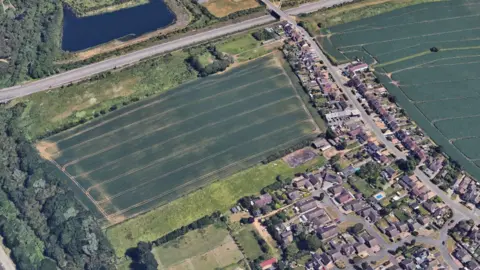
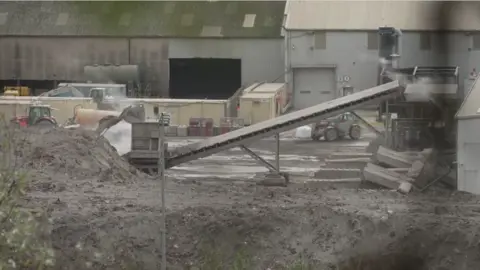
Saxon Pit in Whittlesey, Cambridgeshire, processes incinerator bottom ash (IBA), and neighbours have spoken of hosing down cars and window sills because of dust they believe is coming from the site.
A public health report said the regulatory system "is not always joined up", levels of heavy metals in the nearby King's Dyke exceed drinking water standards, and air quality is not being monitored on the boundary.
East Midlands Waste Management (EMW) and Johnsons Aggregates, linked to the site, have yet to respond to requests for comment.
The report, written by public health consultant Sarah Dougan, said some residents "are specifically worried about the processing of IBA which they consider to be hazardous".
Hundreds of complaints have been made to regulators, including 243 to the Environment Agency in 2025, with three substantiated and attributed to Saxon Pit.
Dougan found that dust has been recorded at the boundary of the site, near Peterborough, but "the source is unclear".
One resident whose house backs on to the site told the BBC in October his "educated guess" is that the dust is coming from Saxon Pit, as he's lived there for nearly 50 years.
Public health officials will now assess whether there are any risks to human health as part of an air quality monitoring strategy.
It will include determining whether there are any particles small enough to cause issues for human health and looking for the source of that dust.
Dougan said monitoring at Hallcroft Road, near the site, "consistently shows air quality in that area is rated as good".
However, her report added: "Air quality is not being monitored on the site boundary, therefore no public health assumptions can be drawn."
Cambridgeshire County Council will also do an assessment to "systematically gather impacts on health and wellbeing and, in particular, to look at cumulative impacts".
Dougan said: "The regulation of the site's multiple operations and their impact on the health of residents is complicated.
"The regulatory system is not always joined up... is not set up to enable the best assessment of potential harms to health.... and does not instil public confidence when there are problems.
"The community has a lack of agency in this all."
Johnsons Aggregates deals with the treatment of IBA while EMW imports waste to stabilise the pit face and has permission to recycle metal.
Meanwhile Forterra, which manufactures house bricks at the nearby Kings Dyke works, was classed as one of the companies operating on or near the site "that have potential to cause amenity issues".
In a statement, it said Forterra has had "no land ownership interests at Saxon Pit and no relationship with its operators" since 2015.
It added that its operations were governed under "the international standard for environmental management, and we have frequent interactions with regulators to ensure our full compliance with all relevant standards and regulations".
Follow Cambridgeshire news on BBC Sounds, Facebook, Instagram and X.