Visionary botanist was 'Attenborough of his day'

 Getty Images
"You can gauge a country's wealth, its real wealth, by its tree cover."
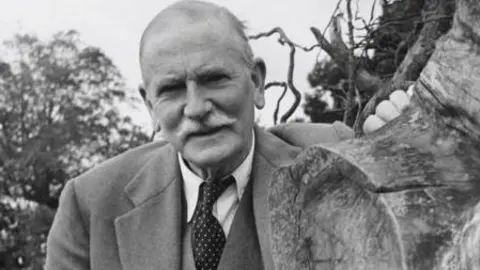
The words of Richard St Barbe Baker OBE, a botanist and visionary environmental activist with a passion for trees.
Born in 1889 in West End, near Southampton in Hampshire, he travelled the world promoting reforestation and founded the organisation Men of the Trees, now known as the Oxford-based International Tree Foundation.
Hailed as an early eco-warrior and the "David Attenborough of his day", it is estimated that his work led to trillions of trees being planted worldwide.
Radio Solent's Rose Lyle visited West End to find out more.
"He was really ahead of his time in recognising the importance of trees and forests in sustaining life on earth," said local author Martin Brisland.
"Today, ecology and awareness of the interaction between trees, nature, wildlife, the seas and climate change is very, very relevant. But he was banging that drum 100 years ago."
Descended from a line of farmers, parsons and evangelists, St Barbe Baker studied biology and botany before travelling to Kenya as a forestry officer with the British government, said Mr Brisland.
It was here that he set up the Men of the Trees organisation [now the International Tree Foundation] in 1922 to carry out managed reforestation.
The organisation's Esther Spencer said St Barbe Baker was a man "who loved trees and loved plants".
"He was incredibly inspirational," she said. "I think he was a bit of the David Attenborough of his day.
"He was deeply saddened by the loss of trees and he started working with one of the local communities to plant trees.
"The community there, they obviously farmed and worked the land, but they said that trees were God's work, that God planted the trees, but they dealt with the crops.
"St Barbe Baker said 'no, we need to plant these trees'."
The foundation created through his work with that community was called Watu wa Miti, Swahili for Men of the Trees.
"It was supposed to speak to values, that these people love trees so much, you're a man of the trees," said Ms Spencer.
Thanks to the work of the International Tree Foundation, his legacy continues to grow.
In St Barbe Baker's words: "Planting and growing increasing quantities of trees is the scientific solution to Earth's environmental dilemma."
His lasting legacy is evident around the village of West End, where several roads roads are named after trees such as Chester, Lyme and Redwood in tribute to the environmental pioneer.
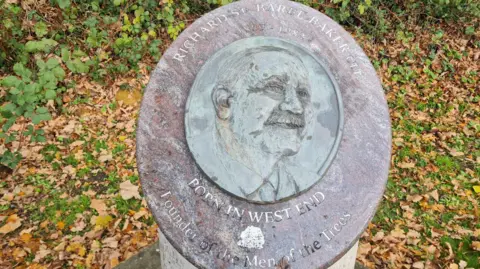
And in a small park near a busy main road sits a bronze plaque on top of stone plinth.
It reads: "Richard St Barbe Baker OBE. Born in West End, founder of the Men of the Trees."
You can follow BBC Hampshire & Isle of Wight on Facebook, X (Twitter), or Instagram.