How a beloved Christmas carol was born in Sussex

 Getty Images
Many will be familiar with The Sussex Carol, but how were words first written nearly 350 years ago transformed into one of Britain's most beloved Christmas songs?
It is a staple of modern carol services, but its words date back to 1684 when Irish bishop Luke Wadding published A Small Garland of Pious and Godly Songs.
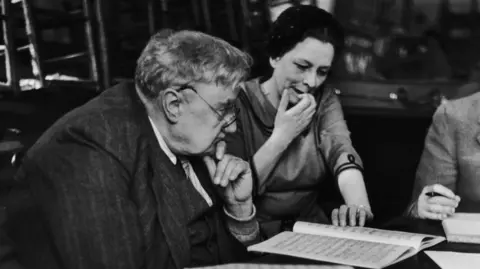
For hundreds of years, the words were put to various tunes as the carol circulated by mouth, until in the early 1900s composer and folk-song collector Ralph Vaughan Williams visited the hamlet of Monk's Gate.
It was here that Vaughan Williams heard the tune he would would match to Wadding's text - and so The Sussex Carol was born.
Nikki Caxton, from Horsham Museum, explained that Monk's Gate was where the magic of The Sussex Carol began.
"Very much it was this place that the words and song were captured, it was very important to the song that we sing today," she said.
But what was Vaughan Williams doing there in the first place?
John Francis, chairman of the Ralph Vaughan Williams Society, said: "There were a few hamlets around Horsham where there were some famous folk singers.
"Folk song collectors out there started realising that an agricultural way of life was passing, urbanisation was destroying these songs.
"People no longer sang as they worked and these songs were in danger of being lost, so they wrote them down.
"Vaughan Williams found a number of sources, particularly Peter and Harriet Verrall and they sang him dozens of songs. In 1904, Harriet sang the song On Christmas Night."
Vaughan Williams used the tune of the song and Wadding's text for The Sussex Carol, but, sadly, Harriet died never having heard it.
In fact, Harriet was buried in an unmarked grave in Horsham, and there are no plaques or information boards with information about her contribution to music.
"Sometimes I think, we want to remember everything, and maybe we can't," Ms Caxton said.
"Part of the charm of folk songs is that they were passed down through different people, so although we don't know much about Harriet, we can get a sense that she was really part of the community.
"Yes, it's nice to remember her, but I think in many ways the folk tradition is about things evolving and not being one person in particular."
Follow BBC Sussex on Facebook, X and Instagram. Send your story ideas to [email protected] or WhatsApp us on 08081 002250.