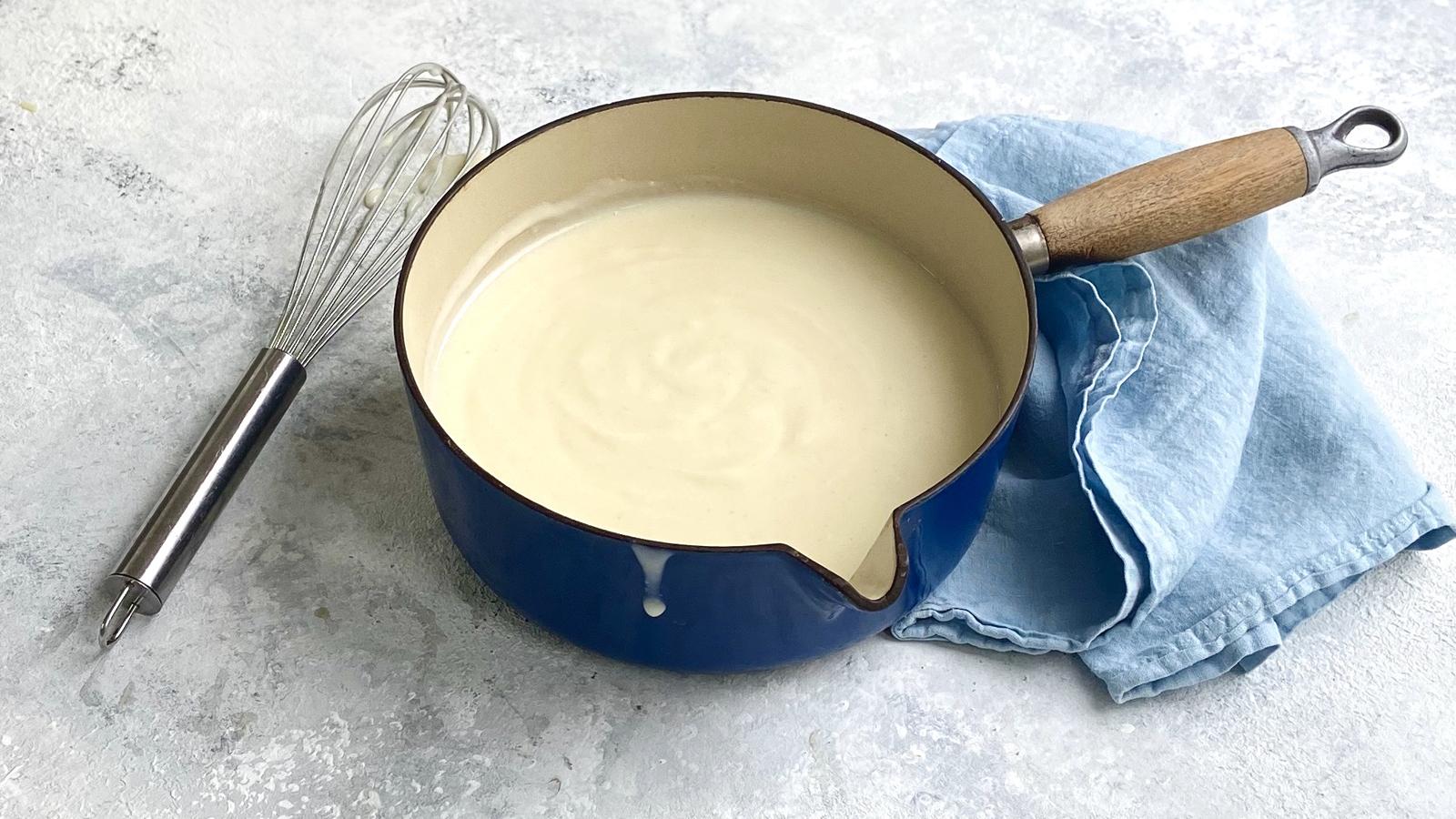
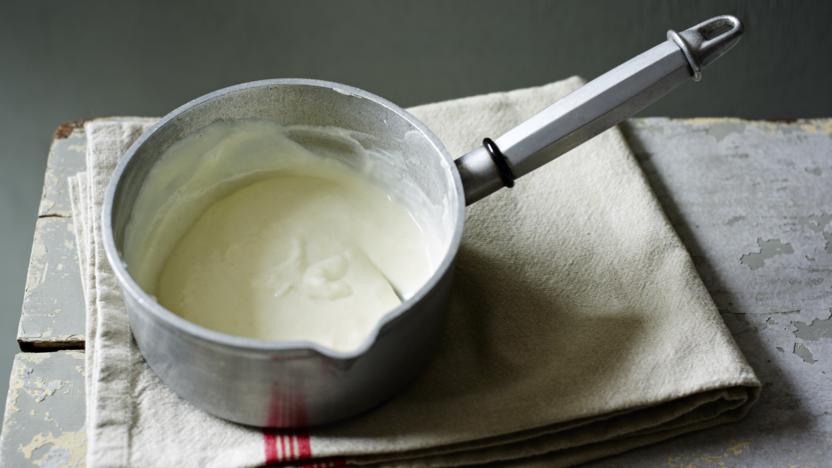
White sauce
- Prepare
- less than 30 mins
- Cook
- 10 to 30 mins
- Serve
- Makes 1 pint
This basic white sauce recipe is so versatile, and can be dressed-up or dressed-down for any occasion. Add cheese, or flavour the milk with onion or bay.
Each serving provides 657 kcal, 23g protein, 46g carbohydrates (of which 27g sugars), 43g fat (of which 27g saturates), 1g fibre and 2.1g salt.
Ingredients
- 40g/2oz butter
- 40g/2oz plain flour
- 500ml/18fl oz milk
- salt and white pepper
Method
Melt the butter in a saucepan.
Stir in the flour and cook for 1–2 minutes.
Take the pan off the heat and gradually stir in one-third of the milk. Return to the heat and simmer, stirring, until all the milk is absorbed.
Repeat this process, stirring all the time, allowing the sauce to become thick and shiny before adding more milk.
When all the milk is added bring to the boil. Simmer gently for 4–5 minutes and season with salt and white pepper.
Recipe tips
You can infuse the milk with a bay leaf or half a peeled onion for an extra layer of flavour. This white sauce, also called bechamel sauce, is used as part of a lasagne. For even more flavour, stir in a teaspoon of mustard or add a pinch of grated nutmeg or ground mace. To make a herby sauce for fish or gammon, add 2–3 tablespoons finely chopped parsley or dill.
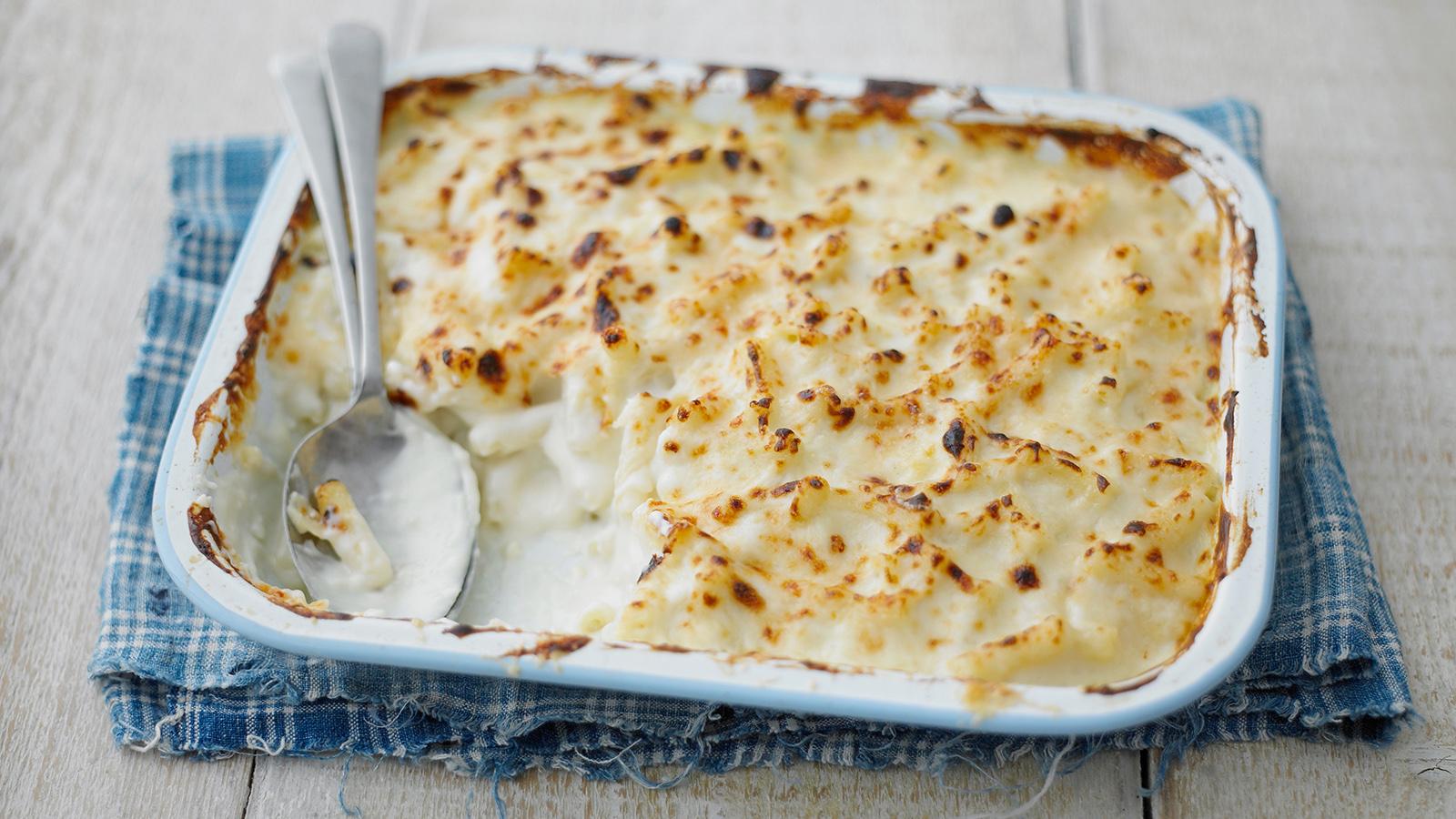
To make a full-flavoured cheese sauce, stir in around 150g/5½oz grated mature Cheddar, or other easy-melting cheese, towards the end of the cooking time. Use odds and ends of cheese from your fridge to make an extra cheesy sauce. Cut off any rind, finely chop or grate the cheese and add the sauce towards the end of the cooking time. You can use any cheese – brie, Stilton, and even goats' cheese all work well, but some will add more punch than others, so add a little at a time and taste the sauce once the cheese has melted. If you are adding cheese, it's best to season your white sauce once the cheese is incorporated as some cheeses are very salty.
Opinions differ as to whether the milk added to a white sauce should be hot or cold. Some say that using cold milk in a hot roux gives the sauce more time to absorb the liquid and will result in fewer lumps. Others advocate hot milk to help melt the roux. The choice is yours, but using milk straight from the fridge is obviously less faff.
When you first start adding the milk to the saucepan, don’t worry if you see lots of lumps, just keep stirring vigorously and they should disappear. Instead of adding the milk in thirds, you can also add just a little at a time and stir until it is absorbed. If your sauce still looks lumpy, remove it from the heat and use a whisk to mix vigorously until smooth. Don't add more milk until it's smooth as this will make any existing lumps harder to get rid of. If something goes wrong and you can’t whisk out the lumps, pass the sauce through a sieve into a clean saucepan and return to the hob.
You can use any milk for this recipe but whole milk will give a richer flavour and texture. For a vegan version of this sauce, simply swap the butter and milk for plant-based alternatives.
If making the sauce ahead of time, cover the surface with plastic film to prevent a skin forming. Whisk well as the sauce is reheated and add an extra splash of milk if it has thickened up on cooling. (Use a silicone covered whisk if using a non-stick pan to prevent scratching.)
How to freeze
Making and freezing a big batch of white sauce is a great way to use up excess milk before it goes off, and means you have a white sauce base ready to transform into a variety of other dishes – macaroni cheese, pasta bake, cauliflower cheese and moussaka for instance. Follow the recipe to the end, then pour into smaller lidded containers and cool thoroughly before covering and freezing for up to 2 months.
If you freeze in small portions, the white sauce will thaw more quickly when you need it and you can grab just what you need. Simply defrost overnight in the fridge or partly defrost at room temperature for a couple of hours before reheating. Bring to a gentle simmer in a large saucepan, or reheat in the microwave, until piping hot. You’ll need to add an extra splash of water or milk when you reheat the sauce and make sure you whisk regularly to prevent any lumps. (Use a silicone covered whisk if reheating in a non-stick pan.)