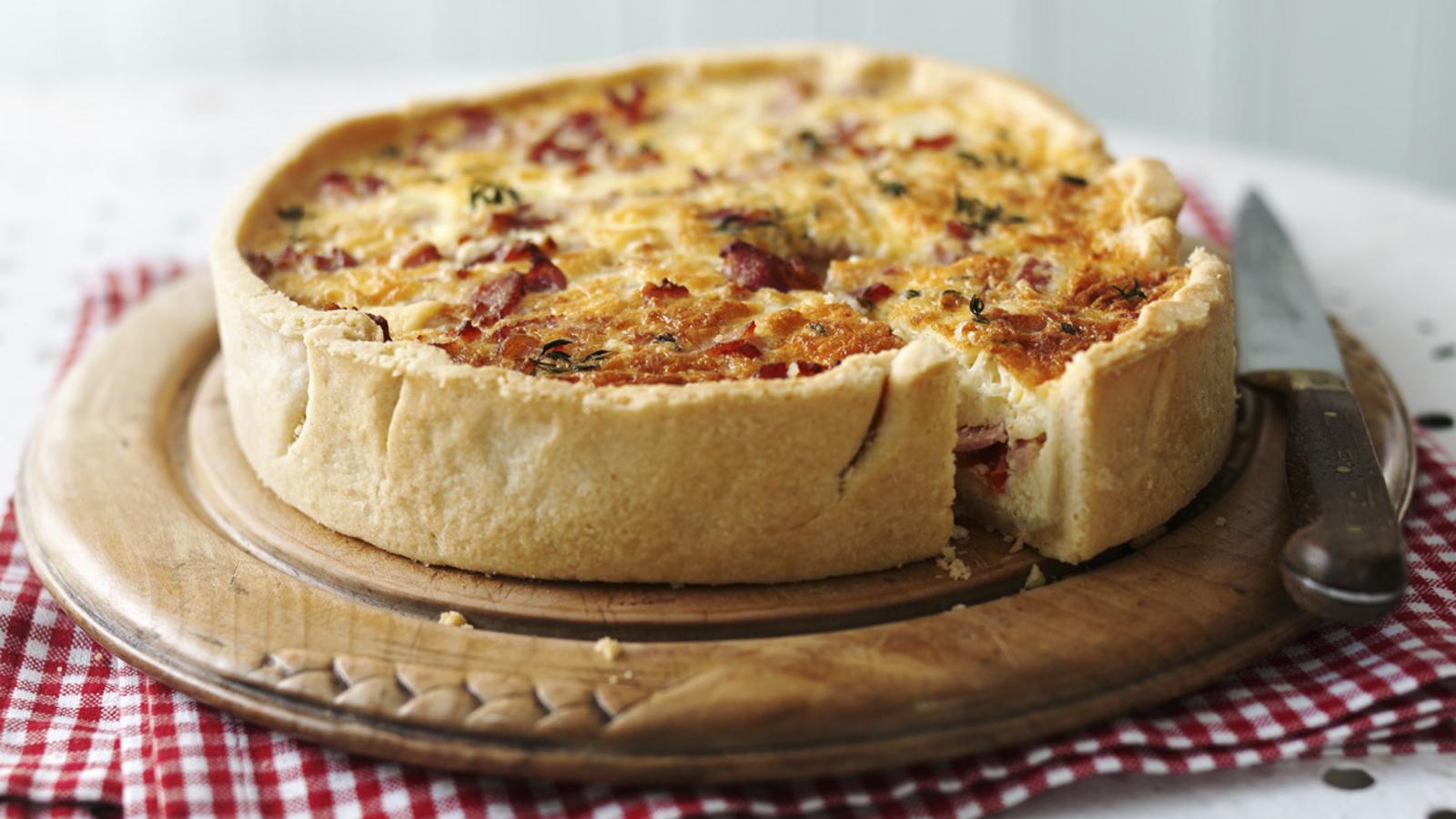
Quiche Lorraine
- Prepare
- 30 mins to 1 hour
- Cook
- 30 mins to 1 hour
- Serve
- Serves 6–8
- Dietary
- Nut-freePregnancy-friendly
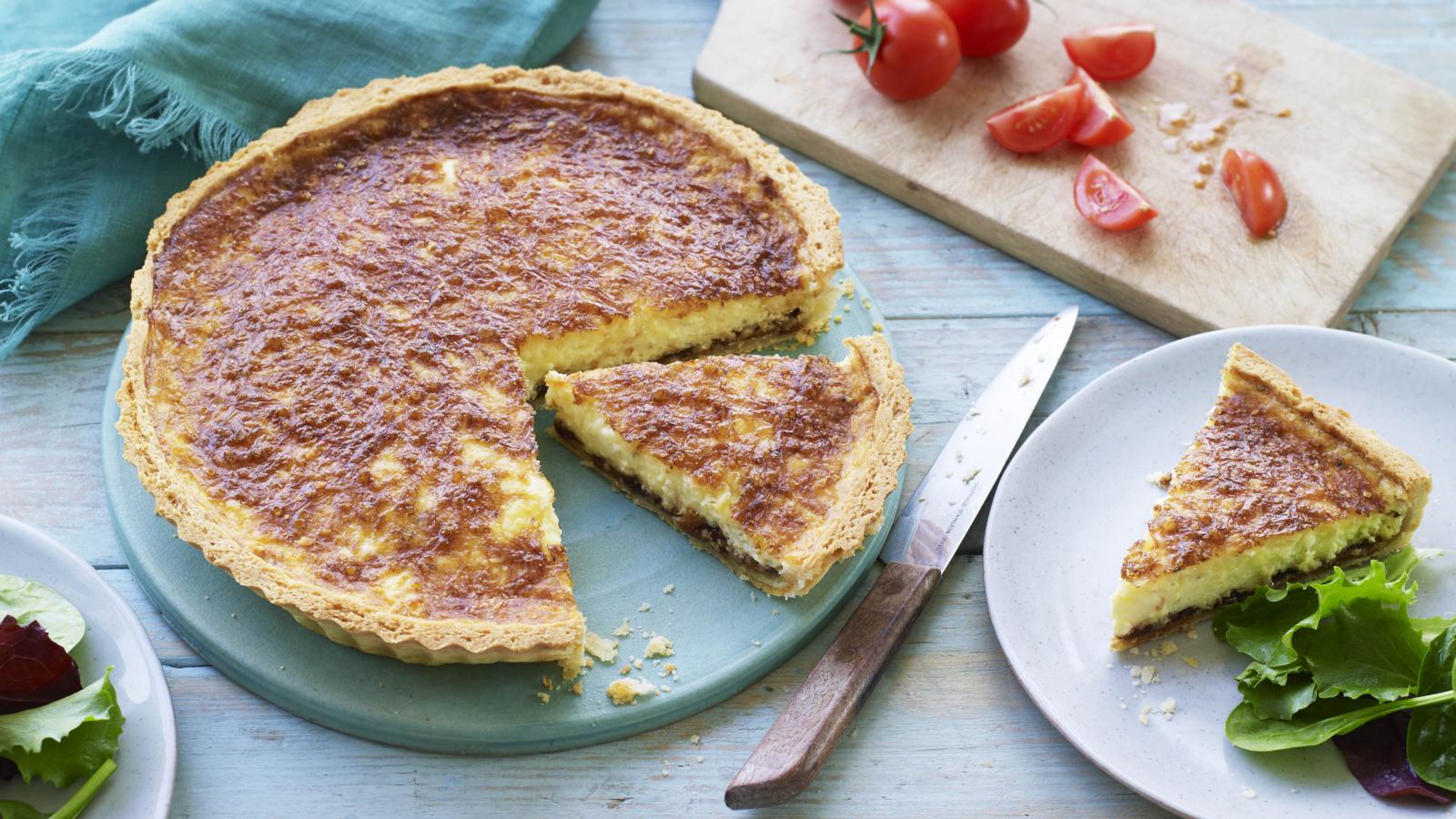
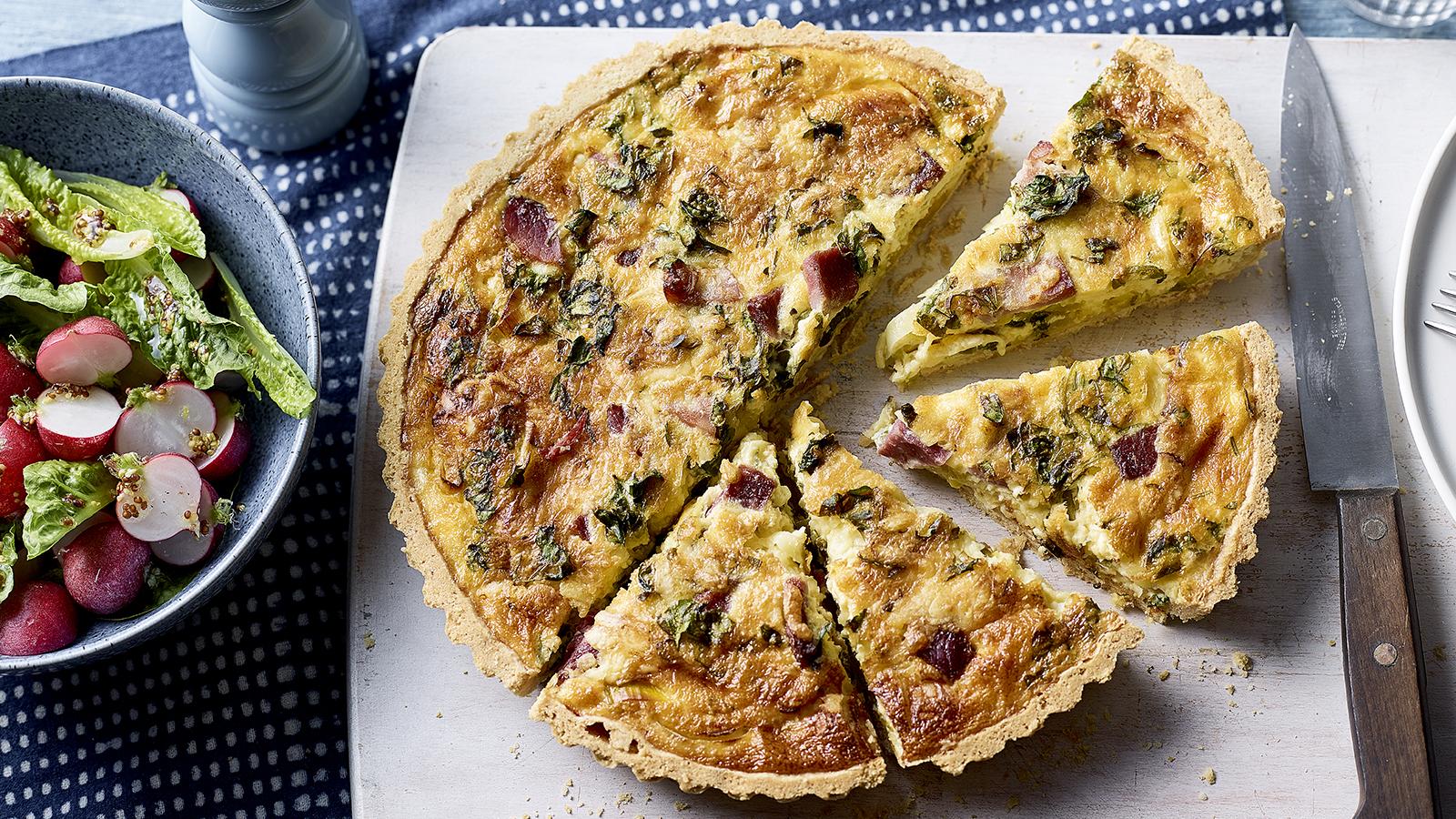
A classic quiche Lorraine is a joy to behold, especially when served still-warm and fresh from the oven. It's a lovely option for a special lunch as it needs nothing more than a simple salad on the side. Choose between making your own proper homemade pastry or a taking the shortcut with a quick shop-bought version.
Based on six sharing, each serving provides 698 kcal, 27g protein, 25g carbohydrates (of which 3g sugars), 54g fat (of which 30g saturates), 2g fibre and 2.2g salt.
By James Martin
From Saturday Kitchen
Ingredients
For the pastry
- 175g/6oz plain flour, plus extra for dusting
- 75g/2¾oz butter, plus extra for greasing
- salt
For the filling
- 250g/9oz cheddar, grated
- 4 tomatoes, sliced (optional)
- 200g/7oz streaky bacon, chopped
- 5 free-range eggs, beaten
- 100ml/3½fl oz milk
- 200ml/7fl oz double cream
- 2 sprigs fresh thyme
- freshly ground black pepper
Method
To make the pastry, sift the flour together with a pinch of salt in a large bowl. Rub in the butter until you have a soft breadcrumb texture. Add enough cold water to make the crumb mixture come together to form a firm dough, and then rest it in the fridge for 30 minutes.
Roll out the pastry on a light floured surface and line a 22cm/8½in well-buttered flan dish. Don't cut off the edges of the pastry yet. Chill again.
Preheat the oven to 190C/170C Fan/Gas 5.
Remove the pastry case from the fridge and line the base of the pastry with baking parchment and then fill it with baking beans. Place on a baking tray and bake blind for 20 minutes. Remove the beans and parchment and return to the oven for another five minutes to cook the base
Reduce the temperature of the oven to 160C/140C Fan/Gas 3.
Sprinkle the cheese into the pastry base and add the sliced tomatoes if you are using them. Fry the bacon pieces until crisp and sprinkle over them over the top.
Combine the eggs with the milk and cream in a bowl and season well. Pour over the bacon and cheese. Sprinkle the thyme over the top and trim the edges of the pastry.
Bake for 30–40 minutes, or until set. Allow to cool and set further.
Trim the pastry edges to get a perfect edge and then serve in wedges.
Recipe tips
To freeze the quiche Lorraine: Allow to cool completely after step 8, then wrap in cling film. Freeze for up to 3 months. Reheat from frozen, in a preheated oven, for 15–20 minutes, or until piping hot throughout.
If you don’t have a flan dish, you can use a shallow loose-based cake tin instead. The pastry may cook more quickly than in the ceramic dish, so be ready to take it out of the oven to remove the beans after 15 minutes, or the pastry could begin to crack. A loose-based fluted tart tin will also work.
If you don’t fancy making your own pastry, buy a block of good-quality shortcrust pastry instead (ready rolled pastry comes in rectangles that won't be wide enough for a 22cm/8½in quiche). Leave at room temperature for a few minutes then roll. If you unroll while it is too cold, it will be hard to work with. Lift onto a rolling pin and place gently over the flan dish. Press into the base and up the sides of the dish or tin.
When lining the pastry base with baking paper, cut out a circle larger than the dish and then scrunch it up tightly. Flatten again before placing onto the pastry base, leaving the excess rising up the sides. Add enough baking beans to cover the base, help the pastry cook evenly and prevent it rising. Use ceramic baking beans if you have them, or dried beans or rice instead if you like. Allow to cool fully before returning to a dry lidded container or jar to use next time.
Strip the thyme leaves from the stalk before sprinkling over the filling. The best way to do this is to pinch the top of each stalk with one hand and using finger and thumb from the other hand, run your fingers all the way down removing the leaves as you go. If you use softer, growing thyme from the supermarket, you just need to snip off a few stalks and roughly chop before sprinkling over.
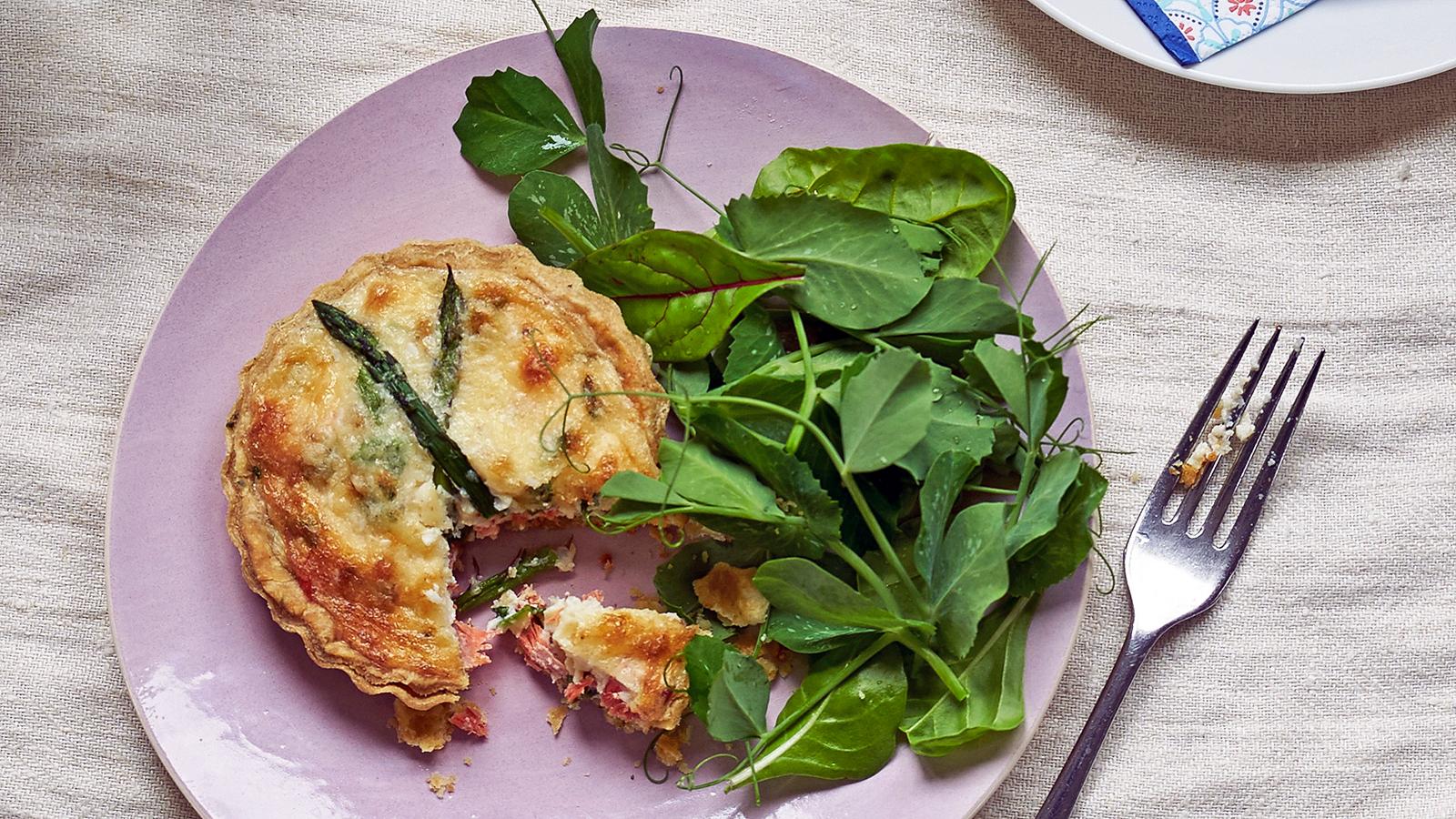
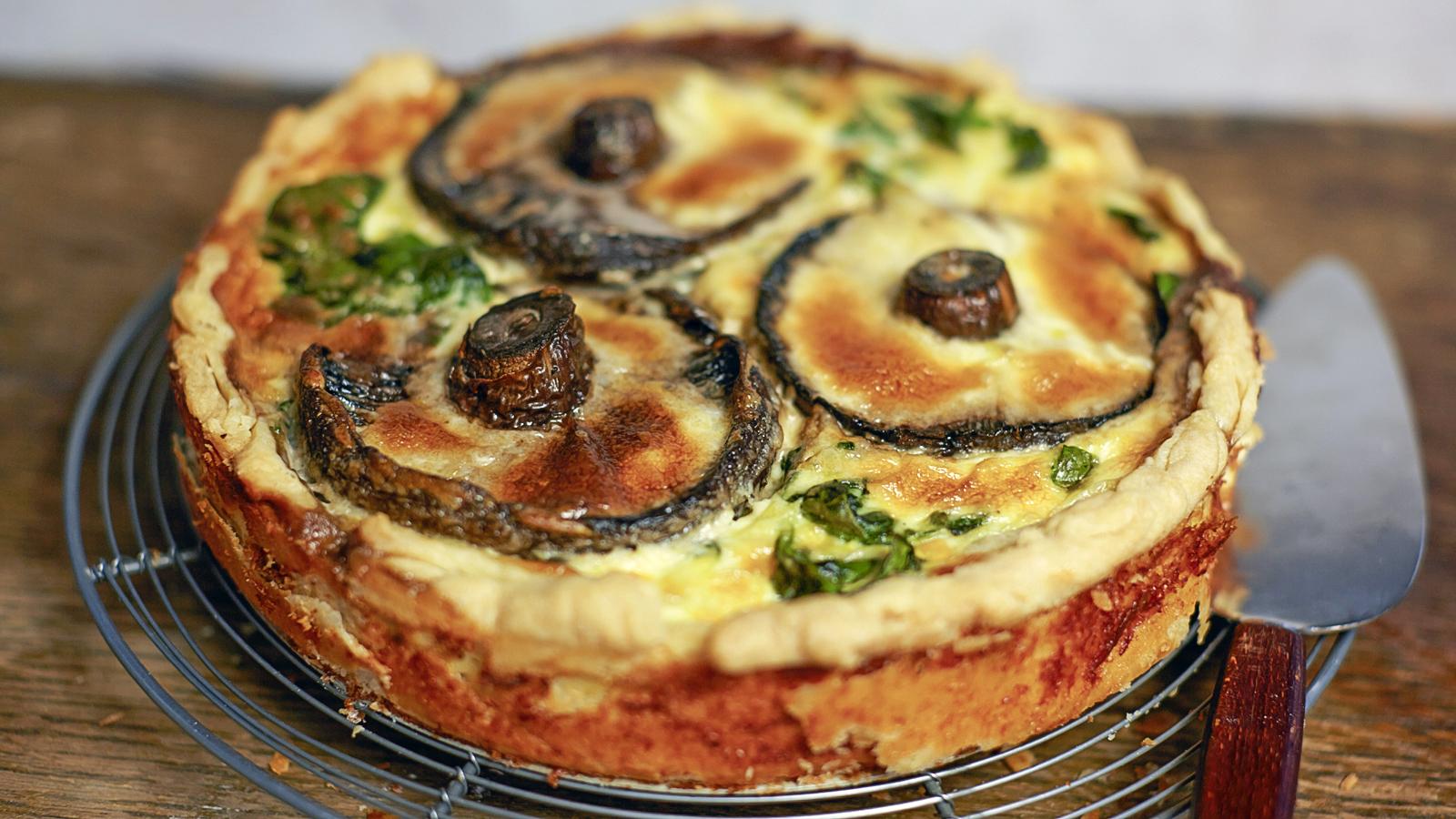
Combine the milk, cream and egg mixture with any of your favourite quiche fillings. Try roasted vegetables, with grated gruyère or cubes of feta instead of the cheddar; or blanched broccoli with crumbled blue cheese; gently sautéed leeks and chopped ham or lightly cooked asparagus with poached salmon. You could even use leftover cooked vegetables, meats or fish from other meals to save waste.
When trimming the pastry, stop the cooked pastry trimmings falling onto the filling by cutting away from the centre using a small, serrated knife and a gentle sawing motion.
You can serve the quiche warm directly from the flan dish (if using a cake tin, cool for at least 20 minutes before removing from the tin). It will be quite delicate when hot, but will get firmer and easier to slice as it cools.
Any leftovers can be kept for up to 2 days covered in the fridge. Either serve cold or warm through on a baking tray in the oven for a few minutes. You can reheat it in a microwave, but the pastry will soften.
Freeze the quiche in its dish or tin after baking. Wrap tightly in cling film and then a double layer of kitchen foil, label and freeze for up to 2 months. Make sure it is in an area of the freezer where it won’t be damaged. Remove the coverings as soon as it comes out of the freezer and place on a baking tray. Reheat from frozen at 180C/160C Fan/Gas 4 for 20–30 minutes, or until hot throughout. If your baking dish can’t go directly into the oven from frozen, thaw the quiche in the fridge for 6–8 hours before reheating.