Greek salad
- Prepare
- less than 30 mins
- Cook
- no cooking required
- Serve
- Serves 2
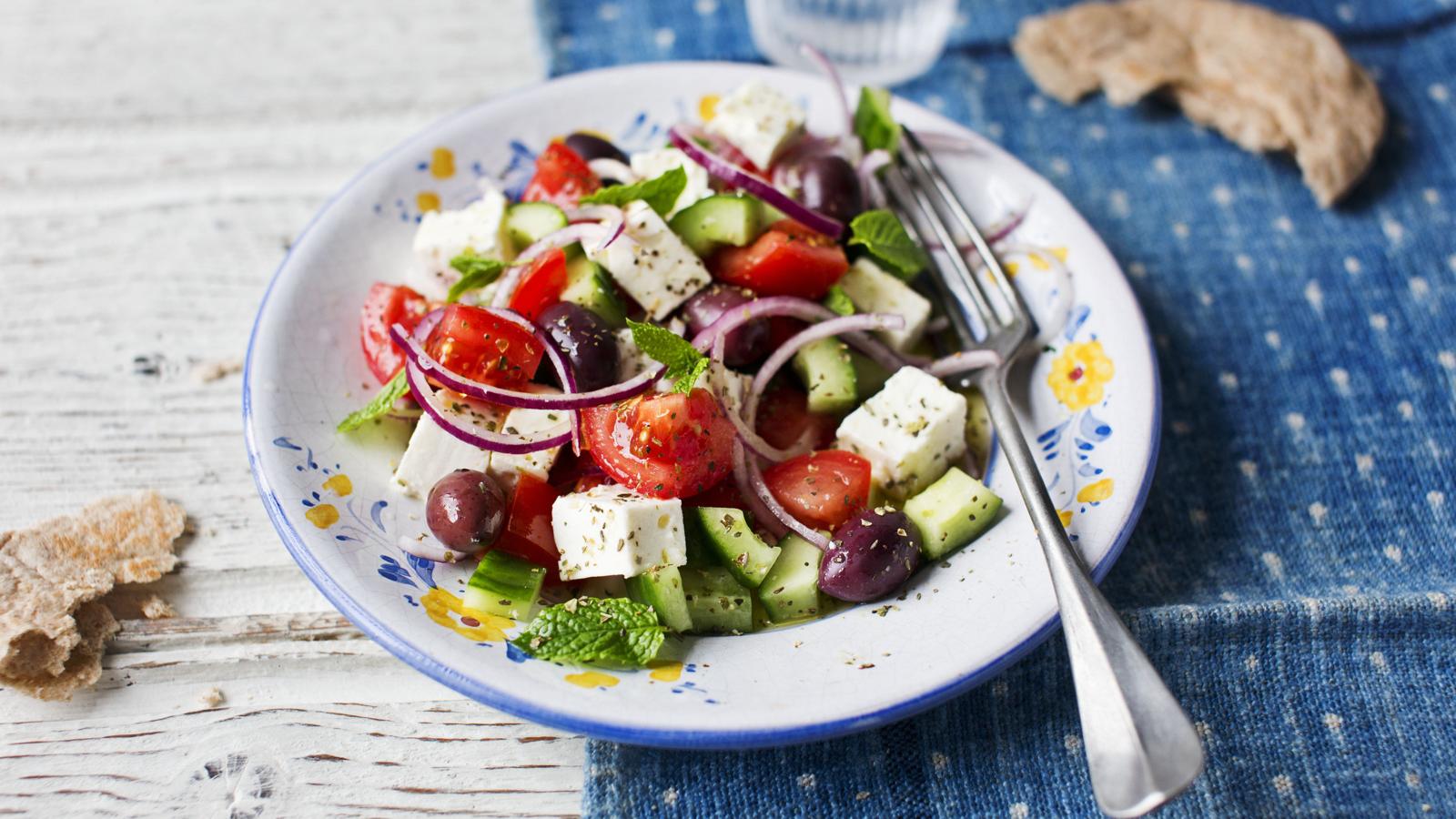
This chunky Greek salad recipe is quick to make and packed with protein. The wholemeal pitta makes a high-fibre accompaniment, but feel free to improvise and serve it with any Mediterranean-style bread or sides.
With a GI of 45, this meal is high protein, low GI.
Ingredients
- ½ small red onion, thinly sliced
- 2 large ripe tomatoes, roughly chopped
- ½ cucumber, deseeded and roughly chopped
- 100g/3½oz reduced-fat feta cheese, drained and cut into cubes
- 50g/1¾oz black olives, pitted and drained (in brine not oil and preferably Kalamata olives)
- small handful fresh mint leaves
- ½ tsp dried oregano
- 2 tsp extra virgin olive oil
- 2 tsp fresh lemon juice
- sea salt and freshly ground black pepper
- 2 wholemeal pitta breads, warmed
Method
Put the onion, tomatoes and cucumber in a bowl and season to taste.
Scatter the feta, olives and mint leaves on top. Sprinkle over the oregano and toss lightly.
Drizzle over the oil and lemon juice and serve with warmed pitta bread.
Recipe tips
This salad is designed to serve two as a light meal, but there is nothing stopping you doubling or quadrupling the ingredients so it can serve more people. It also makes a great accompaniment to any grilled or barbecued meats and can be stuffed into large warmed flat breads with cooked marinated chicken or lamb to make delicious gyros.
Use full-fat feta instead of a reduced fat and serve with plain pitta breads or Greek-style flat breads. You can warm pitta bread very easily in a toaster, then use kitchen scissors to cut it into strips if you like. Larger flatbreads can be warmed on a baking tray in the oven, or in a dry frying pan for a minute or two on each side.
Choose good quality large, ripe tomatoes to make a Greek salad for the best flavour. And, even if they’ve been stored in the fridge, allow to stand at room temperature for at least an hour if you can, to help the flavour become more pronounced
To deseed a cucumber, cut off the ends and cut in half lengthways. Use a teaspoon to scrape out the seeds from each side and discard. For a Greek salad, you want the cucumber pieces to be in fairly large chunks, so cut the deseeded halves lengthways again and then slice thickly.
You could make this salad with cherry tomatoes too, or differently coloured ‘heritage’ tomatoes. If using cherry tomatoes, cut in half rather than chopping, so the pieces don’t become too small.
Mixed olives make a good alternative to Kalamata, or black olives. (Avoid any cheap pitted black olives as they have been processed to achieve the uniform black colour rather than ripening on the tree). It doesn’t matter if they are in oil or brine but it’s best to choose olives that have had their stones removed, so they are easier to eat in a salad.
This salad will keep well in the fridge for a couple of days in a lidded container or a bowl covered with cling film or foil. Ideally, leave at room temperature for around 30 minutes before eating so the flavours have a chance to shine. Swap any discoloured mint leaves for fresh ones if you need to.
This Greek salad is robust enough to put into a lidded container and take to work and is also great for picnics, especially when joining other Mediterranean-style ingredients, such as houmous and tzatziki, or pieces of spanakopita. Don’t forget to keep it cool with ice blocks.
If you cut the ingredients into smaller pieces, the salad also makes a good filling for Greek-style wraps. Toss the salad in the oil and lemon juice, then drain in a sieve. Spread thin flatbreads, such as tortilla wraps, with extra-smooth humous. Scatter over the salad, fold in the ends and roll up. Wrap in foil, keep cool and eat the same day as it is made.
Related recipes
Try as part of this menu
High protein, low GI day 5. Menu High protein, low GI day 5
These quick and easy high protein and low GI dishes will help you to feel full all day without piling on the pounds. You can also eat a high-protein snack such as 30g/1oz portion of almonds or drink 200ml/7fl oz semi-skimmed milk.
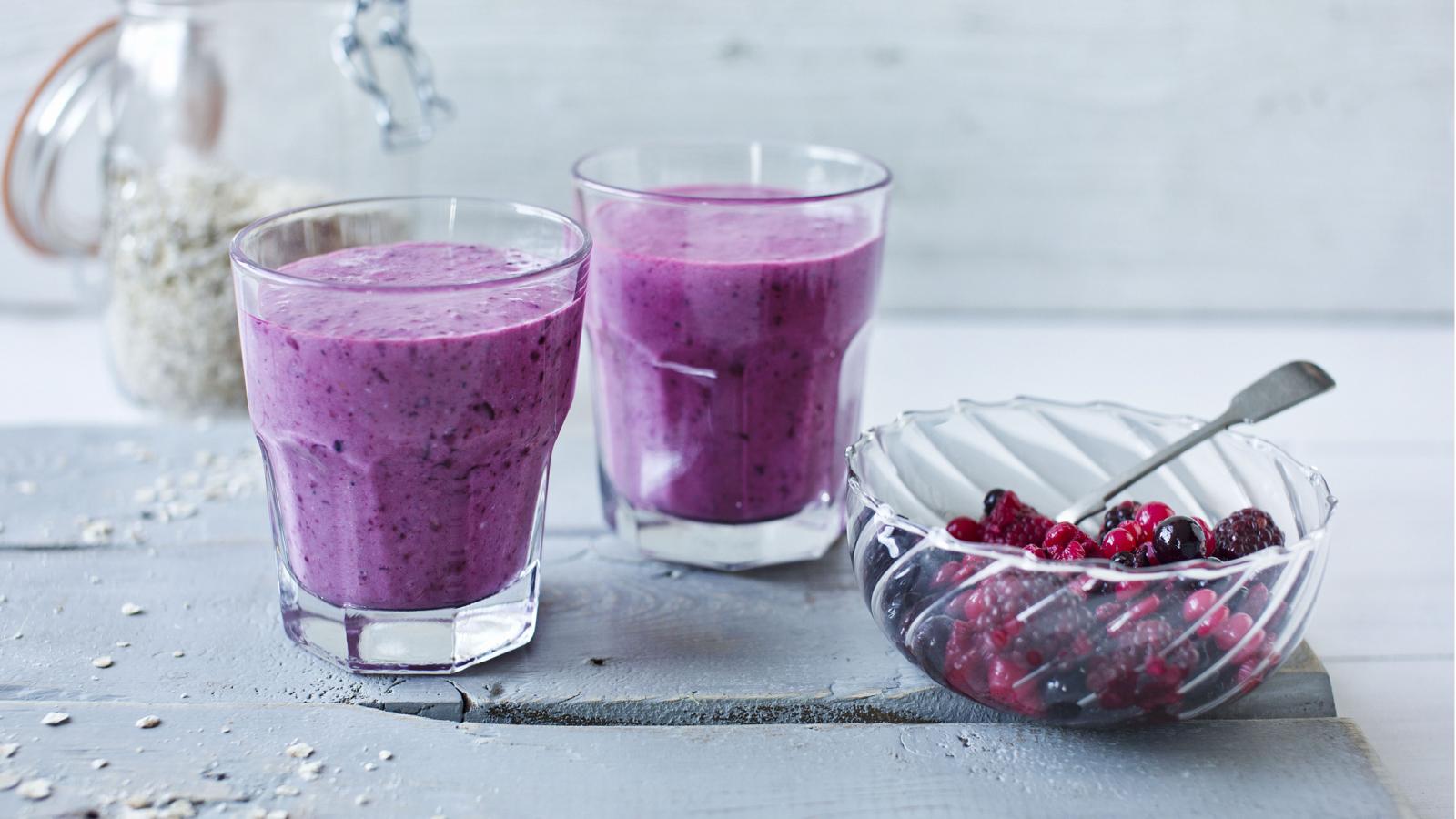
Blackberry and apple crumble smoothie By Justine Pattison
Drinks and cocktails