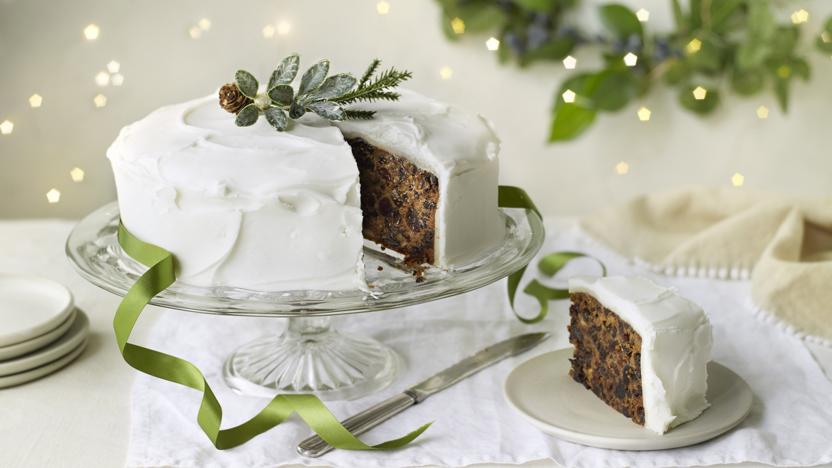
Mary Berry's classic Christmas cake
- Prepare
- overnight
- Cook
- over 2 hours
- Serve
- Serves 16
- Dietary
- Vegetarian
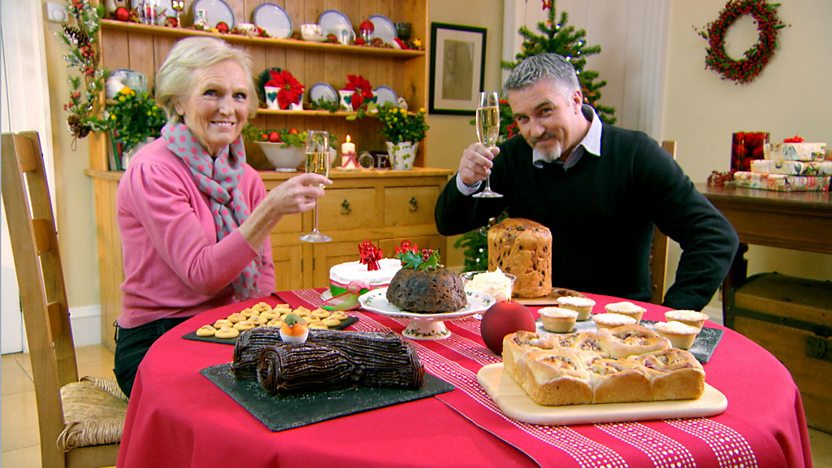
Mary Berry’s been making her traditional Christmas cake recipe for as long as Paul Hollywood’s been alive. She knows what she’s talking about and this moist, rich fruit cake proves it.
If you don't have the required tin size, go to her cake calculator to recalculate the ingredients and cooking time for your cake tin.
Ingredients
For the cake
- 175g/6oz raisins
- 350g/12oz natural glacé cherries, halved, rinsed, and thoroughly dried
- 500g/1lb 2oz currants
- 350g/12oz sultanas
- 150ml/¼pt brandy or sherry, plus extra for feeding
- 2 oranges, zest only
- 250g/9oz butter, softened
- 250g/9oz light or dark muscovado sugar
- 4 large free-range eggs, at room temperature
- 1 tbsp black treacle
- 75g/3oz blanched almonds, chopped
- 275g/10oz plain flour
- 1½ tsp mixed spice
For the covering
- about 3 tbsp apricot jam, warmed and sieved
- icing sugar
- 675g/1lb 8oz marzipan
For the royal icing
- 3 free-range eggs, whites only
- 675g/1½lb icing sugar, sifted
- 3 tsp lemon juice
- 1½ tsp glycerine
Method
For the cake, place all the dried fruit, including the cherries, into a large mixing bowl, pour over the brandy and stir in the orange zest. Cover with cling film and leave to soak for three days, stirring daily.
Grease and line a 23cm/9in deep, round tin with a double layer of greased baking paper. Preheat the oven to 140C/120C Fan/Gas 1.
Measure the butter, sugar, eggs, treacle and almonds into a very large bowl and beat well (preferably with an electric freestanding mixer). Add the flour and ground spice and mix thoroughly until blended. Stir in the soaked fruit. Spoon into the prepared cake tin and level the surface.
Bake in the centre of the preheated oven for about 4–4½ hours, or until the cake feels firm to the touch and is a rich golden brown. Check after two hours, and if the cake is a perfect colour, cover with foil. A skewer inserted into the centre of the cake should come out clean. Leave the cake to cool in the tin.
When cool, pierce the cake at intervals with a fine skewer and feed with a little extra brandy. Wrap the completely cold cake in a double layer of greaseproof paper and again in foil and store in a cool place for up to three months, feeding at intervals with more brandy. (Don’t remove the lining paper when storing as this helps to keep the cake moist.)
The week before you want to serve, begin covering the cake.
For the covering, stand the cake upside down, flat side uppermost, on a cake board which is 5cm/2in larger than the size of the cake.
Brush the sides and the top of the cake with the warm apricot jam.
Liberally dust a work surface with icing sugar and then roll out the marzipan to about 5cm/2in larger than the surface of the cake. Keep moving the marzipan as you roll, checking that it is not sticking to the work surface. Dust the work surface with more icing sugar as necessary.
Carefully lift the marzipan over the cake using a rolling pin. Gently level and smooth the top of the paste with the rolling pin, then ease the marzipan down the sides of the cake, smoothing it at the same time. If you are careful, you should be able to cover the cake with no excess marzipan to trim but, if necessary, neatly trim excess marzipan from the base of the cake with a small sharp knife. Cover the cake loosely with baking parchment and leave for a few days to dry out before adding the royal icing.
For the royal icing, whisk the egg whites in a large bowl until they become frothy. Mix in the sifted icing sugar a tablespoonful at a time. You can do this with a hand-held electric whisk, but keep the speed low.
Stir in the lemon juice and glycerine and beat the icing until it is very stiff and white and stands up in peaks.
Cover the surface of the icing tightly with cling film and keep in a cool place until needed.
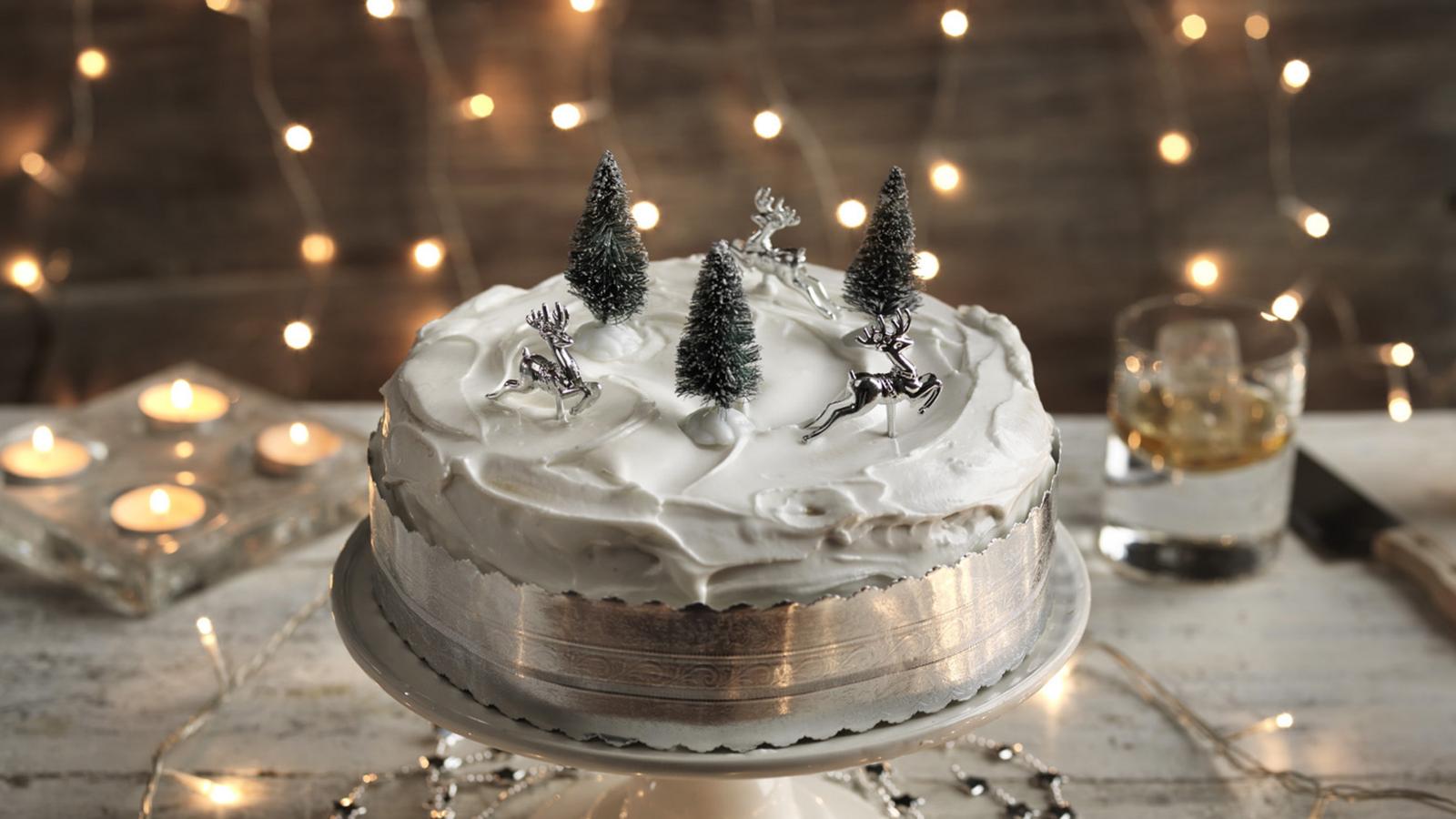
To ice the cake, place all the icing onto the top of the cake. Spread evenly over the top and sides of the cake with a palette knife. For a snow-peak effect, use a smaller palette knife to rough up the icing.
Leave the cake loosely covered overnight for the icing to harden a little, then wrap or store in an airtight container in a cool place until needed.
Recipe tips
Ingredient swaps
If you like, you can replace half of the glacé cherries with dried apricots. You can also replace up to 75g of the currants with mixed candied peel. For a zestier flavour, use half orange zest and half lemon zest.
How to line a Christmas cake tin
Take care to follow the instructions for lining the tin in step 2. Using two layers of baking paper is important to prevent the edges of the cake overcooking during the long bake.
How to soak fruit quickly
Soaking the dried fruit helps them absorb the liquid, which keeps the cake moist as well as adding flavour. If you are in a rush, you can cheat by gently heating the dried fruit in a saucepan with the brandy or sherry for a few minutes, letting it cool completely and then using as directed. For best results, we recommend following the recipe as Mary describes.
Alternative ways to feed your Christmas cake
When feeding the cake, Mary likes to use brandy or sherry, but rum, amaretto and whiskey also work well. Just pick something that you enjoy drinking. If you don't enjoy a boozy cake you can also use smooth orange juice instead of alcohol, or a mix of both, though this does reduce how long the cake keeps (but you'll still get a few weeks out of it).
How to ice your Christmas cake
Before icing the cake, it's best to let the marzipan dry out for a few days. This prevents any oils from the marizipan seeping into the icing and discolouring your perfect snowy white finish. If you plan to eat your cake quite quickly after decorating it's less of a concern, but if you like to bake in advance of Christmas it's definitely worth doing.
Following Mary Berry's recipe for royal icing means the icing is easy to work with and dries to a softer finish than ready-made royal icing sugar (which sets very hard). Watch the recipe video (above) for more tips from Mary.