Bread and butter pudding
- Prepare
- less than 30 mins
- Cook
- 30 mins to 1 hour
- Serve
- Serves 4
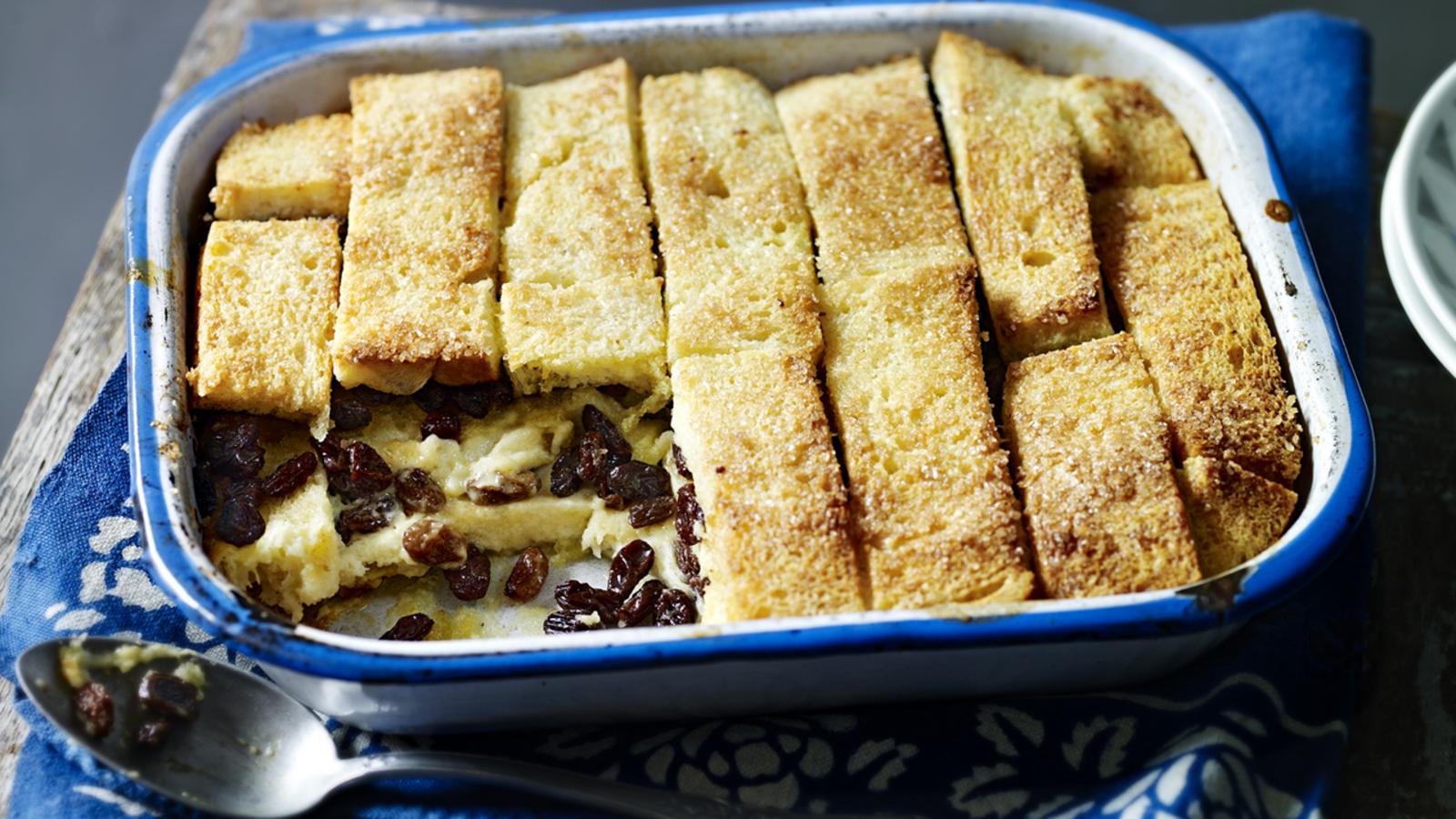
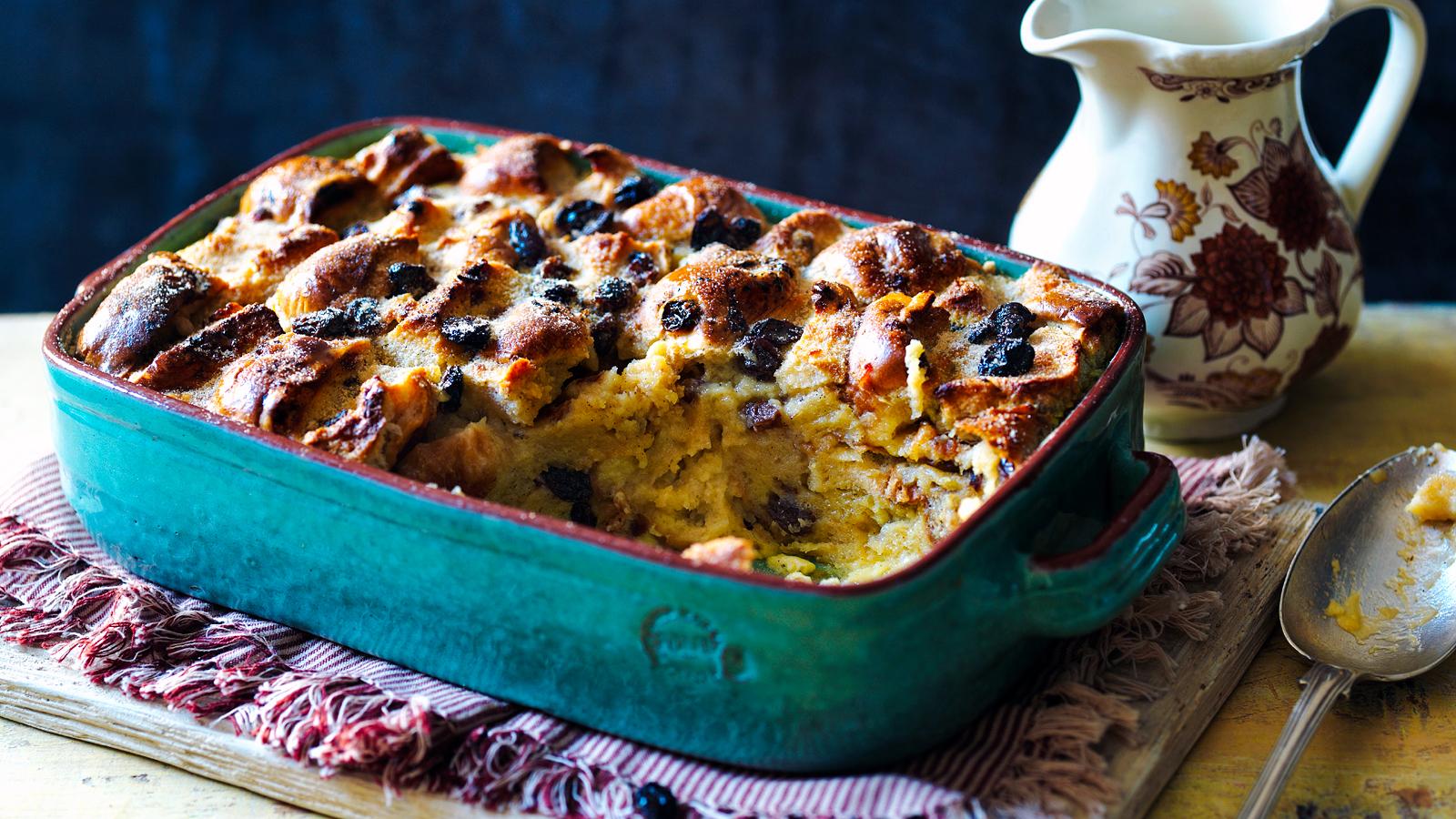
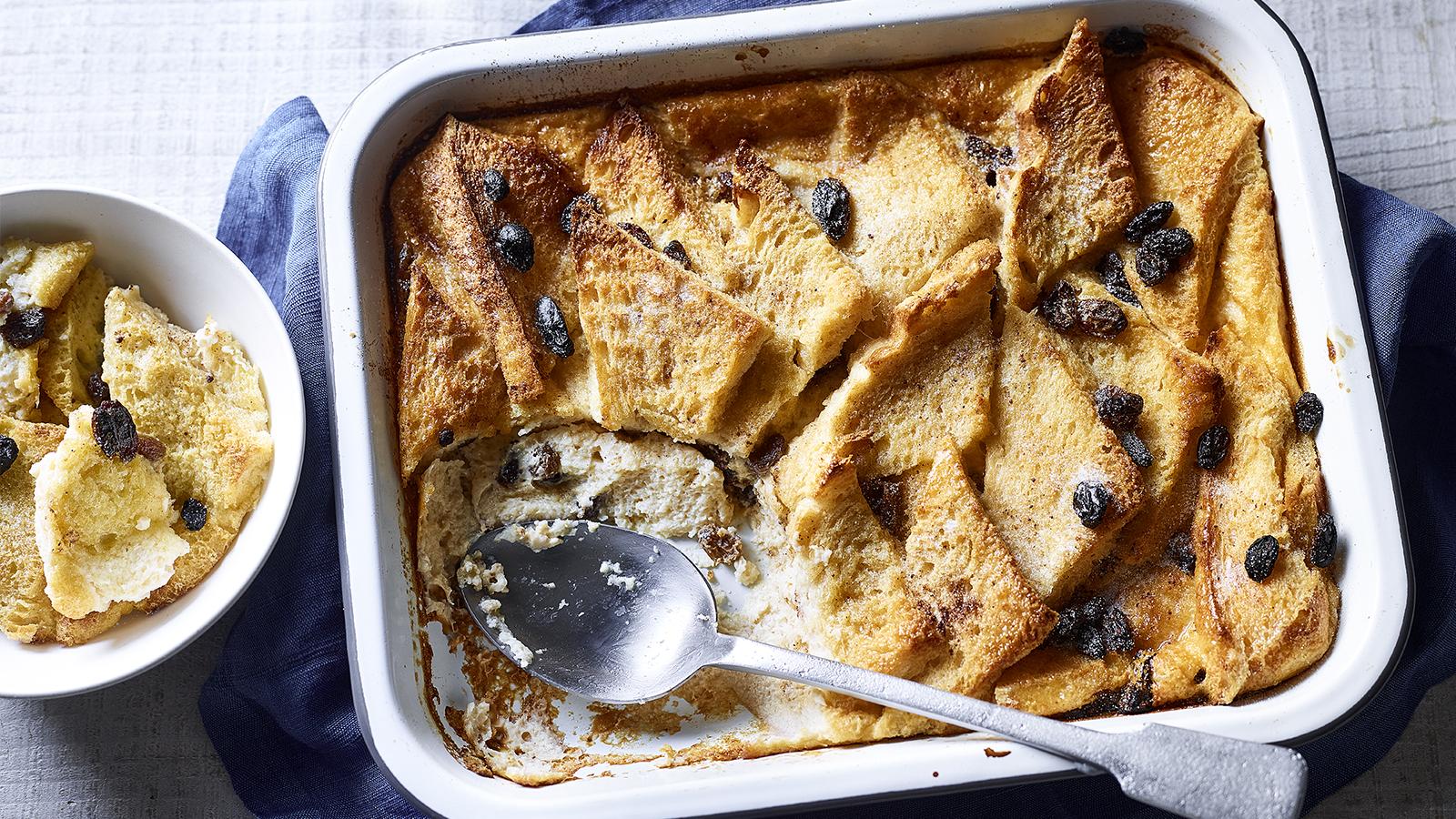
Old-fashioned English bread and butter pudding started out as a way to use up day-old bread, but now we make it just because it's glorious. Crisp-edged and soft in the middle, this is a cosy pudding you'll want to make on repeat.
Each serving provides 408 kcal, 12.5g protein, 44g carbohydrates (of which 20g sugars), 20g fat (of which 11g saturates), 2g fibre and 0.9g salt.
Ingredients
- 25g/1oz butter, plus extra for greasing
- 8 thick slices white bread, (crusts removed if desired)
- 50g/2oz sultanas
- 2 tsp cinnamon powder
- 350ml/12fl oz full-fat milk
- 50ml/2fl oz double cream
- 2 free-range eggs
- 25g/1oz granulated sugar
- nutmeg, grated, to taste
- custard, to serve (optional)
Method
Grease an ovenproof dish (about 23x28cm/9x11in) with butter.
Butter each slice of bread on one side, then cut into triangles.
Arrange a layer of bread, buttered-side up, in the bottom of the dish, then add a layer of sultanas. Sprinkle with a little cinnamon, then repeat the layers of bread and sultanas, sprinkling with cinnamon, until you have used up all of the bread. Finish with a layer of bread, then set aside.
Gently warm the milk and cream in a saucepan over a low heat to scalding point. Do not let it boil.
Crack the eggs into a bowl, add three-quarters of the sugar and lightly whisk until pale. Add the warm milk and cream mixture and stir well, then strain the custard into a bowl.
Pour the custard over the prepared bread layers, sprinkle with nutmeg and the remaining sugar and leave to stand for 30 minutes.
Preheat the oven to 180C/160C Fan/Gas 4.
Bake for 30–40 minutes, or until the custard has set and the top is golden brown.
Serve hot or warm with extra custard or cream.
Recipe tips
Slightly stale bread is better than fresh, because it absorbs more of the custardy liquid and makes a light and fluffy bread and butter pudding. Some supermarket loaves are too soft and pappy, resulting in a gluey bread and butter pudding. Ideally, use an unsliced loaf and cut it yourself. If you don't have stale bread you can very lightly toast it, or place on a baking tray in a low oven for a few minutes to dry it out a little.
Scalding point (in step 4) means just before boiling. You'll know it's ready when you see a little steam coming from the liquid and small bubbles form around the edge of the pan. Stir the milk and cream a few times as it heats and watch carefully. (If it does end up boiling, don’t worry, you can still use it, but it is more likely to overflow the pan if you aren’t taking care.)
Never skip the standing period after the custard is first poured over the bread as this gives a chance for the liquid to soak through all the layers, giving a more soft and pillowy result.
Make sure to use the butter at room temperature so it is easy to spread on the bread slices. If it’s too firm, it can tear the bread. If you are short of time, put on a microwave plate and soften in the microwave on HIGH for around 10 seconds – any longer and it could melt.
If you don’t have sultanas, use any other dried fruit. Raisins work well, as does mixed dried fruit which often has the addition of candied peel for extra tang. If using larger fruit, such as dried apricots or prunes, cut into small pieces before adding to the pudding. Keep most of the fruit below the bread slices so it doesn’t burn.
No granulated sugar? No problem – any sugar will work for this recipe. Caster sugar is a good alternative, and golden caster is great. You can also use light brown sugar or demerara for a subtle caramel flavour.
Ground mixed spice can be swapped for the cinnamon, or you can use 1 tsp vanilla extract instead. A little spice will stop the pudding tasting too eggy, so don’t omit it.
White bread works better than wholemeal or seeded bread, which gives a quite different flavour. But you can use brioche or other enriched doughs. Stale croissants or pain au chocolate don’t need to be wasted as they make a great alternative to sliced bread – and you could always add a handful of chocolate chips instead of the dried fruit too.
Leftover bread and butter pudding can be covered and will keep well in the fridge for a couple of days. Take out of the fridge 30 minutes before serving if eating cold as it will become quite firm when chilled, or warm portions in the microwave on HIGH for about a minute.
How to make ahead
Bread and butter pudding is best served freshly cooked but if you want to make ahead, you can prepare the pudding and leave it to soak in the fridge for up to 24 hours before baking. Allow to stand at room temperature for 30–60 minutes before baking. (Freezing isn’t recommended.)