What are nitrites and nitrates? And are they bad for you?
They’re found in fruit, veg and cured meat, but why is it that we are warned against eating some foods with nitrates and nitrites in, but we’re told to fill our fridges with others?
By Jessica Bradley

Nitrates and nitrites have been referred to as the ‘Jekyll and Hyde’ of the nutrition world. We’re often told to avoid them in processed meats, but also to seek out plants which they're found in (including beetroot and spinach). It is, understandably, confusing.
They actually occur naturally in our bodies but they’re also found in many of the foods we eat and even the water we drink.
Which foods contain nitrates and nitrites?
This is where nitrates and nitrites can become confused.
We get most of our nitrates from vegetables, says Catherine Bondonno, senior research fellow in nutrition and health at Edith Cowan University in Australia. “The primary source of dietary nitrates comes from plants which contribute to about 70-80% of our daily intake," she says.
Leafy veg including spinach, lettuce and kale, as well as beetroot and celery are some of the biggest natural sources of nitrates. These naturally occurring nitrates are thought to have health benefits.
While some vegetables do also contain nitrites, they are at much lower levels.
Nitrites and nitrates (E 249 – E 252) are added to meat like ham and bacon and other cured meats to keep their pink colour and develop flavour, but also to prevent growth of harmful bacteria such as clostridium botulinum. According to the Food Standard Agency (FSA) around 5% of dietary nitrates and nitrites come from their use as a food additive.
Nitrate is also converted into nitrite by the bacteria in ‘the deep crypts’ of our tongue and our stomach.
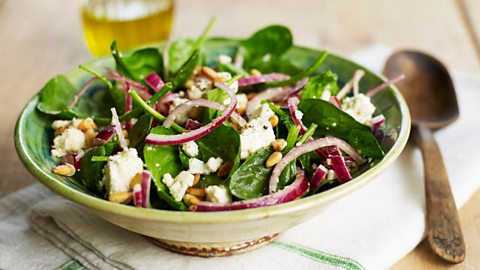
Spinach, feta and pine nut salad
Spinach contains nitrates as do other leafy veg
Chemical reactions
So, if both nitrates and nitrites are present in vegetables and processed meats, albeit at different levels, why are some thought to be beneficial for health and others potentially damaging?
We asked Professor Chris Elliott OBE, Queen's University Belfast to explain. “The nitrates and nitrites in vegetables are ‘natural’ i.e. come from the soil and do not cause any health issues,” explains Elliott.
He continues: “Nitrates and nitrites in meat have been added as part of the curing process and will undergo chemical reactions with proteins to form nitrosamines. These are released into our bodies as our digestive systems break down the meat into amino acids to allow them to be absorbed as energy sources.”
So it’s not the nitrites themselves that are potentially harmful, but the chemical reaction that happens in the body when coupled with protein. “It is the nitrosamines that have been linked with colon cancer. The formation of the nitrosamines is a complex reaction that needs proteins to be present i.e. the same reaction does not happen when the chemicals are added to vegetables so there are not the same health related risks,” Elliott confirms.
Because of their potentially carcinogenic effect, scientists have repeatedly called on the UK government to ban the use of nitrites in processed meats.
However, the FSA considers current levels of nitrates and nitrites added to food to be “sufficiently protective for consumers.” The permitted levels are kept under review by the FSA and EFSA.
While processed meat is associated with an increased risk of developing colorectal cancer and possibly also stomach cancer, experts point out that these risks are not just linked to nitrates and nitrites, but also salt and saturated fat content.
Related stories
Are some nitrates good for you?
Bondonno says there’s substantial evidence showing nitrates from plant sources enhances cardiovascular health and could lower the risk of having a stroke.
The high natural nitrate content found in beetroot juice, for example, has been found to significantly lower blood pressure in those with high blood pressure.
This may be because the nitrate found in vegetables can convert into nitric oxide in our bodies, which dilates blood vessels and, in turn, can reduce blood pressure.
Three easy ways to cook beetroot
But the research on heart health and nitrates is mixed. While there’s an abundance of evidence showing the heart health benefits of eating a diet rich in vegetables – such as the Mediterranean diet, some research has found there’s no specific effect from nitrates.
For example, one large-scale study that looked at the effects of nitrates on heart disease risk, found that even the highest plant-based nitrate intakes (around two servings of leafy green vegetables a day) weren’t associated with a lower risk of developing heart disease. And researchers say there’s a lack of long-term evidence looking into this specific relationship.
One explanation as to why nitrates from vegetables are good for us – or at least don’t harm us, could be because vegetables high in nitrates also contain high amounts of vitamin C and other antioxidants, which have been found to prevent the reaction that causes any harm from nitrates.
These veggie recipes are rich in nitrates
How can we have a healthy diet containing nitrates?
As always, the advice comes down to following a healthy balanced diet. A substantial body of research shows that a diet high in vegetables and low in processed meat is beneficial for our health. The NHS recommends that adults limit red and processed meat to 70g a day.
Bondonno’s advice is to focus on incorporating a variety of plant-based foods into our diets – especially vegetables like leafy greens (spinach, kale, rocket), root vegetables (beetroot) and other nitrate-rich plants like celery and radishes.
“These natural sources of nitrates not only provide other essential nutrients but also contribute to overall cardiovascular health,” she says.
Originally published May 2024