The Korean ingredients we should all be stocking up on
Using punchy ingredients like gochujang, it’s easy to see why Korean food is rising in popularity here in the UK. But what other ingredients should we be stocking up on to make surprisingly-simple staple dishes?
By Su Scott
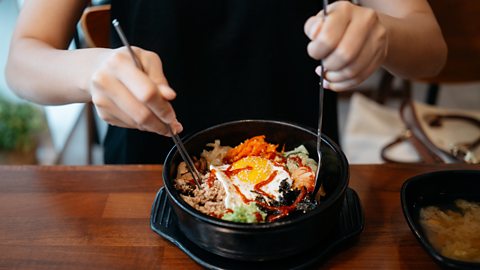
From gochujang to kimchi, more and more Korean ingredients and condiments are becoming readily available in British supermarkets.
As a Korean-born food writer, I’m passionate about Korean food, and I want to show you how you can use these ingredients to make traditional Korean recipes as well as to add different flavours and textures to more typically British dishes.
Korean food – the basics
While kitchens in Korean homes nowadays resemble those in the western world, the oven is a fairly recent addition, so most Korean dishes are cooked on the hob.
This means plenty of dishes are fast and convenient to make and a ‘quickly-quickly’ approach is popular. This is made possible by using flavour-packed staples (more on that below), which can add taste in an instant.
That said, there’s also an appreciation for slow food that is rooted deeply in traditional Korean cooking practices. These low-and-slow methods of cooking are cherished to safeguard our ancestral history of food culture.
This balance of convenience and slow cooking make Korean food so special and whichever method you’re using, the key is to make sure each dish is bursting with flavour.
The meal table is vibrant and nutritionally balanced, filled with assorted banchan (side) dishes that reflect the four distinctive seasons. And most Korean dishes can be built around what we call ‘gazn-yangnyeom’ which loosely translates as ‘assorted seasoning’. It broadly consists of a mixture of spring onion, garlic, toasted sesame seeds/oil, sugar and salt.
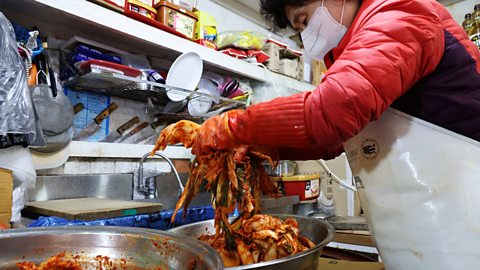
Also at the heart of Korean dishes are the key ingredients of rice (regarded as ‘the key to prosperity’) and fermented and pickled produce. While delicious, their history in Korea comes out of necessity. The geography (mountainous landscapes) and harsh winters make agriculture difficult, and the Korean War created a scarcity of food. For both these reasons, people had to think outside of the box and preserve their ingredients or use ones that last a long time (like rice).
Kimchi: Korean food goes global. audio
In this edition of the BBC Sounds series, Business Daily, the popularity of kimchi is investigated
My must-have Korean ingredients and how to use them
Confused by the array of Korean ingredients available? Worry not, here’s what you can expect from them and how you can use them…
The trio of Jang
Doenjang, ganjang and gochujang are vital to Korean cooking. Doenjang and gochujang are pastes, ganjang is soy sauce. These condiments give your dish a depth and can either be used by themselves or in combination with each other.
Doenjang: When looking for it in the supermarket, doenjang usually comes in a brown tub and can be found next to gochujang. If not, you may need to try a specialist supermarket.
A fermented bean paste made from simmered soybeans that are mashed down, it’s hung outside to dry and ferment and formed into dried blocks called meju. It’s then submerged in heavily salted water which eventually separates into doenjang and the liquid, guk-ganjang (Korean soup soy sauce).
Heavily pungent, doenjang carries deeply complex flavours, adding depth and umami. Used both as an ingredient to cook with and raw as a condiment, it’s salty and earthy.
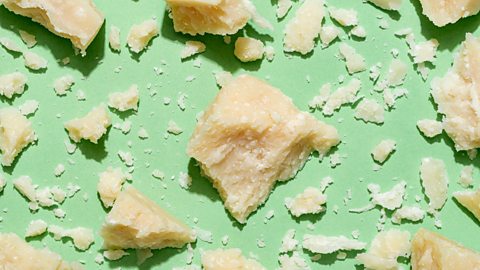
When cooked, the smell often reminds me of well-aged Parmesan. Combine with peanut butter and mayonnaise and you have a perfectly nutty dipping sauce for crudités. Alternatively, mix it with butter and you have an umami-laden flavour bomb which can be stirred through noodles or a bowl of warm potatoes.
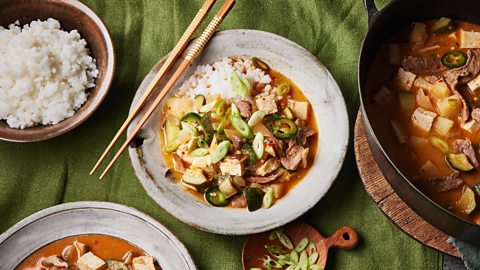
Doenjang jjigae (Korean fermented bean paste stew)
One of Korea’s most-loved stews, doenjang, gochujang and gochugaru feature in this easy-to-make dish
Ganjang (soy sauce): Visit a Korean supermarket and you’d be shocked by the number soy sauce varieties available. Jin-ganjang is the most versatile. It’s robust enough to stand the heat and great for stir-frying or braising. Yangjo-ganjang typically goes through a longer fermentation period and the result is a richer, sweeter sauce. To preserve its taste use it for dishes that don’t require cooking.
Guk-ganjang is lighter in colour and salty, it’s similar to a Chinese light soy sauce. Beyond that, there are ready-seasoned varieties, where additional ingredients such as fruit, vegetables or seafood are added to enhance the flavour. In the absence of Korean soy sauce, all-purpose Japanese soy sauce that’s found in most supermarkets works well.
Gochujang: Often found in a red tub, this Korean chilli paste has a flavour that’s unique to Korea, and there’s no substitution for it but luckily, it is widely available.
The spice comes from gochugaru (Korean red pepper flakes) which is balanced with fermented soybean powder (meju garu) and sweet rice syrup made from malted barley powder and rice flour and salt.
The level of spice can change quite dramatically depending on the types of chilli used, so be sure to check the heat level on the packaging. Gochujang has a smoky undertone with a salty-sweet umami taste adding complex layers.
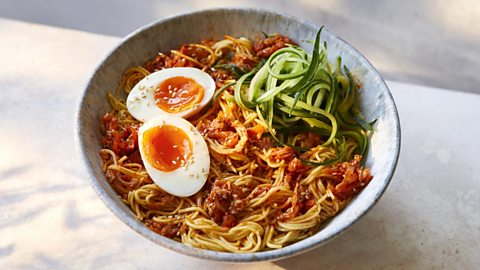
Cold kimchi noodles
This dish is inspired by the Korean classic bibim-guksu
Gochugaru
Korean sun-dried chillies are smoky, have a touch of sweetness and can be fiery. Coarse flakes are used for general cooking but are commonly associated with making kimchi. Alternatively, gochugaru’s available as a finely ground powder and this is preferred for soups and stews such as famous yukgaejang (spicy pulled beef soup), to give the broth a smoother finish. If you can’t get hold of gochugaru, ground Aleppo pepper makes a decent substitute.
Toasted sesame oil and toasted sesame seeds
Korean sesame oil carries a nutty flavour and aroma. It’s predominantly used as a finishing oil to add to the savouriness of a dish and pairs well with beef and dark greens. It has a low smoking point, so when using to cook with, add a higher smoking point carrier oil such as sunflower oil.
If you’re using sesame seeds instead of oil, you’ll add a great crunchy texture to your dish. You can also lightly grind them down; this brings out another level of nuttiness. Then stir them into noodles seasoned with soy sauce.
Gim / Gim Jaban
While crispy roasted seaweed thins are mostly enjoyed as snacks in the UK, in Korea, they are regarded as a powerhouse ingredient that can add so much flavour to any dish. I like to crumble them into dishes to add a salty-sweet umami flavour.
Gim pasta
This easy pasta dish makes the most of store cupboard ingredients
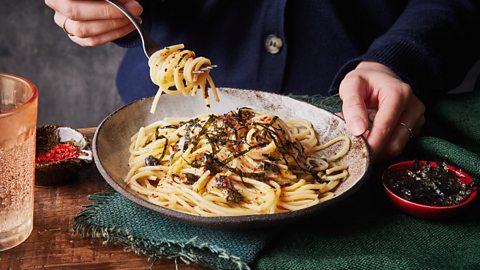
Look for pre-crumbled bags of seaweed labeled as gim jaban from Korean supermarkets or online, which come in a resealable pouch. Once opened, store in the freezer to keep them crispy.
Tomato ketchup and Worcestershire sauce
The two popular condiments are great for using in Korean cooking.
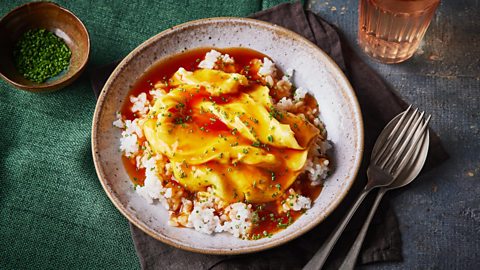
Folded egg and rice with easy pantry sauce
Egg and rice are transformed with the addition of this sweet and sour sauce
It may surprise you to see tomato ketchup and Worcestershire sauce among the Korean pantry list. This unlikely duo is often used to add tanginess to kare (Korean curry) or in brown sauce for donkkaseu (Korean pork cutlet).
Tomato ketchup paired with gochujang became popular in the 1980s in Korea and has remained so. It’s layered with heat but isn’t too overpowering so if you prefer mild dishes with a touch of warmth, this mixed sauce is the one for you.
As you can see, when using Korean ingredients, your dishes don’t have to be complicated or expensive to make, it’s about pairing them with simple ingredients to create something that’s delicious and packed with flavour. So next time you’re in the supermarket take a chance on a few Korean ingredients, they will transform your dishes.
Originally published January 2024
Want more? Visit BBC Food on Instagram, Facebook and Pinterest. Want to watch the latest Food TV programmes? Visit BBC iPlayer.