What is folate and why do I need it?
Set to be added to flour in the UK, this B vitamin is vital for everyone, although it’s particularly crucial if you’re pregnant.
By Laura Tilt, dietitian

What is folate?
Folate is another member of the B vitamin family – B9, to be exact. You might also have heard it called folic acid, which is the synthetic form of folate. It’s used in dietary supplements (like vitamins) and to fortify foods like breakfast cereals.
Folic acid is a more stable form of folate, because it’s not affected by light or heat. It’s also absorbed more effectively than the folate found naturally in food.
Why do I need folate?
Folate helps to make healthy red blood cells. It’s also needed for cells to divide and grow properly. It’s vital during early pregnancy, because it helps a baby’s neural tube (which becomes the brain and spinal cord) to develop.
Folate also helps to regulate levels of homocysteine – a type of protein that’s made as a byproduct of various processes in the body. Usually, homocysteine levels stay low because it’s broken down by folate and vitamin B12, but levels can increase with folate deficiency.
Research suggests a possible link between raised homocysteine levels and the risk of heart disease and stroke.
Scrambled eggs with spinach and kale
Tom Kerridge’s scrambled egg recipe is packed with folate

How much folate do I need?
For adults, the recommended intake is 200 micrograms (μg) of folate per day. Most people should be able to get this much by eating a healthy, balanced diet. But if you’re planning a pregnancy or are pregnant or breastfeeding, you’ll need to take a folic acid supplement to help ensure you have enough folate to support your baby’s development.
Folate needs during pregnancy and breastfeeding
| Planning a pregnancy | 200 micrograms folate daily in your diet, plus a folic acid supplement containing 400 micrograms daily, ideally starting at least three months before trying to conceive |
| During pregnancy | 300 micrograms folate daily in your diet, plus a folic acid supplement containing 400 micrograms during the first 12 weeks of pregnancy |
| When breastfeeding | 260 micrograms folate daily in your diet |
What’s the link between folic acid and pregnancy?
Low folate levels not only increase the risk of anaemia but also raise the risk of serious birth defects called neural tube defects (NTDs). NTDs affect around 1,000 pregnancies in the UK each year.
Babies born with NTDs can have lifelong disabilities. The most common type of NTD is spina bifida, where the baby’s spine doesn’t develop properly.
Taking a folic acid supplement lowers the risk of NTDs, but you need to start taking it before you get pregnant. This is because the baby’s neural tube develops in the first four weeks of pregnancy – often before you know you’re pregnant.
Building up your levels before trying to conceive is really important because data shows folate levels in the UK are falling. In fact, research shows almost 90% of women of childbearing age have levels that may increase their risk of NTDs.
Related stories

What happens if I don’t get enough folate?
Because of its role in making healthy red blood cells, a lack of folate can lead to a type of anaemia called megaloblastic anaemia. This is a condition where the blood cells your body makes are abnormally large, and can’t carry enough oxygen, leading to tiredness and fatigue. Other symptoms of folate deficiency include:
- Feeling short of breath
- Muscle weakness
- A sore or inflamed tongue
- Mouth ulcers
- Headaches
- Palpitations
The symptoms of folate deficiency are similar to those of vitamin B12 deficiency. It’s important to treat the right one because taking folic acid supplements can hide the symptoms of a B12 deficiency.
If you think you might have a folate deficiency, talk to your doctor. They can do a blood test to check your levels.
Swapping traditional chickpeas for soybeans makes these falafels an excellent folate-rich lunch option
What causes folate deficiency?
The most common reasons for folate deficiency are:
- A diet low in folate-rich foods
- Conditions which affect absorption, like untreated coeliac disease or Crohn’s disease
- Pregnancy, which increases folate requirements
- Drinking lots of alcohol
- The use of some types of medication. An example is methotrexate, an immunosuppressant used to treat rheumatoid arthritis, psoriasis and other autoimmune conditions
- Being on dialysis for kidney disease, because it removes folate from the body
- Liver disease
Which foods are good sources of folate?
Folate is found in a wide range of foods including:
- Leafy green vegetables like spinach, lettuce, kale and watercress
- Beans, peas and lentils
- Citrus fruits, like oranges
- Eggs
- Nuts and seeds
- Fortified foods, like breakfast cereals and yeast extract
Because folate is water soluble, it gets pulled into water when cooking. Studies show that green vegetables can lose as much as 50% of their folate content when you boil them. To reduce losses, steam or microwave your vegetables, or cook them in a dish (like a soup, curry or stew) where the liquid is also eaten.
| Food | Serving size | folate content (mcgs) | Recipe idea |
|---|---|---|---|
| Raw spinach | 80g (cereal bowl) | 128 | Spinach, feta and pine nut salad |
| Stir-fried broccoli | 80g serving | 70 | Quick broccoli pasta |
| Peas, microwaved | 3 tbsp | 48 | Pesto eggs with crushed peas |
| Kale | 80g, about a heaped cup (chopped) | 78 | Kale & peanut pesto spaghetti |
| Black beans, canned | Half cup, drained | 105 | Black bean burrito bowls |
| Baked beans in tomato sauce | Half can (200g) | 60 | BBQ bean pie |
| Edamame beans | Half cup, podded | 250 | Quick chicken stew |
| Orange | 1 medium orange | 53 | |
| Strawberries | 1 cup halved strawberries | 60 | Smoothie bowl |
| Yeast extract | 8g/teaspoon | 100 | Lentil bolognese |
| Mixed nuts | Small handful/30g | 30 | Roasted nuts |
| Eggs, boiled | 2 eggs | 60 | Keralan boiled egg curry |
| Fortified breakfast cereal – wheat biscuits | 2 biscuits | 64 | |
| Malted wheat cereal | Small bowl (40g) | 45 |
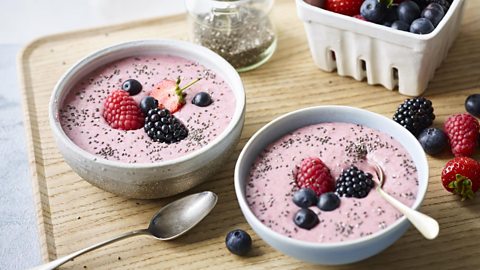
Smoothie bowl
Packed full of strawberries and topped with chia seeds, this smoothie bowl is a folate-rich breakfast that will see you through to lunchtime
What can I do to boost my intake?
Here are some simple ideas for ways you can include more folate in your diet:
- Start your day with a bowl of breakfast cereal with added folic acid
- Spread Marmite on your morning toast or use it instead of a stock cube in cooking
- Snack on a handful of nuts, an orange or hummus and crackers
- Toss in half a cup of peas or edamame to your lunchtime salad
- Have a cereal bowl of leafy green salad before your evening meal
- Stir-fry or steam your vegetables instead of boiling them
- Add a few handfuls of spinach (fresh or frozen) to pasta or risotto dishes
- Plan meals with beans or lentils a few times a week like these tacos with beef and black beans or spinach and coconut dal
Nutrition calculator | Use the calculator now
Use this calculator to find out whether you're getting all the nutrients you need
Flour to the rescue: a fix for our falling folate levels?
It’s true that folate deficiency impacts fewer than 5% of UK adults and children, but this isn’t the whole story.
National data shows folate levels have dropped by about 3% each year over the last decade. Most women of childbearing age also have folate levels below the threshold needed to help prevent neural tube defects in babies. This is especially worrying as only a third of women take folic acid supplements before pregnancy.
To tackle low levels, more than 80 countries have introduced legislation which means flour is fortified with folic acid. And now the UK is set to do the same. By the end of 2026, folic acid will be added to all non-wholemeal wheat flour. It’s estimated this will prevent around 200 cases of neural tube defects each year.
Although this is a positive step, many experts think we need a bigger fortification programme. For example, if whole wheat flour and rice were also fortified, it could prevent as many as 80% of NTDs. This is important because not everyone can eat wheat (people with coeliac disease, for instance), and healthy eating guidelines also advise choosing more whole grains.
All content within this article is provided for general information only, and should not be treated as a substitute for the medical advice of your doctor or any other health care professional. Always consult your GP if you’re concerned about your health.
Laura Tilt is a registered dietitian with a master’s in public health nutrition and a postgraduate diploma in dietetics. Since qualifying in 2012, she has specialised in gastroenterology at London’s UCLH before moving into freelance practice. With over 10 years of experience translating nutrition science into accessible, meaningful advice, Laura’s specialist interests include digestive health, disordered eating, and sports nutrition.
Originally published August 2025
Want more? Visit BBC Food on Instagram, Facebook and Pinterest or watch the latest Food TV programmes on BBC iPlayer.