You can reverse fatty liver disease through your diet – here’s how
It affects one in five people in the UK, and you might not even know you have it.
But the good news is that fatty liver disease (which also goes by the less memorable name of metabolic dysfunction-associated steatotic liver disease, or MASLD) can be reversed with some simple dietary changes.
What is fatty liver disease?
“Fatty liver disease is very common, and rates are rising year-on-year,” explains Prof Philip Newsome, clinical advisor to the British Liver Trust and professor of hepatology at King’s College London in King’s College Hospital.
“It’s strongly linked to obesity and type 2 diabetes: as these conditions become more common, so does fatty liver disease.”
Fatty liver is actually one of the first stages of liver disease, explains Prof Laeticia Lichtenstein, lecturer in nutrient and metabolism at the University of Leeds.
“When fat builds up on the liver it triggers inflammation. The liver will try to fight it, but if the same levels of fat continue, the inflammation will keep getting worse,” she says.
“This causes scarring to the liver which is called fibrosis. Ultimately it can lead to cancer.”
The problem is that fatty liver disease has few symptoms. So much so, it’s often called a silent disease.
“Some may feel tired or notice discomfort in the upper right side of the abdomen, but it often goes undetected until it is picked up during blood tests or scans that are done for another reason,” says Newsome.
Thankfully, it’s possible to reverse fatty liver – it’s just important to act quickly.
“If it gets to the later stages, you’re going to need surgical intervention.”
Made of Stronger Stuff | Listen to the podcast now
In this episode, psychologist Kimberley Wilson and Dr Xand van Tulleken examine the liver
Diet is key
“While genetics and lifestyle also play a role, what we eat is central to whether fat accumulates in the liver,” says Newsome.
“Diets high in sugar, refined carbohydrates and processed foods can drive insulin resistance and fat storage, which are key in the development of fatty liver disease.”
Lichtenstein also notes, “There is proof that the Western diet carries a high risk of developing fatty liver disease, compared to the Mediterranean diet.”
Foods to avoid
Diets that often contain sugary drinks, sweets, white bread, fried foods, and highly processed convenience foods are strongly linked to fatty liver disease.
“These foods are problematic because they cause rapid spikes in blood sugar and insulin, promote fat storage and drive inflammation,” says Newsome.
“High amounts of saturated fats and trans fats also increase liver fat and make the condition worse.”
Lichtenstein adds that if you have fatty liver disease, it’s a good idea to steer clear of alcohol, too: “It’s very bad for triggering toxicity in your liver.”
Related stories
Foods that can help you avoid or reverse fatty liver disease
“The Mediterranean diet is one of the best-studied dietary patterns for protecting the liver,” says Newsome.
Often given as an example of a well-balanced diet, it’s all about vegetables, fruit, whole grains, legumes, nuts, olive oil, and fish, with very small amounts of red meat and processed foods.
“This approach is high in fibre and healthy fats, which both improve insulin sensitivity and reduce inflammation, and in turn help protect the liver and overall metabolic health.”
By ‘healthy’ fats, we usually mean unsaturated. These are found in foods like avocado, plant-based oils and oily fish.
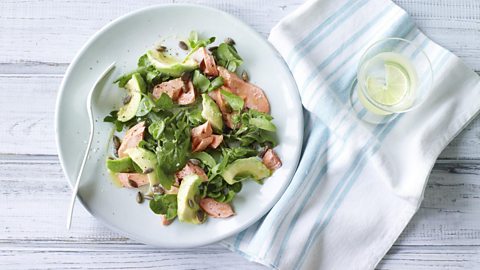
“Salmon is very rich in unsaturated fats,” says Lichtenstein. “Served with lots of vegetables, that makes a good meal.”
Salmon, avocado, watercress and pumpkin seed salad | Save to Your Favourites now
This salmon recipe highlights 'good fats'. It's also a good source of fibre
If you have fatty liver disease and are making lifestyle changes, “the most effective approach is gradual weight loss, achieved through a balanced, calorie-conscious diet and regular exercise,” says Newsome.
“Cutting back on sugar and refined carbs, reducing saturated fats, and prioritising vegetables, lean protein and high-fibre foods can all help reduce fat in the liver.
“Studies show even a 7–10% reduction in body weight if you’re overweight can significantly improve liver health.”
Other helpful dietary changes
Newsome says that it’s not just what you eat, but when – and how much.
He suggests focusing on:
“Smaller, balanced meals rather than very large portions – this may help with blood sugar control.”
“Avoiding eating late at night and leaving a gap between eating and going to sleep, which could help support an improved metabolism.”
“Drinking enough water instead of sugary drinks to support liver function.” Plus avoiding alcohol if you already have fatty liver disease.
Disclaimer: This article is not a substitute for proper medical diagnosis or dietary advice given by your doctor and dietitian. Please contact your GP for tailored support and advice.
Originally published October 2025
Want more? Visit BBC Food on Instagram, Facebook and Pinterest or watch the latest Food TV programmes on BBC iPlayer.