My Nights In With the Prof

Charlotte Bogard Macleod
Writer
Editor's note: In a new Radio 4 drama, Andrew Scott plays an earnest statistician who falls in love with an impulsive photographer.
Here, the writer of the story, Charlotte Bogard Macleod, reveals how the inspiration for Statistical Probability of Love at First Sight began...
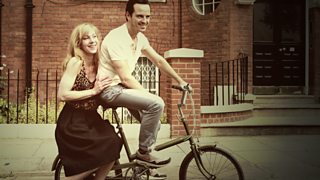
Andrew Scott and Jenny Spark
I email the eminent statistician Professor David Spiegelhalter, of Cambridge University, this question.
Dear Professor Spiegelhalter
What is the statistical probability of love at first sight?
He responds immediately.
Hearing back from The Professor is a bit like googling God, finding to your astonishment that He had an email address, and sending Him a message. Then. Ping. A response from The Almighty.
Of course Professor Speigelhalter is not God. To suggest that would be silly. But he is a man with answers to some of life’s BIGGER questions.
Speigelhalter’s system is based on numbers.
It occurs to me that our ‘Google’ lives are deluged with data, but without analysis, this data is meaningless.
The Professor’s mission has been to find meaning in it: Our actions. Our choices. Our behavior. They all leave traces. They’re the patterns of the human heart. It is now possible to analyse what it means to be human.
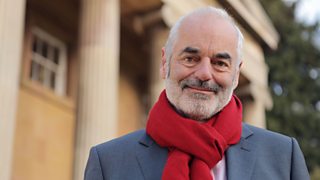
Professor David Spiegelhalter
The Professor works out the stats on vital matters. It’s possible to shrink the years more slowly. By choosing to smoke twenty a day, you risk shortening your life by nine years. The Professor measures slow-drip risks in ‘micro-lives’. One micro-life is a millionth of an average lifetime, which is equivalent to about thirty minutes.
It strikes me that if The Professor can work out the probability on this stuff, he may have the answers to Other Important Questions.
Like love. Yes, love, which remains so indefinable, yet so addictive.
I want to find out the truth about love.

Charlotte Bogard Macleod
This is how I come to email the following question:
Dear Professor Spiegelhalter
What is the statistical probability of love at first sight?
He responds immediately:
Dear Charlotte:
Sadly the Office of National of Statistics doesn't collect such info, although they are now attempting to measure happiness.
Sorry not to be able to help more
Best Wishes
David
Wow. I think. Happiness. Interesting. I like that, but how does anyone measure it?
Dear Charlotte
You ask, "How happy did you feel yesterday?"
The data on personal wellbeing is here.
Thus begins my nightly e-mail correspondence with The Professor.
I begin to understand basic ideas. It’s intoxicating. I’m standing on the edge of a precipice, looking down at life’s questions. For a Planck moment (theoretically the smallest measurement of time), I feel as if I may be coming close to an answer.
Ultimately, of course, The Truth carries on eluding me. The Professor’s answers generate still more questions, but somewhere in this process, my mind becomes alive to the possibility of writing a play. A story informed by statistics. Inspired by it.
I imagine a love story. What if someone, who is trying to order the world, falls in love with someone who is hopelessly chaotic?
My characters will have to meet by accident, of course. What are the odds that they’ll get married? What’s the likelihood that they’ll start a family? What’s the probability that they’ll stay together?
I have written it with Andrew Scott voice in my head. I can’t imagine that he will agree ever to play the part. What’s the likelihood of that?
On hot August day, we record it at the BBC’s Maida Vale Studios.
Andrew Scott plays my Professor of Probability.
Unsurprisingly, it is called:
THE STATISTICAL PROBABLITY OF LOVE AT FIRST SIGHT.
It is statistically likely to make you smile.
And
Maybe
Hopefully?
Probably
Worth a listen.
That reminds me,
I must ask The Professor what he thinks.
I’ll email him now.
The Statistical Probability of Love at First Sight, on BBC Radio 4.