Feedback: BBC’s medical correspondent Fergus Walsh on the MMR vaccine reporting

Roger Bolton
Tagged with:
Editor's note: The BBC’s medical correspondent Fergus Walsh discusses how medical stories are reported. Listen to Feedback from 19 April 2013.
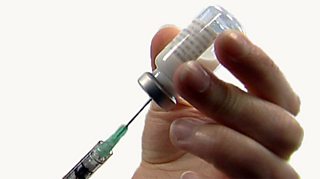
Needle and vaccine
“Totally discredited”. That’s how the BBC’s medical correspondent Fergus Walsh, and his colleagues, describe the alleged connection between the MMR (Measles, Mumps and Rubella) vaccine and autism.
Don Benson, a Feedback listener thinks a different term would be appropriate.
He thinks it would be better to say “has been widely rejected within the British medical hierarchy”.
He thinks that “BBC journalists should be cautious about accepting opinions from the medical hierarchy as unquestionably true and free from undeclared interests or bias”.
Who should we believe? Some scepticism is understandable. We were assured for some time that all was well in Mid Staffordshire before the horrors of some of its (non) care were starkly revealed. Then there is the running controversy over the Leeds heart hospital. One leading heart specialist said he would not send his child there for an operation. Others maintain it is perfectly safe and has a fine record.
Also many of the greatest breakthroughs in medicine have come through the rejection of current orthodoxies and in the teeth of opposition from medical establishments.
Many, perhaps most, journalists have an ingrained scepticism about authority, and when there is a debate about a medical controversy there is an understandable tendency for broadcasters, committed to impartiality, to offer all sides equal time.
However as Professor Steve Jones pointed out, in a report commissioned by the BBC Trust, this can be misleading.
“According to the Economic and Social Science Research Council survey, at the height of the panic” (about a MMR/autism link) ”most people felt that because both sides of the argument had been given equal time by the media, then there must have been equal evidence for both (although by then the result had been thoroughly discredited by experts)”.
I remember, how could I forget, in my own family at the time of the original “scare”, a particularly vigorous debate about whether our daughters should have the MMR vaccine. They eventually did so.
There is no easier way for a media outlet to fill space than by running a health scare story together with emotive coverage of the allegedly affected children. Often they are grossly inflated, sometimes entirely false. Yet some of these “scares” can be justified. Remember the long Sunday Times Thalidomide campaign which was triumphantly vindicated?
All of this means that I was particularly interested in talking to Fergus Walsh in person. Here is this week’s Feedback interview.
The BBC's medical correspondent Fergus Walsh on recent MMR vaccine reporting.
Next week’s edition of Feedback is the last in the present run, and most of it will be given over to listeners questioning the Controller of Radio 4, Gwyneth Williams.
If you have a question for her please let me know. Otherwise I will have to ask all the questions myself and surely you would not want that!
Roger Bolton
•Listen to this week's Feedback
•Get in touch with the programme, find out how to join the listener panel or subscribe to the podcast on the Feedback website
•Read all of Roger's Feedback blog posts