TV PRESENTER
Breaking news, breaking news! The new prime minister is a teenager!
NARRATOR
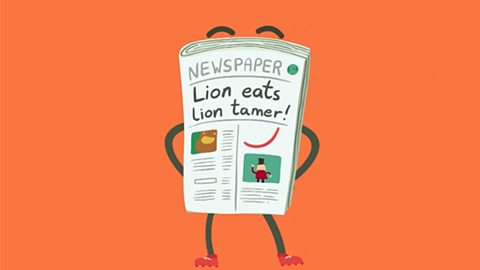
When you see the news on TV or in newspapers, it’s important to understand what kind of information you’re getting.
Some of it is fact – things that are definitely true.
TV PRESENTER
The new prime minster is giving her first speech and is promising big changes!
Ahem…
TEEN PM
Double pocket money for everyone!
NARRATOR
But when people talk about what they think…
PUNDIT 1
She’s a terrible prime minister!
PUNDIT 2
I don’t agree! I really like her. And I think doubling pocket money is a really, really good idea, actually!
NARRATOR
That’s what we call opinions.
If someone says something is good, or bad, it’s not a fact, it’s how they feel.
Sometimes people have already made their minds up about whether something’s good or bad before they even know anything about it.
VOXPOP MAN
All teens are smelly, and can’t be trusted. Everybody knows that!
NARRATOR
That’s called being biased.
If you think about what’s fact and what’s just opinion, or bias, it’s a lot easier to make sense of things.
[TV STATIC]
Facts:
- Facts are definitely true.
- They can be backed up with evidence.
- For example, 'the Prime Minister is giving a speech.'
Opinions:
- Your opinion is how you feel.
- Other people might think differently, they have a different opinion.
- For example, 'having a teenager as Prime Minister is a terrible idea.'
More on Factual writing
Find out more by working through a topic
- count3 of 8

- count4 of 8
- count5 of 8
- count6 of 8