What are conjunctions?
Conjunctions join together two different, but related, parts of a sentence.
They can be words like 'and', 'but', 'if', 'when', and 'because'. For example:
I like swimming and she likes dancing.
'Because' is a really useful conjunction. We can use it to explain how or why something is the case. For example:
I felt sick because I went on the roller coaster twice!
Watch: Conjunctions
Watch the short video below to see some more examples of conjunctions in action!
See if you can spot all the times 'and' is used to join sentences.
DRIVER ONE: We're never going to get up there, we need a conjunction. Conjunctions are joining words. The main thing they do is join two different parts of a sentence.
NARRATOR: Oh, you can't just force them together, you have to coordinate them. You need a coordinating conjunction, to join groups of words that are about similar things.
DRIVER ONE: Well here it says 'I like cats'
DRIVER TWO: And here it says, 'he likes dogs'
NARRATOR: Perfect. They're both as important and talking about similar things. Let's grab one of these 'coordinating conjunctions' and drop it in. They always go between the words you want to join. You can even join sentences with them.
DRIVER ONE: I like cats, but he likes dogs.
NARRATOR: I think you know what to do here. Hey, steady on drinking all that water. That's great, 'The water is calm and I am dry'.
DRIVER ONE: Whooaaa!
NARRATOR: Oops! Maybe not so dry after all.
Watch: Using 'because'
Explore how to use 'because' with Ms Williams.
Hello, I am Ms Williams and today we're learning how to use the word "because" in our writing. Why? Because it's fun.
We use the word "because" to join ideas in our writing. Usually this is to explain how or why something is the case. For example, I needed to borrow a pencil because I lost my pencil case. This person needed to borrow a pencil because they couldn't find their own. "Because" tells us why the person needed a pencil.
Let's try an example together with a creative challenge.
The sentence "Nadir missed the bus" makes sense on its own. However, aren't you curious why Nadir missed the bus? Me too. Using the word "because" we can give more information. So, let's remove the full stop and add "because". Have a think about what you can add to finish the sentence. You can put me on pause while you think.
So, why did Nadir miss the bus?
How about "Nadir missed the bus because his alarm clock did not go off"? Or possibly, "Nadir missed the bus because an alien stopped him to ask for help." Which is your favourite reason?
The great thing about joining sentences with "because" is that we can use "because" at the beginning of the sentence or in the middle. Let's see this with our examples. I needed to borrow a pencil because I lost my pencil case. Could also be written as… Because I lost my pencil case I needed to borrow a pencil.
Now, I know you will like this next example.
Nadir missed the bus because an alien stopped him to ask for help. Can you move "because" to the beginning?That's right. Because an alien stopped him to ask for help, Nadir missed the bus. Excellent.
Time to take it up a level. We've reminded ourselves how to use "because" and how to switch around sentences using it. So, for the next two sentences it's your turn to decide whether the sentences use "because" correctly.Let's go.
Edie bought a present, because it was her. Does this sentence make sense? Yes or no? Thumbs down? Yes, that's right. The sentence is unfinished and does not use "because" correctly. Let's fix it. Edie bought a present because it was her friend's birthday. Thumbs up now.
Next one.
Because he was scared, the dog ran under the table. What do you think? Does the sentence make sense? Yes or no? Thumbs up? Yes, that's right. It makes complete sense. And we could read it the other way too. The dog went under the table because he was scared. Double thumbs up for all of you.
Amazing effort everyone.
Today try writing five sentences with "because" in the middle and at the start. I know you will be able to do it because you are smart. Because you are smart, I know you'll be able to do it.
Good luck!
For more help, challenges and games on this subject visit bbc.co.uk/bitesize

Top tip!
You can use 'because', 'if' and 'when' at the beginning or the middle of a sentence. For example:
I was late because I missed the bus.
Or you could write:
Because I missed the bus, I was late.
Activity 1
See if you can identify all the conjunctions (joining words) in this short activity.
Activity 2
There are lots of different things you can see in the ocean.
Watch this short video then complete the activity below.
Try and remember as much information about the ocean as possible.
We are here. But have you ever wondered what plants and animals live in the ocean and how they survive underwater? Well, pack your swimsuit, we're off to find out!
Look at all these fish! Big fish, small fish and so many colours. And there's seaweed growing here. Doesn't it look like a plant? But it's an algae.
Seaweed grows close to the surface because it uses the sun to make its own food. Just like a plant. And what's that? It's lots and lots of plankton.
Plankton is made up of tiny plants and animals. These plants are at the beginning of most of the ocean's food chains.
Look! A right whale having its dinner.
Whales are the biggest animals in the world and most only eat plankton, one of the smallest. They must have to eat a lot! They can stay underwater for an hour, but come to the surface to breathe.
So, ocean habitats are large and wet.
Ooh, I'm off to find a boat.
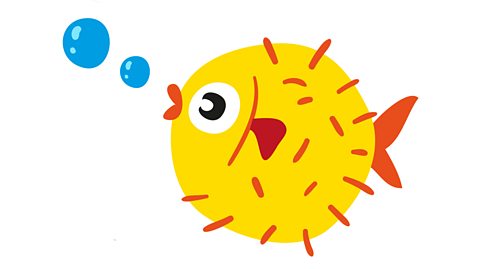
Complete the sentences using the list of conjunctions.
You should use each conjunction once.
You can say your answers out loud or write them down.
The first one has been done for you.
Conjunction
- and
- because
- and
- but
- and
- when
Sentences
Some fish are big and some fish are small.
Seaweed looks like a plant … it's an algae.
Seaweed grows close to the surface … it uses the sun to make food.
Plankton is made up of tiny plants … animals.
Ocean habitats are large … wet.
… whales need to breathe, they swim to the surface.
You can check your answers using this answer sheet.
Activity 3
Write six sentences about the ocean using 'because', 'if' or 'when'.
You might want to watch the video again to get some ideas.
Try and write two sentences for each conjunction. For example:
Whales swim to the surface because they need to breathe.
Remember to use 'capital letters' at the start of your sentences and 'punctuation' at the end.
Karate Cats English game! game
Head to the dojo to become an expert in spelling, punctuation and grammar.

More on Grammar
Find out more by working through a topic
- count5 of 12
- count6 of 12
- count7 of 12
- count8 of 12