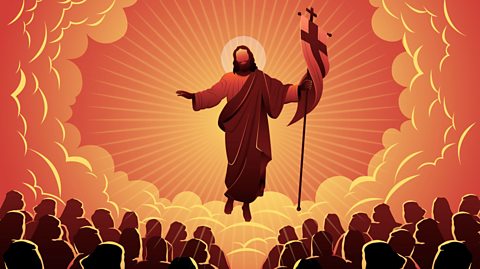
There’s a new trend on TikTok that has some people believing we are close to the end of the world as we know it.
The hashtag #Rapture is connected to the belief that Jesus is returning to Earth for the Second Coming.
What does the Rapture mean?
Some believe that the Rapture is when Christ’s followers will be taken up to Heaven, while those who do not follow him will be left behind on Earth, changing life for humans forever.
It isn’t a belief held by all Christians, however. The Rapture is closely linked to Evangelical Christianity, in particular believers based in the USA.
The Rapture isn’t mentioned by name in the Bible. In his First Letter to the Thessalonians, Paul - one of the Apostles - wrote that Jesus would return one day, and “we who are alive, who are left, will be caught up” which shares some of the imagery connected to the idea of the Rapture.
Some Christians believe that the world as we know it will come to an end in the Apocalypse. This is used to refer to God’s final and complete destruction of the world. Belief in the Rapture could be connected to interpretations of that event.

Why is the Rapture said to be happening now?
A pastor from South Africa called Joshua Mhlakela said in a TV interview that he had seen Jesus in a vision. In this vision, Jesus returned to Earth on Rosh Hashanah, the New Year in Judaism. The pastor also said that the Rapture would take place on either September 23 or 24.
There are also posts that say the Rapture claims are a conspiracy theory, linked to the world ending. There have been several predictions about the world ending in recent years, including one that a Mayan calendar which abruptly ended partway through December 2012 meant that there wouldn't be a world to live in after that date - you can find out more here.
How has TikTok reacted to the Rapture news?
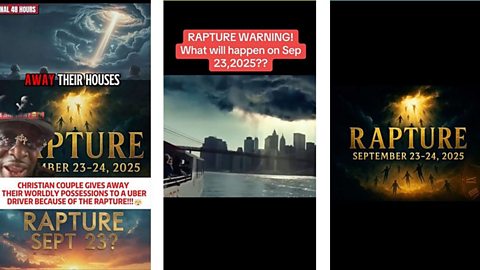
TikTok has more than 300,000 posts about the Rapture so far. They have included serious clips about Pastor Mhlakela’s claims, giving them a biblical background. Others have shown how believers have given away their belongings to strangers as they do not expect to be around on Earth to need them. Some clips take a more humorous approach, especially from people who don’t believe the Rapture is real and use humour to make light of the situation. The hashtag #raptureready has become popular too.
With 23 and 24 September given as one of the dates for the Rapture, some TikTokers have filmed themselves waiting for the Rapture to happen. Others have posted clips that since the Rapture is not mentioned in the Bible, Jesus will not let us know in advance when it is happening.
Stories such as these can grab people's attention and in turn, go viral. It could be because the idea of the Rapture is so intriguing, with imagery of people going up into the skies, that they draw people in. This often encourages people to share the posts, whether they find them funny or take them seriously. Some posts are even intentionally exaggerated or satirical to stand out and get shared more widely.
It’s crucial to verify your sources instead of relying solely on social media. Always ask, does this information come from a credible news outlet, or in this case an original religious text? Is it being used for clickbait? Be aware of confirmation bias too. People tend to believe information that aligns with their pre-existing beliefs.
This article was published in September 2025

The monthly AI or Real quiz: September 2025
Can you tell the real images from the ones created using AI in this month’s special edition quiz?

How safe are wireless headphones?
Looking into the claims behind headphones and ear plugs